Periodically I say something like this to my wife: “Excuse me, I’m going to go take this piece of electronic equipment outside and smash it with the baseball bat.” I say it politely, generally with a piece of already-broken electronic equipment in my hand, right after I’ve spent a couple of hours trying to make it work and definitively failing, and right before I grab the baseball bat, head out the front door, and smash the thing to blithereens on our driveway.
Because what I have is an anger problem, not an anger management problem.
I get really angry. A lot. I regularly scream into the dashboard of my car as my hands clench or beat the steering wheel, raging about the crazy of the day. Sometimes I get hoarse doing that, even hurt my voice. But other than occasionally hurting my voice, I never take it out on people - not anymore. My wife actually says she finds it hard to believe that I have an anger problem, because I so rarely show it. And to me that’s the difference between an anger problem and an anger management problem - whether you take it out on others or not.
Personally, I’d rather not get angry, and I think the degree to which I do get angry is the problem - like David Banner says, that’s my secret: I’m always angry. But I’ve also grown to think about anger like Stephen Covey - anger is an alarm, a signal that something’s wrong, and the first thing you do with an alarm is to turn it off and deal with the problem.
I didn’t used to have that resource available to me. I’ve knocked pieces from a chessboard, stormed out of a Risk game, yelled at people, gotten into fights, even smashed important computer equipment. When playing the raconteur I always like to exaggerate, to tell the true story about punching one of my best friends in the face - twice - and now I can add to that kicking another friend in the face - but the problem with all of those is that they were accidents, so they don’t tell the truth as much as, say, mentioning that I’ve ripped off my Android watch three times in the last year because it was so annoying.
But even that’s a part of the management, not the problem. The Android watch-toss generally happens when I’m driving, when it’s firing some alert and won’t stop, and I need to pay attention to the road - so I toss it off so I can focus on driving, not dying. One day, if it gets too annoying when I’m driving, I may tear it off and toss it out the window, but if so, I won’t look back - because as much as that’s an expression of anger, it’s also something that I’ve calculated in advance, a deliberate choice that if this little widget distracts me too much when I’m driving a ton of car at three times the speed human beings were designed for, it’s time for the widget to go.
So the anger is still there, but under control. I no longer smash cordless phones or toss cell phones, unless I’ve determined the device is actually a loss, and then, heck, I’ll give it a go, or pull out the baseball bat. Supposedly the cathartic theory of anger isn’t any good, that screaming or smashing plates will, rather than releasing your anger, actually make it worse; however, it certainly does feel good to just get that anger out and to move on.
But I had to spend fifteen minutes fixing a bent pin in my watch after the last watch-toss, and I really don’t like the pain in my throat after yelling in the car - and I still remember smashing those pieces from the chessboard, thirty-five years later, with a little bit of shame. So I know I have an anger problem - but one thing I’ve committed to is making sure I manage it.
-the Centaur
Postscript: Since this was written, I sat down with my wife to fix a problem with her Audible account after she moved to a new computer. During this process, we found out that Audible employees had NOT, as they had previously claimed, successfully fixed a problem that we’d had with her books when she accidentally got a second account - to the tune of a lost $500 in books - and THEN we found out that Audible employees had lied to her about whether she actually owned the books she downloaded, to the tune of $17,000 dollars in books encumbered with DRM that makes them effectively a rental, not ownership. My wife got so angry about this she had to take a walk. Me? I got angry because I spent two and half hours trying to resolve a problem which should have taken fifteen minutes, so angry at the end, when a error in Google’s interface repeatedly thwarted me trying to execute a simple search, that I wanted to smash my hand against the glass desk. My wife raised her hand to stop me, but I just said, “Don’t,” and then lowered my hands to the desk, took a deep breath, switched to Bing to resolve the problem. I then spent the next half hour calming my wife down about the horrible state of DRM in this country and how Audible employees lied to fuck her over. (And I was in on the call; they did lie - as my wife put it, they said whatever they had to to get her to enter her credit card number). In the end, I had calmed my wife down, I had found a solution for her problem, and I had not put my hand through a desk made of glass.
Scorecard: anger, zero; anger management, one.
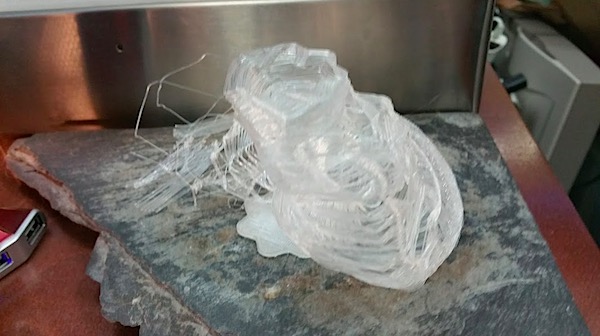
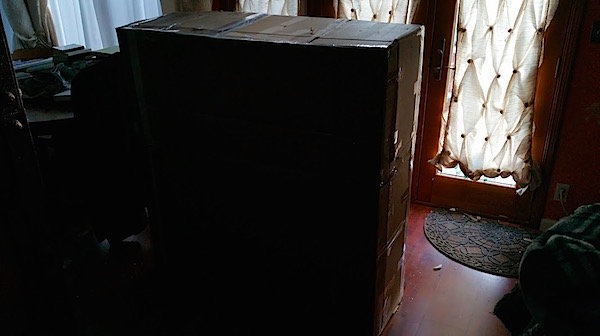
Pictured: My first 3D printed model. It didn’t turn out so well. I did not, in fact, smash it, despite several hours of frustration.






 1995 was one of the best years of my life: I got engaged, I published my first scientific paper, and I published my first short story. All that gave me a great feeling of satisfaction and accomplishment, but that happiness was short lived: that engagement ultimately disintegrated, my PhD dragged on, and I didn’t publish another short story for years.
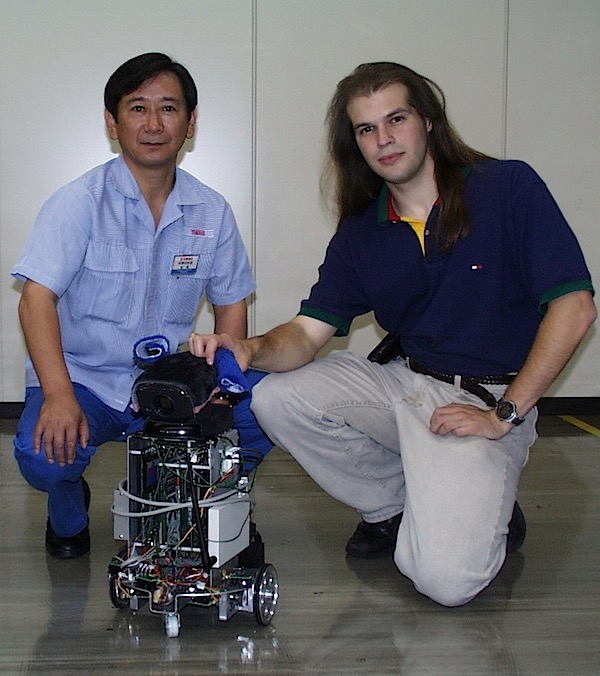 Now, there were great sparks in there - successive internships at CMU in Pittsburgh in 1996, SRI in the Bay Area in 1997 and Yamaha in Japan in 1998 - but I didn’t really start feeling great until 1999, when my thesis advisor started an internet startup with me and one of his graduate students - Enkia, my first taste of the inside of a healthy startup.
 But the dotcom crash happened and everything got acrimonious (as things do when external factors turn sour, since people are no longer glossing over problems that didn’t bother them before) and my father grew gravely ill and we all agreed it was better to part ways, so that happy time evaporated too. I don’t even really have good pictures of this time, not digital ones.
 The pattern repeats - ups and downs, good times and bad, a few really so-so jobs with really nice people, meeting my wonderful fiancee and having a terrible-post wedding experience with my mother, and so on, and so on. It’s really easy to focus on the bad, sometimes, to think of all the things that have gone wrong.
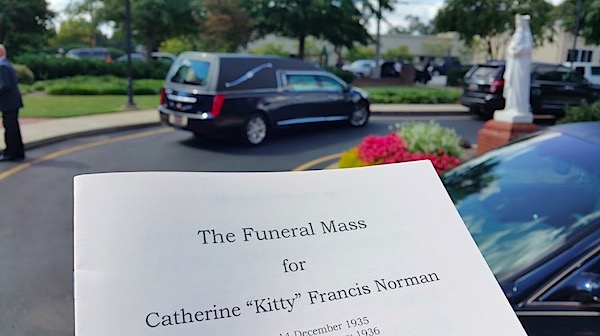 This year was no different: loss of the family matriarch, extreme disruption at work (I lost 2 SVPs, 2 directors, 2 bosses and 2 teams in the last year to other-than-normal churn) and the delay of my latest novel, the CLOCKWORK TIME MACHINE. But at the same time, I had a great novel published - LIQUID FIRE - found a wonderful new team, and had a great time with friends and family.
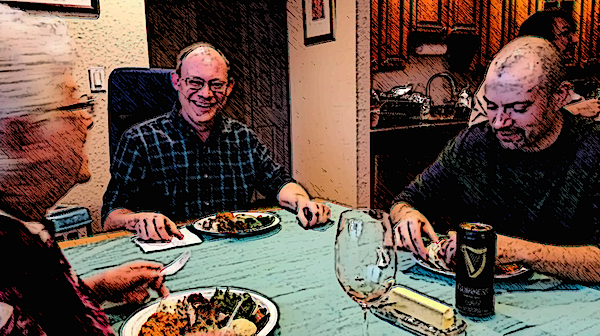
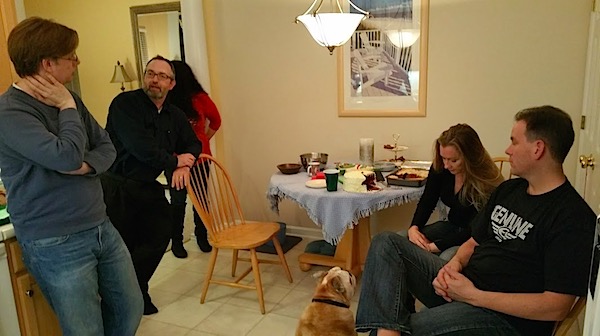 You know what? Crap happens. But wonderful things happen to. And the way that we choose to take things affects what we get out of them. If you focus on all the bad stuff, you may end up feeling like your life is in the shitter. But if you take the time out to appreciate the good things as they happen, to share them with friends and family, and to remember them …
 … you might find everything really did turn out all right.
 -the Centaur






 -the Centaur