

Lots of great content …
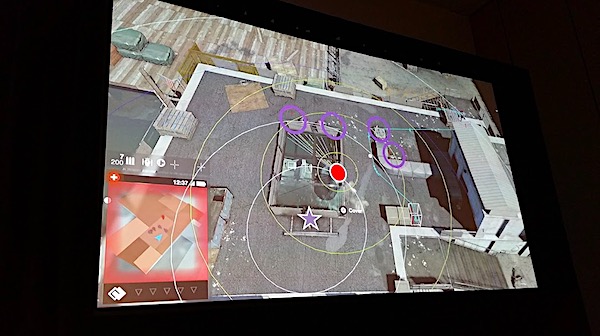
... and this year I have pages and pages of notes!
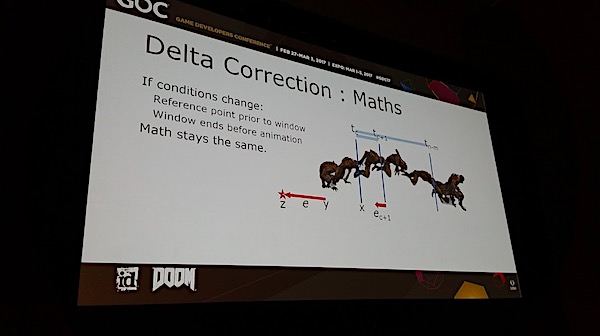
Stay tuned …
... or check the talks out in a few weeks on the GDC Vault!
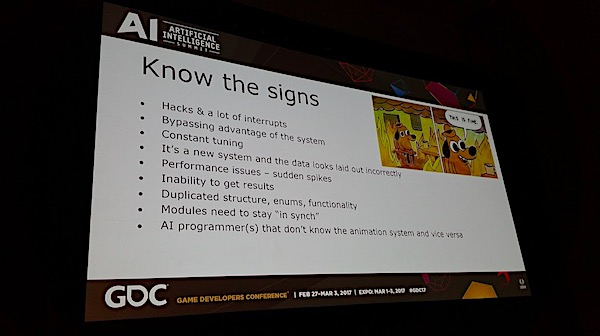
-the Centaur
Words, Art & Science by Anthony Francis
The art and science of mechanized thought.
Lots of great content …
... and this year I have pages and pages of notes!
Stay tuned …
... or check the talks out in a few weeks on the GDC Vault!
-the Centaur

Welcome to the future, ladies and gentlemen. Here in the future, the obscure television shows of my childhood rate an entire section in the local bookstore, which combines books, games, music, movies, and even vinyl records with a coffeehouse and restaurant.

Here in the future, the heretofore unknown secrets of my discipline, artificial intelligence, are now conveniently compiled in compelling textbooks that you can peruse at your leisure over a cup of coffee.

Here in the future, genre television shows play on the monitors of my favorite bar / restaurant, and the servers and I have meaningful conversations about the impact of robotics on the future of labor.

And here in the future, Monty Python has taken over the world.
Perhaps that explains 2016.
-the Centaur
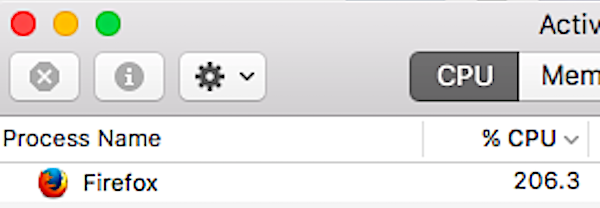
… I had to install an ad-blocker. Why? Firefox before any ad block:
Firefox after Adblock Plus:
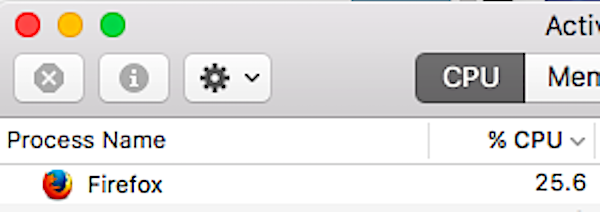
Yep, Firefox was TEN TIMES SLOWER when loading a page with ads, and it stayed that way because the ads kept updating. Just one page with ads brought FF to its knees, and I did the experiment several times to confirm, yes, it indeed was the ads. I don’t know what’s specifically going on here, but I strongly suspect VPAID ads and similar protocols are the culprit, as documented here:
http://techaeris.com/2016/06/14/vpaid-ads-hurting-internet-experience/
… publisher and website owner Artem Russakovskii took to Google+ and The Hacker News to share some of his findings concerning VPAID ads. He shows how VPAID ads can degrade a user’s browser performance:
“… after several minutes of just leaving this one single ad open, I’m at 53MB downloaded and 5559 requests. By the time I finished typing this, I was at 6140 requests. A single ad did this. Without reloading the page, just leaving it open.
A single VPAID ad absolutely demolishes site performance on mobile and desktop, and we, the publishers, get the full blame from our readers. And when multiple VPAID ads end up getting served on the same page… you get the idea."
Similarly, John Gruber reports that a 500-word text article weighed in at 15MB - enough data to hold more than 10 copies of the Bible, according to the Guardian. Gruber links another post which shows that web pages can get more than 5 times faster without all the excess scripts that they load.
The sad thing is, I don’t mind ads. The very first version of my site had fake “ads” for other blogs I liked. Even the site I tested above, the estimable Questionable Content, had ads for other webcomics I liked, but experimentation showed that ads could bring Firefox to its knees. QC I always thought of as ad-lite, but guess it’s time to start contributing via Patreon.
The real problem is news sites. Sites were opening a simple story kept locking up Firefox and twice brought down my whole computer by draining the battery incredibly fast. I don’t care what you think your metrics are telling you, folks: if you pop up an overview so I can’t see your page, and start running a dozen ads that kill my computer, I will adblock you, or just stop going to your site, and many, many other people across the world are doing the same.
We need standards of excellence in content that say 2/3 of a page will be devoted to content and that ads can add no more than 50% to the bandwidth downloaded by a page. Hell, make it only 1/3 content and 100% extra bandwidth - that will be almost 100% more content than a page totally destroyed by popup ads and almost 3000% less data than one bloated by 10 copies of the Old Testament in the form of redundant ads for products I will either never buy or, worse, have already bought.
-the Centaur
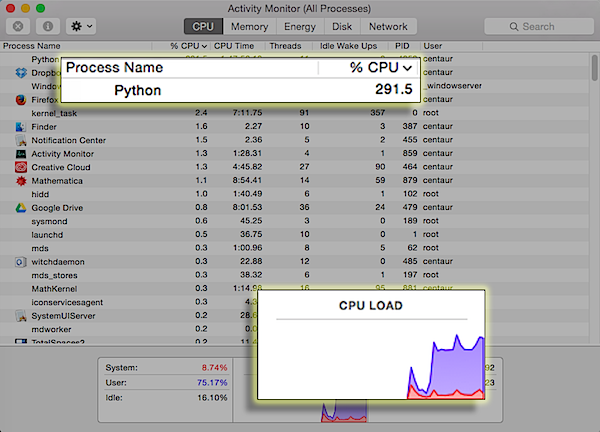 Yep, that’s Python consuming almost 300% of my CPU - guess what, I guess that means this machine has four processing cores, since I saw it hit over 300% - running the TensorFlow tutorial. For those that don’t know, "deep learning” is a relatively recent type of learning which uses improvements in both processing power and learning algorithms to train learning networks that can have dozens or hundreds of layers - sometimes as many layers as neural networks in the 1980’s and 1990’s had nodes.
For those that don’t know even that, neural networks are graphs of simple nodes that mimic brain structures, and you can train them with data that contains both the question and the answer. With enough internal layers, neural networks can learn almost anything, but they require a lot of training data and a lot of computing power. Well, now we’ve got lots and lots of data, and with more computing power, you’d expect we’d be able to train larger networks - but the first real trick was discovering mathematical tricks that keep the learning signal strong deep, deep within the networks.
The second real trick was wrapping all this amazing code in a clean software architecture that enables anyone to run the software anywhere. TensorFlow is one of the most recent of these frameworks - it’s Google’s attempt to package up the deep learning technology it uses internally so that everyone in the world can use it - and it’s open source, so you can download and install it on most computers and try out the tutorial at home. The CPU-baking example you see running here, however, is not the simpler tutorial, but a test program that runs a full deep neural network. Let’s see how it did:
Yep, that’s Python consuming almost 300% of my CPU - guess what, I guess that means this machine has four processing cores, since I saw it hit over 300% - running the TensorFlow tutorial. For those that don’t know, "deep learning” is a relatively recent type of learning which uses improvements in both processing power and learning algorithms to train learning networks that can have dozens or hundreds of layers - sometimes as many layers as neural networks in the 1980’s and 1990’s had nodes.
For those that don’t know even that, neural networks are graphs of simple nodes that mimic brain structures, and you can train them with data that contains both the question and the answer. With enough internal layers, neural networks can learn almost anything, but they require a lot of training data and a lot of computing power. Well, now we’ve got lots and lots of data, and with more computing power, you’d expect we’d be able to train larger networks - but the first real trick was discovering mathematical tricks that keep the learning signal strong deep, deep within the networks.
The second real trick was wrapping all this amazing code in a clean software architecture that enables anyone to run the software anywhere. TensorFlow is one of the most recent of these frameworks - it’s Google’s attempt to package up the deep learning technology it uses internally so that everyone in the world can use it - and it’s open source, so you can download and install it on most computers and try out the tutorial at home. The CPU-baking example you see running here, however, is not the simpler tutorial, but a test program that runs a full deep neural network. Let’s see how it did:
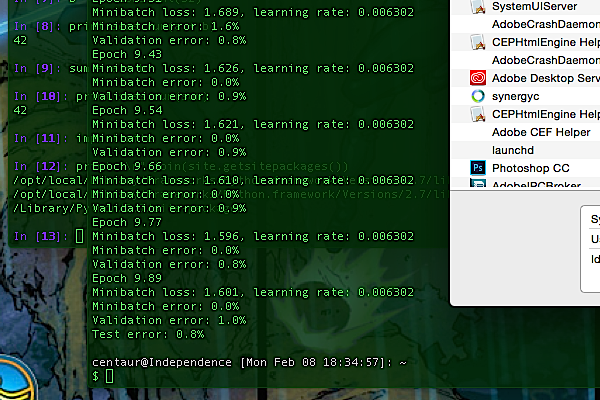 Well. 99.2% correct, it seems. Not bad for a couple hundred lines of code, half of which is loading the test data - and yeah, that program depends on 200+ files worth of Python that the TensorFlow installation loaded onto my MacBook Air, not to mention all the libraries that the TensorFlow Python installation depends on in turn …
But I still loaded it onto a MacBook Air, and it ran perfectly.
Amazing what you can do with computers these days.
-the Centaur
Well. 99.2% correct, it seems. Not bad for a couple hundred lines of code, half of which is loading the test data - and yeah, that program depends on 200+ files worth of Python that the TensorFlow installation loaded onto my MacBook Air, not to mention all the libraries that the TensorFlow Python installation depends on in turn …
But I still loaded it onto a MacBook Air, and it ran perfectly.
Amazing what you can do with computers these days.
-the Centaur 