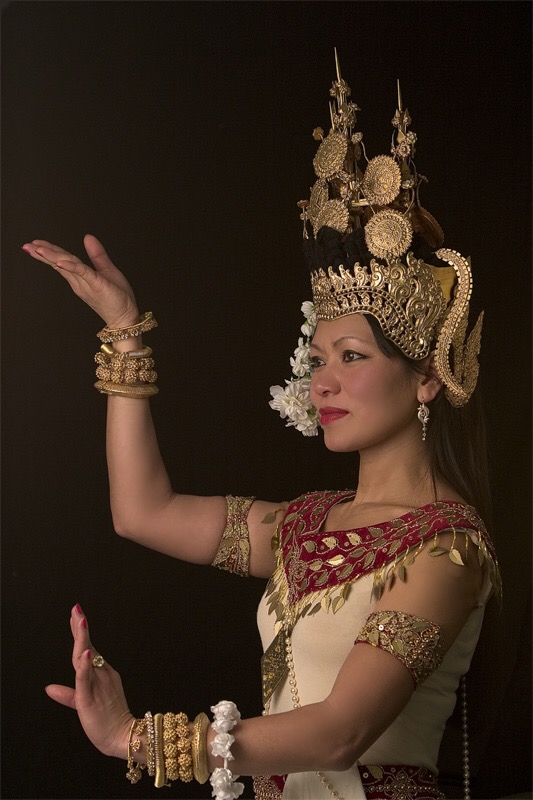
Quick Sharpie sketch of an Apsara dancer, a mythical spirit appearing in Southeast Asian cultures. Came up in some tangential research for a scene in Dakota Frost #7, SPIRAL NEEDLE, but decided this was too rich a mine of mythology for a throwaway line, so I ended up using something else.
Drawing every day.
-the Centaur
Oh, and on Camp Nano: just got ~1000 words so far. Not sure why I got fewer words when I had more to do yesterday than today. Perhaps I need to break more paintings?
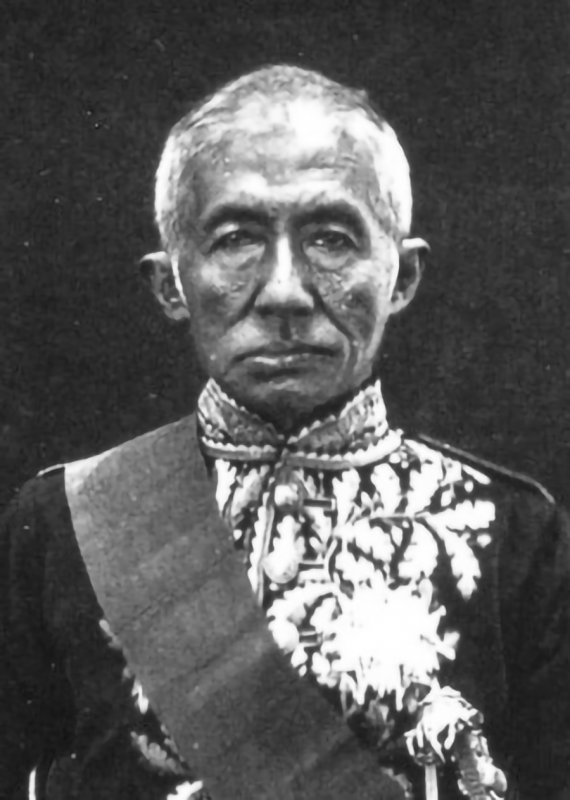
Quick Sharpie sketch of King Mongkut of Thailand, the famous king from The King and I, and also, not a bad mathematician and astronomer. Tangentially came up in today's Dakota Frost Camp Nano adventure (2300+ words today, still behind, but catching up). The real guy's head is more egg-shaped, and the left eye has an iris placement mistake: we are near the limit of what I can do with a Sharpie, but it's still the best tool I have to keep myself drawing when it's super late and I'm tired.
Drawing. Every. Day.
-the Centaur
I do not like this picture frame. While the wood border is beautiful and it handsomely frames posters, the attachment is an awkwardly placed pair of hooks, roughly 1/3 of the way down the frame and an inch inside the outer edges, making it almost impossible to hang levelly, or evenly, or at the right height.
In fact, I'd say that the placement is so awkward it actively thwarts "measure twice, cut once" in that on at least three or four different occasions (with two different poster frames, apparently not having learned my lesson trying to level the first one) I have measured the hook placement twice, or more than twice - most recently, using two different rulers, including a t-square - and after double and triple checking it, finding that the hooks are too far apart, or once moved closer, are not quite level, or, once leveled, are a whole inch to the right from where they should be, despite the fact that you measured the center and the hooks both against the sides of the wall upon which it was going, so, what the hell, Danielewski?
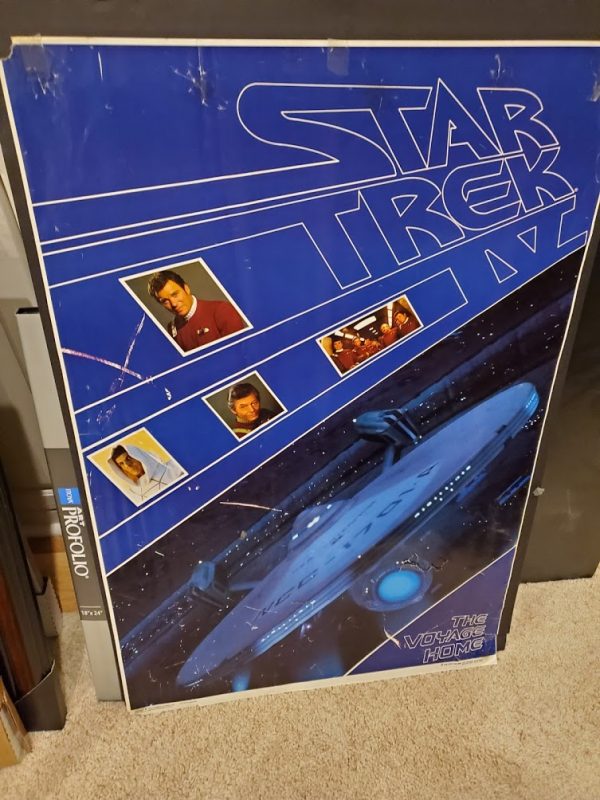
Also, this frame does not well protect posters when thrown across the room. But it does make a very satisfying crashing sound, and the remains of the frame are well suited for pulling a 2001: A Space Odyssey monkey-smashing-the-bones-with-a-club re-enactment.
Sigh. "I don't have an anger management problem, just an anger problem." Sigh. And it's not like it was a great poster, but, hell, it's impossible to replace. And I checked.
Time to find a new frame - with a proper wire or central attachment, either of which enables you to add a single central hook, and to slightly adjust the angle and centering of the picture.
"We call it living."
-the Centaur
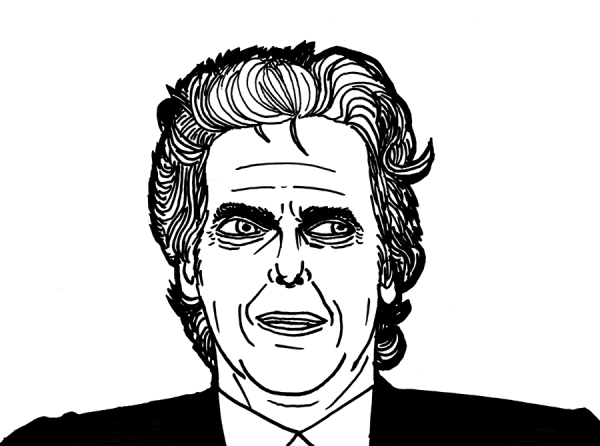
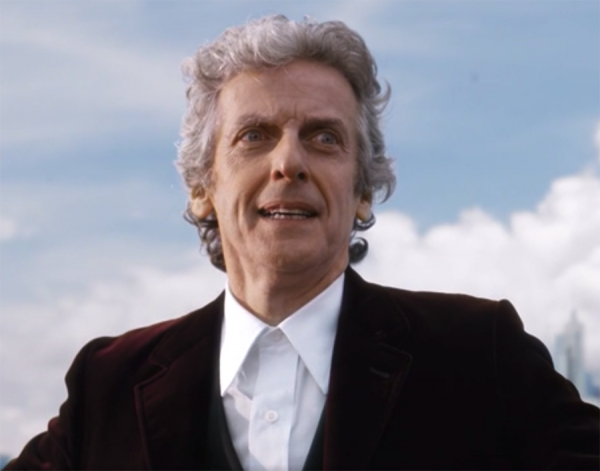
Sharpie sketch of Peter Capaldi from the Doctor Who episode "The Pilot," which is lightweight in tone and stakes but stands up surprisingly well to repeated viewings, especially Capaldi's knockout speech about time in the beginning, the Doctor's amazing office, and the introduction of the TARDIS.
The sketch is ... OK. Slightly squashed, and I'm still doing eyes too big (likely a function of the Sharpie sketches, which put a minimum size on the features I can draw). But it ... kinda looks like him? His head's not turned the right way, and I still have trouble getting the "landscape" of the face right.
Still, drawing every day.
-the Centaur
P. S. Only got ~50 words on Camp Nano, but I feel good about those words, as they're stitching parts of a scene together so I can really roll with it tomorrow. 11K words behind, but I've been behind worse.
Quick sketch - much of it, just a dry erase marker, not even a Sharpie - on Strathmore 9x12. Not completely terrible for the first two, but I sure did squeeze Bolton's head. Sorry, man.
Drawing every day.
-the Centaur
P.S. Only 250 words with Camp Nano, but then, I still feel that maybe-vaccine headache, so, ugh.
tl;dr: Opponents of things should never be appointed to oversee them.
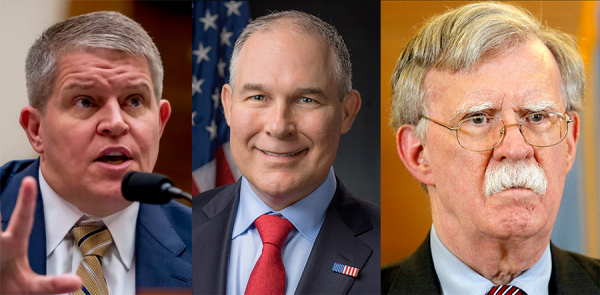
So President Biden has nominated David Chipman to lead the ATF - and he was wrong to do so.
It's not that Chipman isn't qualified to lead the ATF - he's a 25-year ATF veteran. It's that Chipman is explicitly disqualified to lead an agency that oversees firearms - because he's a gun control advocate. It's not that he can't be trusted to make good decisions: he can be trusted to make bad ones.
Previous presidents have made the same mistake. To lead the EPA, Donald Trump nominated Scott Pruitt, a noted environmental skeptic who had sued the EPA. To serve as ambassador to the UN, George Bush nominated John Bolton, a noted United Nations skeptic who said that it does not really exist.
Political cards on the table: I voted for Joe Biden, and I'm happy with him. And while I'm a gun rights proponent - if the Second Amendment didn't exist, we'd need to invent it - I recognize both the need for and constitutional legitimacy of gun legislation, which shouldn't be set in stone as our society evolves.
But intellectual and moral integrity demands that if I call an opponent out for their misbehavior, that I also call out allies for the same behavior. Calling out misbehavior only on one side is worse than hypocritical: it undermines trust in the political system, and encourages further distorted value judgments.
And humans are great at distorting value judgments when emotions are involved. From the most basic arguments all the way up to the most complex adjudication of fact and law, our moods and emotions affect whether we judge something to be true or false.
In a way, we should expect this: researchers like Antonio Damasio have shown that rational decision making breaks down in people whose emotions are impaired, because the value judgments provided by our emotions are necessary for making mental decisions.
But a functioning emotional system can also lead us astray: emotions can impair our judgments. Studies show we're more likely to screw up simple if-then syllogisms if they're emotionally charged. Even judges, trained to be impartial, are more likely to make mistakes with legal arguments on "hot" political topics.
Heightened emotion distorts perceptions, leads us to attribute our feelings to arbitrary targets we come across, and reduces self-control - precisely what you don't want to have in someone who needs to make impartial decisions about something, and precisely what you do have in the person of a political activist.
Now, I'm not questioning Chipman or Bolton's integrity (Pruitt's lack of integrity is well documented, down to his sound-proof booth), or Chipman or Bolton or Pruitt's patriotism, or their expertise. But all three of them are interested enough in the areas they later oversaw to have gone into them as opponents.
In our public life, there is politics, and there is civics, and the two should not mix. Politics literally means deciding how to allocate scarce resources, and it is right and expected for us to dive in rough and tumble to ask for what we want - a participatory political system grants moral authority to a government.
But government's purpose is to bring the use of force under rational control, and more broadly, to allocate resources correctly when policy has been made. Inevitably, decisions will need to be made on matters of fact at an agency - and a political partisan can be trusted to screw them up even if they're trying not to.
When a partisan appoints a opponent of something to oversee it, the person that they've appointed will, very likely, whether they want to or not, "lean their hand on the till" to make things come out for their own partisan ends - meaning they will, sooner or later, fail in their civic duty to make an honest decision.
If you're passionate about something, you might feel that it's all right to put a partisan in charge of it, because then you'll get what you want. But that's evil, on two grounds - first of all, because you are subverting the political process to get a result through the back door that you can't through the front.
But more importantly, impartial decisions will need to be made - and by putting a partisan in charge, you're explicitly hoping for them to make a wrong decision to help implement your political desires. Tyrants, bigots and the corrupt throughout history have employed the same tactic. Stop doing it.
Regardless of our political desires, we need to step back and decouple our understanding of people into (at least) two parts: their politics, and their competence. If their political orientation isn't a direct conflict of interest for to the matter at hand, their basic competence is the primary qualification for doing the job.
I was happy when Trump picked Bolton as National Security Advisor: whether I agree with their politics or not, Bolton had the experience to do the job and the attitude towards the job to do it right. Bush should never have appointed Bolton to the UN: even when he made the right decisions, we couldn't trust them.
I might not have agreed with Scott Pruitt politically, but as a lawyer and state Senator, he was well qualified to be Attorney General of Oklahoma. It was morally wrong for Donald Trump to appoint a climate change denier to lead the EPA, and, predictably, that led to Pruitt lying about climate issues.
I thank David Chipman for his service at the ATF, and would approve of his nomination to another agency. But the moment that he joined a political movement against guns, he disqualified himself from overseeing gun law enforcement, and if confirmed, he will inevitably make some serious mistakes.
-the Centaur
Pictured: Chipman, Pruitt, Bolton
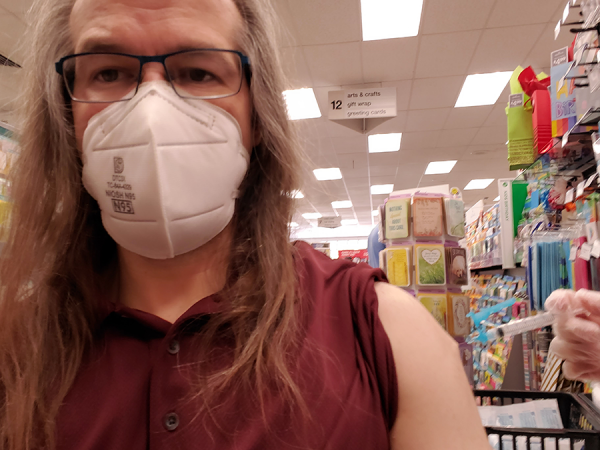
So! I got my first shot today, and other than a little arm soreness, a headache which may or may not be related, and some tiredness which may just be because it's 3:21am, I have not yet had any ill effects. I was totally lied to by my album covers though, and have not been able to hack into Bill Gates' secret global network through the tiny implanted computer chip in the vaccine, maybe because neither exists.
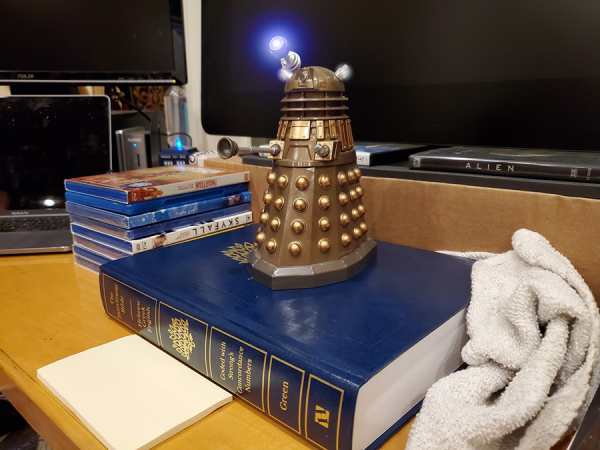
Ouch. First picture failed for some reason, so we get this charming shot of the needle coming OUT rather than going in. But it didn't really hurt at all, maybe because I was fiddling with my camera. Our Dalek friend below is proud that he was able to contribute his catchphrase to our cause:
~500 words on Camp Nano, still behind, but I am too wiped to write more.
Drawing, writing, being a good citizen every day.
-the Centaur
Character study for a Dakota Frost picture, inks on vellum over a roughs with inks and blue on Strathmore 11x14. Required some Photoshop surgery as I didn't anticipate how the shading would riff off the hair and make it look like the model had a beard. Compared to the original, the forehead is too high and the nose too large. Back to practicing, sigh. I think the below is from the Peles Salon Instagram, though I actually found this picture from like 1,000 different Pinterest boards.
Drawing every day.
-the Centaur
P.S. Got 600+ words on Camp Nano. Picking up speed, more in a bit.
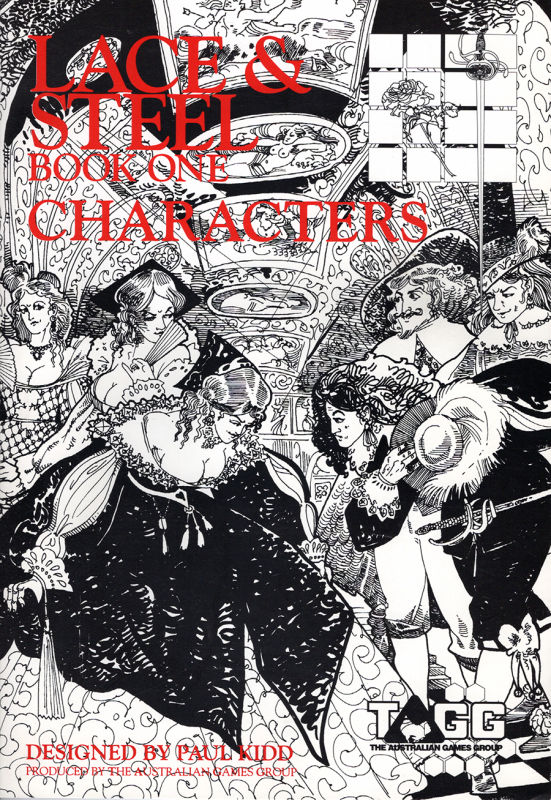
Aborted character study from the Lace and Steel box cover I did with a Sharpie. I think the drawing is improved, but the composition that I originally did straight on the box is too hard to work with. Better to start over with something that I can use to show off the various parts of the drawing like the rapier and the weird double-bladed fan/shield/thingy. This composition, of course, was totally off-the-cuff:
Based on the Lace and Steel RPG character book cover: you can see the inspiration, but the off-the-cuff composition was too slavish in recreating some of the elements. I need to start over with a wholly new composition to get the effect I want with this drawing.
Apparently you can buy Lace and Steel online at Drive Through Fiction, with art by the incomparable Donna Barr, who has a video about drawing horses, which I am going to watch before trying again.
-the Centaur
P.S. ~400 words on Camp Nano, but that's OK, as I am going to bed "early".
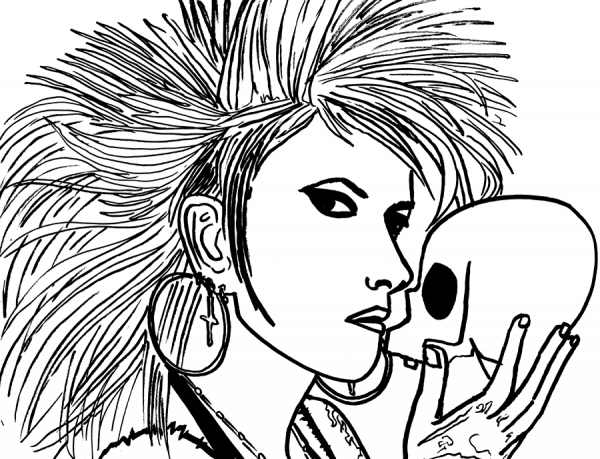
Quick Sharpie sketch of Dakota Frost, based on the model from the BLOOD ROCK / LIQUID FIRE covers. I tried to do this upside down at first, to "see" it better, and OH BOY it did not turn out well - the landscape was all off. So this is an even quicker sketch, because I need to get to bed early.
Also, Camp Nano only got ~150 added words, but again, I need sleep. Rough draftiness:
“Your voice,” the priest said, taking another step back. “If not a vampire, surely … surely not a werewolf … but your voice … why do I know your voice?”
I spun, rolling my neck, unfurling more vines into a soft green halo that lit my face.
“Do you know me now?” I asked.
“Oh … God,” the priest said. “You were on the news, the mother of that weretiger—”
“That I am, and if she is here,” I said, “you should point the way … then run.”
“She … here?” The priest blinked, then his eyes flicked at the coffin. “But it’s not—”
My heart fell. The prisoner in the coffin was not Cinnamon—but as the priest’ eyes went wide in terror, I realized that in his shock he’d given away there was a prisoner in that coffin. I drew a breath, my face flushing, feeling my blood pounding in my ears.
Hopefully I'll pick up speed now that I'm out of the Lenten "Jesus and Godel" series. I wrote 45,000 words of nonfiction in Lent, which is nowhere near the needed Nano rate, but I think is probably the fastest rate and largest single body of nonfiction writing I've done since perhaps my thesis.
But what I really did today was move boxes into the room that's going to become my wife's art studio.
Drawing, writing, moving every day.
-the Centaur
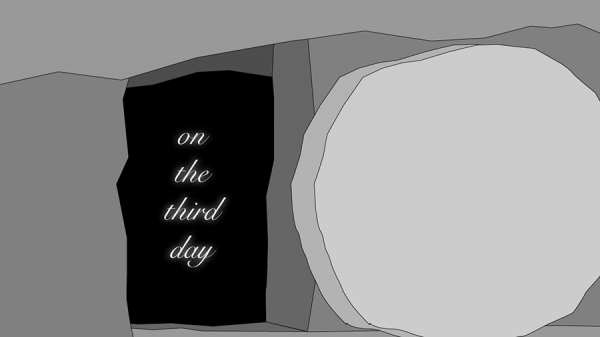
And so comes an end to Lent, and my Lenten series, with Easter. To Christians, Easter not just the commemoration of the Resurrection of Jesus on the third day after his Crucifixion, but an event happening in a very real sense right now, reverberating through time and space.
If the Crucifixion is when Jesus atoned for our sins, the Resurrection is when He brings the promise of eternal life to us, and begins his work moving the spirits of the people of the world towards the path of following Him into the Kingdom of God.
Forthcoming, at Pentecost, the Holy Spirit, the third Person of the Trinity, will take over that work; but now, we are in another time, not liminal, like Black Saturday, but celebratory, in which we give thanks for Jesus's Resurrection and worship with joy in the remembrance of it.
This was perhaps the hardest Lenten season I have ever undertaken: writing roughly 1,000 non-fiction words a day every day on top of all my other responsibilities was quite the challenge. But Jesus can resurrect anything, and He certainly resurrected my connection to the faith this Lent.
And now, on this day of rest, I close this Lenten series. I've much more to write on the "Jesus and Godel" thread, but I am going to take a break, and be grateful for the glory of the Resurrection, the promise of eternal life, and most importantly, for the Christian values that guide me towards Jesus.
Day 3, just under 600 words, still behind. A lot of today was spent on planning the scene.
Rough draftiness, with Dakota infiltrating a church using her magic tattoos:
My eyelids flickered as the orchid petals infiltrated the lock, a jumble of images and feelings flooding back to me as the interlocking parts of the stamen column felt the tumblers. It was hard to see and “see” at the same time, much less guide the—
Click.
I drew a careful breath, then turned my hand. The petals and sepals closed on the knob and turned it, softly, and I gingerly opened the doors. My vines and their floating leaves shifted as the heavy wood parted, but did not otherwise react: no security system had been triggered.
The church was spacious, almost cavernous … but not wholly dark. An eerie blue glow filtered in from the twin rows of stained glass, but the white light glinting off the rows of pews came from a pool of spotlights, pinioning before the altar a gleaming silver coffin.
“My friend,” came a quiet Asian voice. “You should not have come here.”
Instantly I whirled 270, twisting mana up in my body, murmuring shield just as I came face to face with … a priest? A typical, nay, stereotypical long-cassocked priest, stepping from a confessional, bearing an ornate pectoral cross and carrying a gun … no … a water pistol?
“Let this be a warning to you,” he said, and fired. “Begone!”
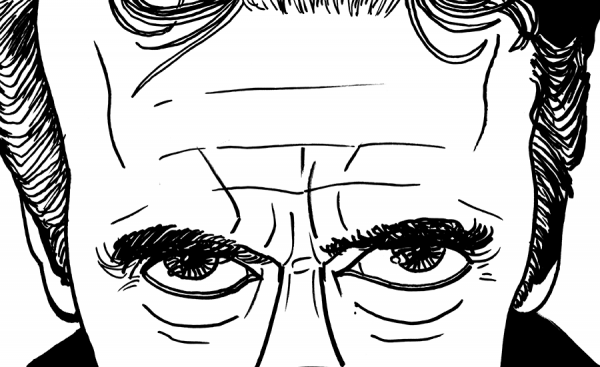
Quick Sharpie sketch, sans roughs, of Peter Capaldi's eyebrows.
Not terrible, but still needs work - the eyebrows are more angled in the realz, and the eyes are more round, and there are subtleties to the hair and temple that need work.
Nevertheless, drawing every day.
-the Centaur
Black Saturday commemorates the day that Jesus lay in the tomb. If the Crucifixion is the great sacrifice, and the Resurrection is its great reward, the Tomb is the liminal space between, the moment between before and after, the place in time and space where Death reigns as supreme as it ever will.
Death is a funny thing, and does funny things to people's brains. Some people fear it; others welcome it, perhaps grudgingly. Some seek it; some try to move heaven and earth to avoid it. Strangest of all is what death does to otherwise rational people's perceptions of reality - of what is "ontologically possible."
Nicholas Meyer, director of Star Trek II: The Wrath of Khan, in which Spock - SPOILERS - dies, is said to have complained that Star Trek III: The Search for Spock wasn't realistic, because Spock - SPOILERS - comes back from the dead, along the lines: "It's a fantasy - people can't come back from the dead."
Yeah, well, people used to not fly in space either, Nick, but you still directed a movie about it, almost a decade and a half after humanity successfully landed on the moon. A friend of mine had a similar complaint about another movie because "coming back from the dead isn't possible."
Put bluntly, this isn't a rational analysis. This is treating death as Death with a capital 'D', elevating it into a permanent part of the City of Myth, like Neil Gaiman's Endless or Terry Pratchett's Four Horsemen. But Death isn't a perky, photogenic goth or a cloak-wrapped figure made wholly of bones.
We are three-dimensional patterns persisting through four-dimensional space-time, and, one day, those self-maintaining patterns may cease to maintain themselves and dissolve. Put simply, someday, everybody dies. But those patterns, one day, might be restored, by any number of methods.
Despite the cliche, neither death nor taxes are an unavoidable part of the structure of the universe, and that should be obvious if you engage in informed speculation about possible futures. Thinking of taxes alone, we might have a universal basic income in a robotically-powered post-scarcity utopia.
While the resurrection method in Star Trek III leaves a lot to be desired - it's beyond scientific speculation and fully in the realm of "treknobabble" - if you're already talking about starships traveling faster than light crewed by psychic space elves, please, don't start talking to me about the realism of Death.
Death doesn't deserve its capital letter. One day, we might scientifically conquer it - I wear a cryogenic suspension bracelet around my wrist for precisely this purpose - and, to Christians, Jesus has already conquered it, with His ministry providing the gateway of belief to His death and resurrection.
Black Saturday remembers this time. One day, death will reach us all - it is inevitable, even though it might be reversible - but the promise of Jesus's resurrection is the promise that one day we all may go beyond the dissolution of our physical patterns and into a new mode of existence that is eternal.
-the Centaur
Pictured: the eyebrows of Peter Capaldi, known for playing a man who knows something about coming back from the dead.
Just added roughly 250 words today. An excerpt, all first-drafty stuff:
I strode up to the silver coffin, the parallel blades of the Salt Chamber Sword singing hungry in my hand. The closer I got, the more it vibrated, testing my grip and rattling my teeth. The coils of my Dragon looped out around me in a spiral, pushing the guards back; her wings covered me protectively, but none of them were fool enough to try shooting again.
“Alright, alright,” I murmured to my sword. “I’ll give you what you want.”
I drew the Salzkammergutschwert down the length of the silver coffin.
The black tuning-fork blade squealed through the thick metal case as easily as drawing a pen across paper, except the line left by this writing instrument was a hot metal gash. The ancient faerie blade jerked and popped in my hand, and I struggled to control it so I didn’t harm the occupant—oh, that precious occupant!—as the screeching Salt Chamber Sword popped clamps and cut hinges alike, bits of hardware clattering to the floor in glowing showers of sparks.
My arm completed its motion. The Salzkammergutschwert quit singing. Something thudded against the lid, which shuddered, jumped, then flipped aside, the thin hands of the occupant clawing for the air. A slender child rose from the prison, screaming, fanged, eyes glowing, and for the briefest snap-second I imagined it might have been Cinnamon.
Then the starved vampire child’s gaze fell on me—and he lunged.
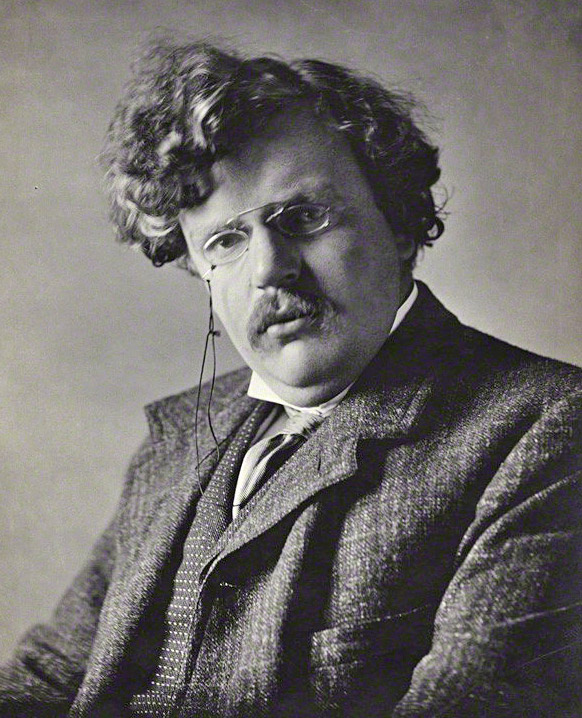
G. K. Chesterton. Got the landscape of the face a bit off, down and a bit twisted; I guess I didn't really believe he had that much of a double chin. (The error is even more obvious mirror-reflected; time to start drawing these sketches upside-down again).
It's really hard to do these quick sketches with no roughs, but doing so is forcing me to pay close attention to what I'm doing and to plan ahead, even on a blank canvas with few to no guidelines (I did draw a box, cropped out of this picture).
Still, drawing every day.
-the Centaur
The Crucifixion puts everything into perspective. No matter what we face in life, no matter how bad things get, it’s hard to top an innocent man being tortured to death for telling the truth in a political kangaroo court - which, essentially, is the story of Jesus’s death.
This is a strange comfort for me when I think I’ve had a bad day. No matter what minor mishap has triggered my internal narrative and constant catastrophizing, it really never is as bad as what Jesus had to go through to protect us from the consequences of our own sins.
I feel strange even writing this. It seems like this is something that should be treated with heavy reverence - the Crucifixion is the most important event in Christian theology, and in that view, is the most important thing to ever happen in all of Creation itself.
But the reverence of a prayer to our God - as regurgitated performatively to other true believers, which is what all audible or written prayers are, performances - leads to language which is the opposite of clear explanation and honest sharing with people who do not yet believe.
Think of the exaggerated “JAY-zuss” you hear from televangelists. Jesus actually tells us not to pray in public: “When you pray, you shall not be as the hypocrites, for they love to stand and pray in the synagogues and in the corners of the streets, that they may be seen by men.”
Or think of the constant praises that Muslims offer to Allah in religious contexts: Allah, may He be glorified and exalted”, “Muhammad, upon him be prayers and peace.” In a sense, this is a performance, something which reads the best to other believers.
But in another sense, these praises and exaggerations are not a performance. While I’m leery of taking much from any other faith into Christianity, especially Islam, which C. S. Lewis described as “Christianity’s greatest heresy,” one thing that I agree with Islam about is submission to God.
Islam means submission to God, and as part of that submission, Muslims believe in gratitude, which leads to thanks and praise to God, and Muslims believe in scripture, citing verses from the Qur’an as a reason to bestow on Muhammad all those honorifics.
Similarly, to a televangelist, belief in Jesus is the most important element of anyone’s life. He’s their guide, their Savior, their close personal friend, even if He is invisible, and every time they say His name, they want to emphasize His importance to them.
In Christian theology, Jesus is God, existing before and outside Creation; but Jesus is also human, making Him the most important part of Creation - and the Crucifixion, Death and Resurrection the most important event.
That’s why the Crucifixion looms so large: in a sense, it is both everywhere and at the center of things. The authors G. K. Chesterton and C. S. Lewis both had a genius for metaphor when talking about the Risen Lord, often using the imagery of the Sun when they did so.
That’s appropriate. The Earth turns, and sometimes, its weight and bulk seems like it blots out the Sun. But the Sun is always there, still burning, shining its light into every part of the darkness, and it will be waiting for us when it turns around again.
The light of the Sun predates the formation of the Earth, which took its current shape after the Mars-sized planet Theia slammed into the proto-Earth (which in my novels I call Hyperion), and it will shine after the Earth is gone, consumed in the swelling of the Sun into a red giant.
This is one reason I’m not so worried about the discrepancies between the Bible and modern cosmology: the world wasn’t made in six days and it won’t end in seven trumpets, but echoes of those spiritual truths can be found over and over again, fractally, throughout the universe.
And the largest of those looming truths is that of the Son. Like the Sun, He was here before us, His light shaped us and helped us grow, and He will be here long after we’re gone, collecting the dust of the old world and refashioning it into a new one.
So today, the echoes of the Crucifixion wash over us; tomorrow, that of his Death; the day after, that of his Resurrection. And the lesson, even for our worst suffering and our darkest hours, is that suffering, followed by death, is a mere echo of a process that ends in Resurrection.
Taking on Dakota Frost, Book 7. Added 305 words. A raw unedited excerpt (including some prior text from Tuesday for context):
Agent Grant, commander of the MIRTH unit—if I remember my DEI alphabet soup, that stands for something twee like Magical Incident Response Transportable Headquarters—turned towards us, turned off his earpiece, and turned completely serious.
“She’s right, this is an operation,” he said evenly but firmly, his full beard making him look grimmer and sterner than he already sounded. “It doesn’t matter if you two are the only ones on deck. If you’re not ready, I am not sending you in.”
“I fought in the Great War, you ridiculous pup!” But Nyissa’s voice quavered. I knew she was not particularly brave; but what was up? More than just anger at being awakened before the crack of sunset, I think. “But I’ll not be going in at all, I think—”
My hand fell on her knee. “And no-one thinks less of you for it,” I said.
Nyissa sagged a bit. Grant raised his eyebrows at me.
“So we have one operative,” he said.
“We have one operative,” Philip said.
“And it’s Red Sonja here,” Grant said.
“Hey!” I said. “Just because I have a metal bikini and a sword—”
“Outclassed by my own supposed sub,” Nyissa said. “Some bodyguard I am.”
“Different kind of discipline,” Grant said, looking between us. “Frost, you ready?”
“As much as I ever am,” I grumbled, squinting at the church. “What can you tell me?”
Quick sketch of PKD. His face got a bit distorted, but it's not terrible, methinks.
Also, I did the following sketch on a box of the roleplaying game Lace and Steel, which is "centaurs and friends in the age of the Three Musketeers." I'd lost the original box somehow - I seem to recall it being mis-sized or having something wrong with the cover - and the generic white box was easy to lose in the shelves. So I quickly flipped through the character book - AMAZING art by Donna Barr, as I recall - and drew, without roughs, the following character on the cover of the white box, so I could find it later:
Centaurs and rapiers and Sharpies, oh my.
Drawing every day.
-the Centaur
[For those tuning in from yesterday, when I wasn’t sure if I would continue these essays: I’m “at work” waiting - wading, really - through recompiles and reinforcement learning policy evaluations, so I might as well write my essay while my virtual robot chugs along.]
There’s a great bit in the surprisingly dark Doctor Who holiday episode “The Last Christmas” where someone says they don’t like Christmas because every Christmas is the last Christmas for someone, and might be the last Christmas for you in particular.
That got me thinking about the Last Supper. Today is Maundy Thursday, the last day of Lent proper. Working backwards, Easter commemorates the Resurrection, Black Saturday the Tomb, Good Friday the Crucifixion, and Maundy Thursday the Last Supper.
At the Last Supper, the final meal Jesus shared with His followers prior to His death, Jesus ritually broke bread and instituted the Eucharist, predicted his betrayal by Judas, and may also have washed the feet of the Apostles in a show of servant leadership (the Gospels differ).
While the Crucifixion and the Resurrection are critically important in the salvation of humanity (and the resolution of the problem of evil), the Last Supper and the institution of the Eucharist are critically important to the spiritual lives of Christians everywhere.
In it, Jesus broke bread and said, “This is my body, which is for you: this do in remembrance of me,” and after supper, he shared a cup, saying ”This cup is the new covenant in my blood: this do, as often as ye drink it, in remembrance of me.”
This is big league stuff. That text isn’t from the Gospels: it’s from First Corinthians, one of the most reliable books of the New Testament: Paul’s authorship isn’t really disputed, it’s found in the oldest copy of the Bible (the Codex Vaticanus), and it dates to like 50ish AD.
As we discussed earlier, First Corinthians documents events happening in the first few years after Jesus’s Crucifixion - but Paul says he got his info about the Last Supper from Jesus Himself, with the words: “For I received of the Lord that which also I delivered unto you…”
My point is twofold. First, if you’re a skeptic not super interested in Christianity, sometimes you hear arguments that “Christianity” is a later invention and that maybe Jesus didn’t even exist. This is bunk: key elements of Christian worship were rolling only a year or two after He died.
You may not believe that has any meaning, of course. Christian theology itself says mysteries must be taken on faith. If you’re not willing to do that, that’s your prerogative. Just, please, don’t work backwards from your disbelief to pretend verifiable things aren’t true to give you cover.
My second point is this: the Eucharist is a key part of Christian worship. I know that many Protestants don’t place the same emphasis on the sharing of bread and wine that Catholics and Episcopaeans do, but according to Paul, Jesus thought it so important He told Paul personally.
[I want to say that Jesus knocked Paul off His horse to tell him, but I doubt that’s actually true.]
The celebration of the Eucharist, and the transformation of the bread and wine into the body and blood of Jesus - whether you think that’s literal transubstantiation, spiritual transformation, or simply holy metaphor - are the key conduits we have to receive spiritual grace in worship.
Jesus instituted the Eucharist at the Last Supper directly with His Apostles, and re-emphasized it in-person after His death and Resurrection to the Apostle to the Gentile, Paul, and His Church is still celebrating this 2,000 year old institution today.
Philip K. Dick once came to believe that we’re all trapped in 70 A.D., waiting for the return of Jesus. I certainly don’t believe that, but there is something timeless about the elements of Christian worship, which makes the rituals spiritually appropriate for all times.
So, regardless of whether you’re an active Christian, a lapsed backslider, or an interested outsider, you should attend a Mass sometime. One day, your supper may be a Last Supper, and it will be good to have shared that last meal - metaphorically, spiritually, actually - with Jesus.
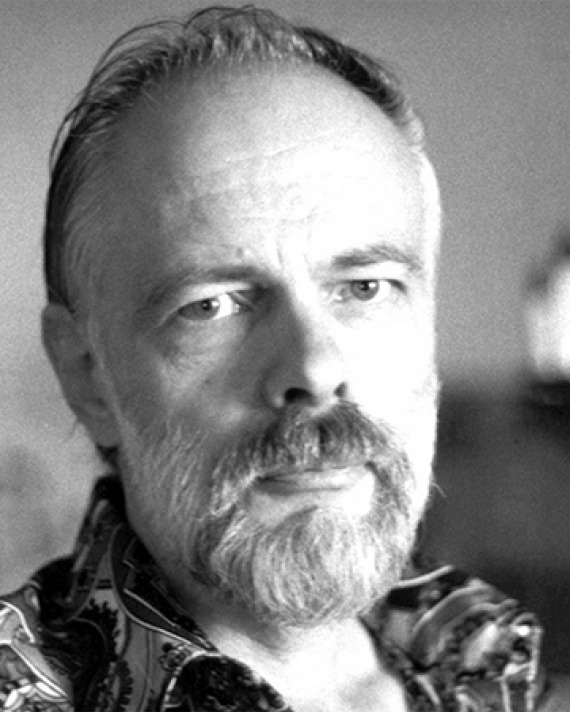
-the Centaur Pictured: Philip K. Dick, who was quite the strange cat.

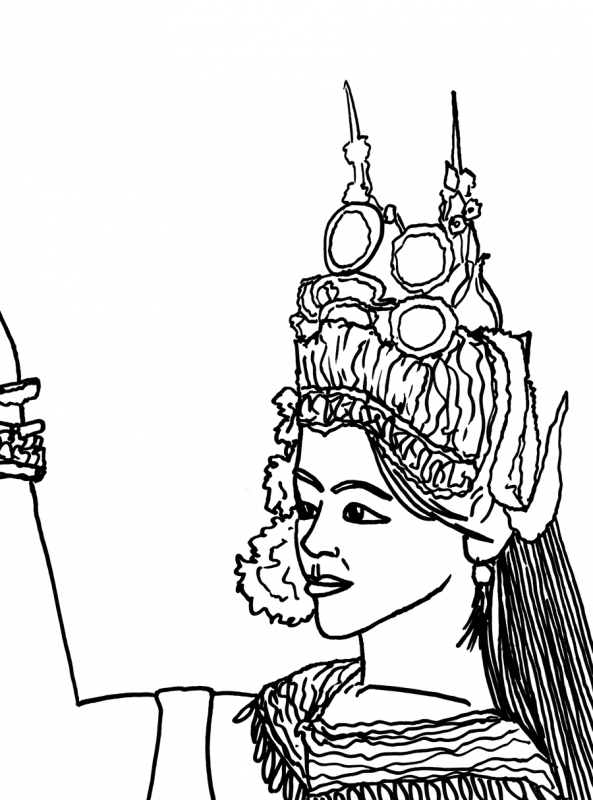 Quick Sharpie sketch of an Apsara dancer, a mythical spirit appearing in Southeast Asian cultures. Came up in some tangential research for a scene in Dakota Frost #7, SPIRAL NEEDLE, but decided this was too rich a mine of mythology for a throwaway line, so I ended up using something else.
 Drawing every day.
-the Centaur
Oh, and on Camp Nano: just got ~1000 words so far. Not sure why I got fewer words when I had more to do yesterday than today. Perhaps I need to break more paintings?
Drawing every day.
-the Centaur
Oh, and on Camp Nano: just got ~1000 words so far. Not sure why I got fewer words when I had more to do yesterday than today. Perhaps I need to break more paintings? 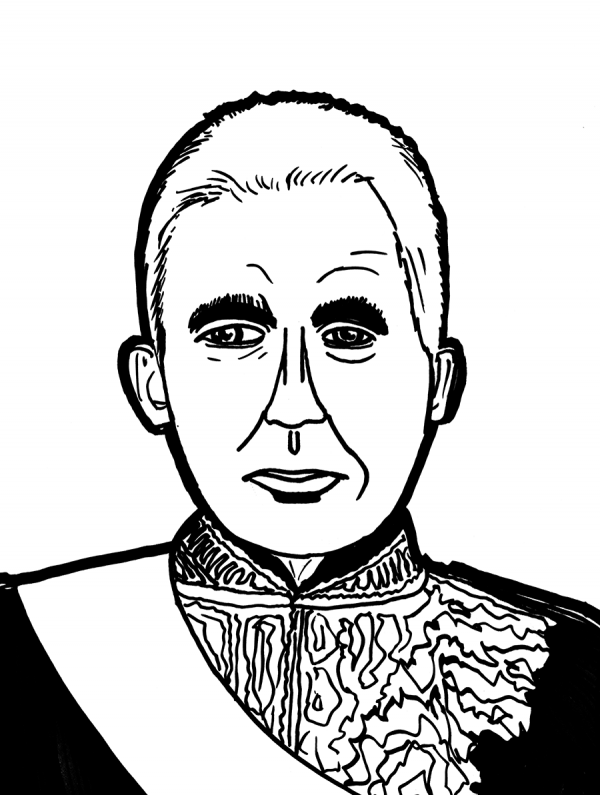 Quick Sharpie sketch of King Mongkut of Thailand, the famous king from The King and I, and also, not a bad mathematician and astronomer. Tangentially came up in today's Dakota Frost Camp Nano adventure (2300+ words today, still behind, but catching up). The real guy's head is more egg-shaped, and the left eye has an iris placement mistake: we are near the limit of what I can do with a Sharpie, but it's still the best tool I have to keep myself drawing when it's super late and I'm tired.
 Drawing. Every. Day.
-the Centaur
Drawing. Every. Day.
-the Centaur 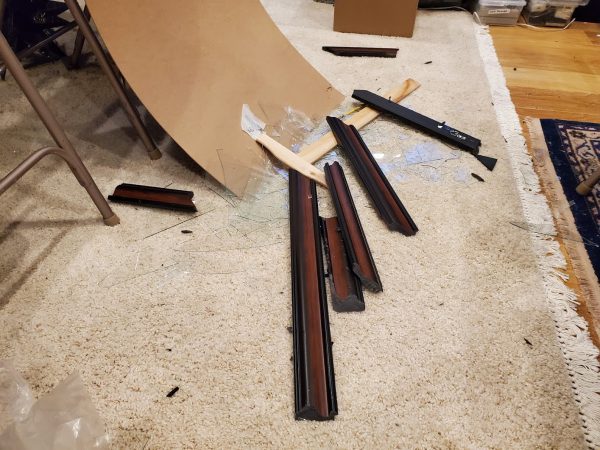 I do not like this picture frame. While the wood border is beautiful and it handsomely frames posters, the attachment is an awkwardly placed pair of hooks, roughly 1/3 of the way down the frame and an inch inside the outer edges, making it almost impossible to hang levelly, or evenly, or at the right height.
In fact, I'd say that the placement is so awkward it actively thwarts "measure twice, cut once" in that on at least three or four different occasions (with two different poster frames, apparently not having learned my lesson trying to level the first one) I have measured the hook placement twice, or more than twice - most recently, using two different rulers, including a t-square - and after double and triple checking it, finding that the hooks are too far apart, or once moved closer, are not quite level, or, once leveled, are a whole inch to the right from where they should be, despite the fact that you measured the center and the hooks both against the sides of the wall upon which it was going, so, what the hell, Danielewski?
I do not like this picture frame. While the wood border is beautiful and it handsomely frames posters, the attachment is an awkwardly placed pair of hooks, roughly 1/3 of the way down the frame and an inch inside the outer edges, making it almost impossible to hang levelly, or evenly, or at the right height.
In fact, I'd say that the placement is so awkward it actively thwarts "measure twice, cut once" in that on at least three or four different occasions (with two different poster frames, apparently not having learned my lesson trying to level the first one) I have measured the hook placement twice, or more than twice - most recently, using two different rulers, including a t-square - and after double and triple checking it, finding that the hooks are too far apart, or once moved closer, are not quite level, or, once leveled, are a whole inch to the right from where they should be, despite the fact that you measured the center and the hooks both against the sides of the wall upon which it was going, so, what the hell, Danielewski?
 Also, this frame does not well protect posters when thrown across the room. But it does make a very satisfying crashing sound, and the remains of the frame are well suited for pulling a 2001: A Space Odyssey monkey-smashing-the-bones-with-a-club re-enactment.
Sigh. "I don't have an anger management problem, just an anger problem." Sigh. And it's not like it was a great poster, but, hell, it's impossible to replace. And I checked.
Time to find a new frame - with a proper wire or central attachment, either of which enables you to add a single central hook, and to slightly adjust the angle and centering of the picture.
"We call it living."
-the Centaur
Also, this frame does not well protect posters when thrown across the room. But it does make a very satisfying crashing sound, and the remains of the frame are well suited for pulling a 2001: A Space Odyssey monkey-smashing-the-bones-with-a-club re-enactment.
Sigh. "I don't have an anger management problem, just an anger problem." Sigh. And it's not like it was a great poster, but, hell, it's impossible to replace. And I checked.
Time to find a new frame - with a proper wire or central attachment, either of which enables you to add a single central hook, and to slightly adjust the angle and centering of the picture.
"We call it living."
-the Centaur
 Sharpie sketch of Peter Capaldi from the Doctor Who episode "The Pilot," which is lightweight in tone and stakes but stands up surprisingly well to repeated viewings, especially Capaldi's knockout speech about time in the beginning, the Doctor's amazing office, and the introduction of the TARDIS.
The sketch is ... OK. Slightly squashed, and I'm still doing eyes too big (likely a function of the Sharpie sketches, which put a minimum size on the features I can draw). But it ... kinda looks like him? His head's not turned the right way, and I still have trouble getting the "landscape" of the face right.
Sharpie sketch of Peter Capaldi from the Doctor Who episode "The Pilot," which is lightweight in tone and stakes but stands up surprisingly well to repeated viewings, especially Capaldi's knockout speech about time in the beginning, the Doctor's amazing office, and the introduction of the TARDIS.
The sketch is ... OK. Slightly squashed, and I'm still doing eyes too big (likely a function of the Sharpie sketches, which put a minimum size on the features I can draw). But it ... kinda looks like him? His head's not turned the right way, and I still have trouble getting the "landscape" of the face right.
 Still, drawing every day.
-the Centaur
P. S. Only got ~50 words on Camp Nano, but I feel good about those words, as they're stitching parts of a scene together so I can really roll with it tomorrow. 11K words behind, but I've been behind worse.
Still, drawing every day.
-the Centaur
P. S. Only got ~50 words on Camp Nano, but I feel good about those words, as they're stitching parts of a scene together so I can really roll with it tomorrow. 11K words behind, but I've been behind worse. 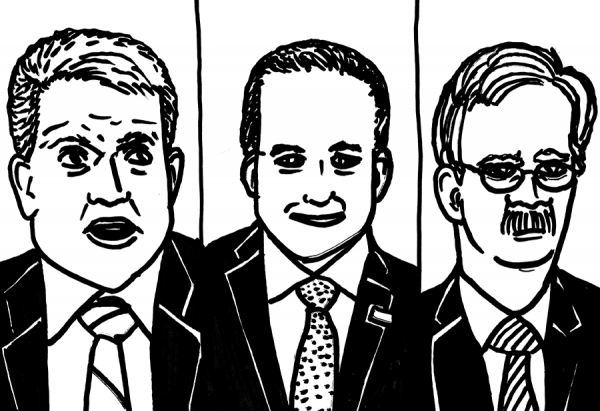 Quick sketch - much of it, just a dry erase marker, not even a Sharpie - on Strathmore 9x12. Not completely terrible for the first two, but I sure did squeeze Bolton's head. Sorry, man.
 Drawing every day.
-the Centaur
P.S. Only 250 words with Camp Nano, but then, I still feel that maybe-vaccine headache, so, ugh.
Drawing every day.
-the Centaur
P.S. Only 250 words with Camp Nano, but then, I still feel that maybe-vaccine headache, so, ugh. 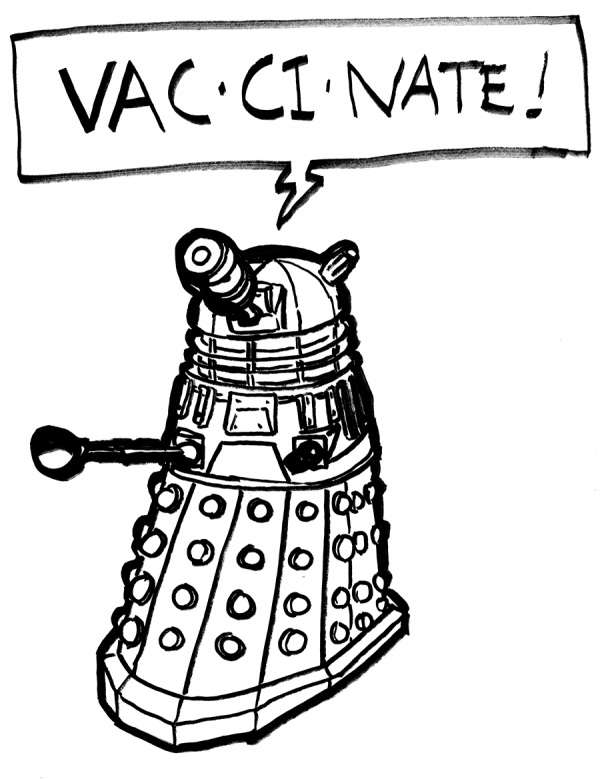 So! I got my first shot today, and other than a little arm soreness, a headache which may or may not be related, and some tiredness which may just be because it's 3:21am, I have not yet had any ill effects. I was totally lied to by my album covers though, and have not been able to hack into Bill Gates' secret global network through the tiny implanted computer chip in the vaccine, maybe because neither exists.
 Ouch. First picture failed for some reason, so we get this charming shot of the needle coming OUT rather than going in. But it didn't really hurt at all, maybe because I was fiddling with my camera. Our Dalek friend below is proud that he was able to contribute his catchphrase to our cause:
 ~500 words on Camp Nano, still behind, but I am too wiped to write more.
Drawing, writing, being a good citizen every day.
-the Centaur
~500 words on Camp Nano, still behind, but I am too wiped to write more.
Drawing, writing, being a good citizen every day.
-the Centaur 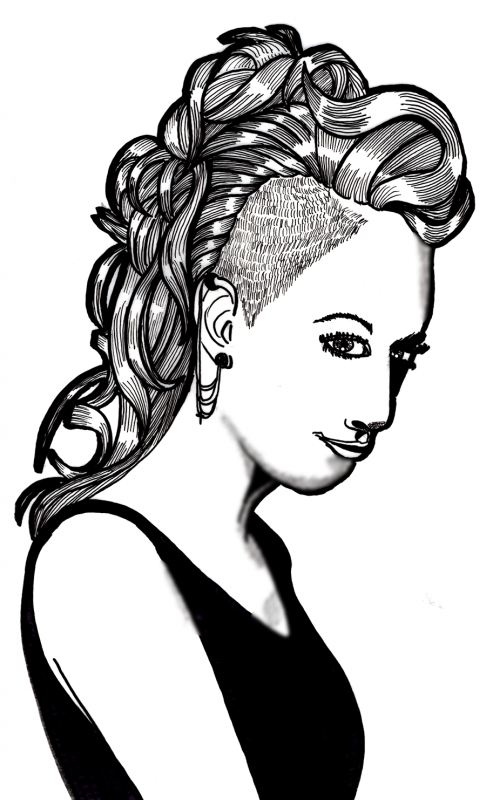 Character study for a Dakota Frost picture, inks on vellum over a roughs with inks and blue on Strathmore 11x14. Required some Photoshop surgery as I didn't anticipate how the shading would riff off the hair and make it look like the model had a beard. Compared to the original, the forehead is too high and the nose too large. Back to practicing, sigh. I think the below is from the
  Drawing every day.
-the Centaur
P.S. Got 600+ words on Camp Nano. Picking up speed, more in a bit.
Drawing every day.
-the Centaur
P.S. Got 600+ words on Camp Nano. Picking up speed, more in a bit. 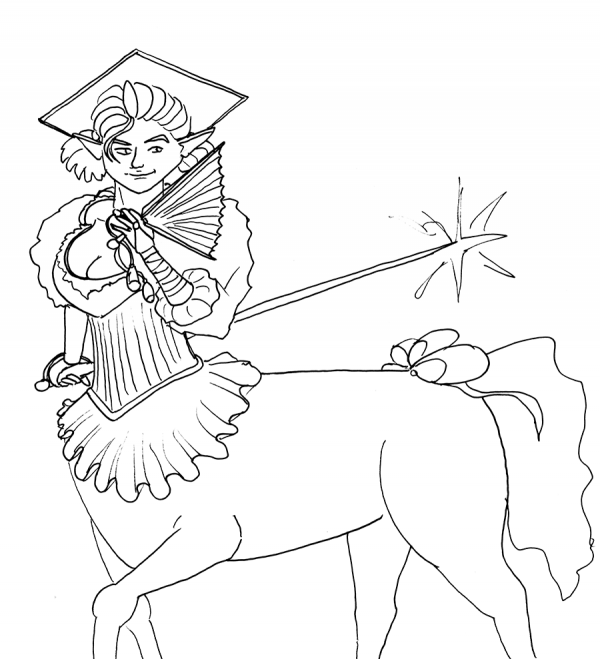 Aborted character study from the Lace and Steel box cover I did with a Sharpie. I think the drawing is improved, but the composition that I originally did straight on the box is too hard to work with. Better to start over with something that I can use to show off the various parts of the drawing like the rapier and the weird double-bladed fan/shield/thingy. This composition, of course, was totally off-the-cuff:
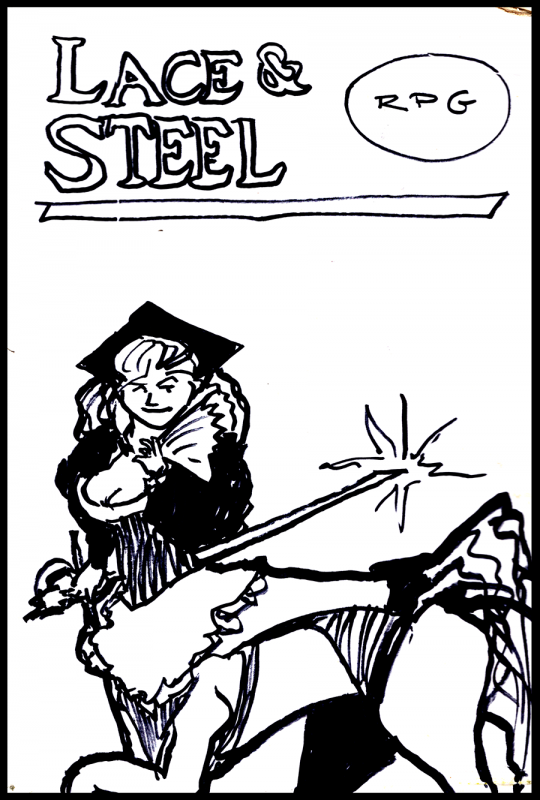 Based on the Lace and Steel RPG character book cover: you can see the inspiration, but the off-the-cuff composition was too slavish in recreating some of the elements. I need to start over with a wholly new composition to get the effect I want with this drawing.
 Apparently you can buy Lace and Steel
  Quick Sharpie sketch of Dakota Frost, based on the model from the BLOOD ROCK / LIQUID FIRE covers. I tried to do this upside down at first, to "see" it better, and OH BOY it did not turn out well - the landscape was all off. So this is an even quicker sketch, because I need to get to bed early.
 Also, Camp Nano only got ~150 added words, but again, I need sleep. Rough draftiness:
 Quick Sharpie sketch, sans roughs, of Peter Capaldi's eyebrows.
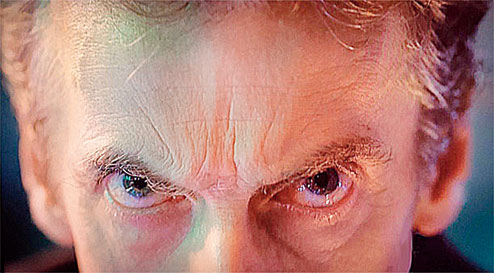 Not terrible, but still needs work - the eyebrows are more angled in the realz, and the eyes are more round, and there are subtleties to the hair and temple that need work.
Nevertheless, drawing every day.
-the Centaur
Not terrible, but still needs work - the eyebrows are more angled in the realz, and the eyes are more round, and there are subtleties to the hair and temple that need work.
Nevertheless, drawing every day.
-the Centaur  Just added roughly 250 words today. An excerpt, all first-drafty stuff:
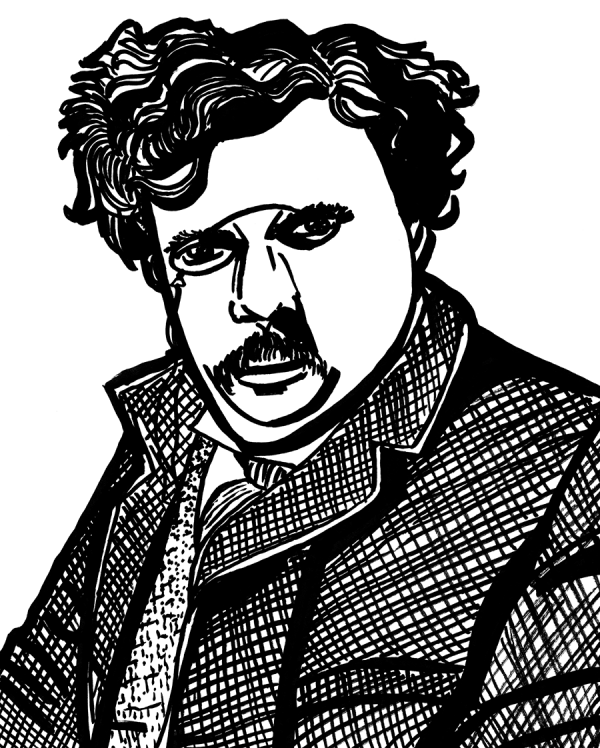 G. K. Chesterton. Got the landscape of the face a bit off, down and a bit twisted; I guess I didn't really believe he had that much of a double chin. (The error is even more obvious mirror-reflected; time to start drawing these sketches upside-down again).
It's really hard to do these quick sketches with no roughs, but doing so is forcing me to pay close attention to what I'm doing and to plan ahead, even on a blank canvas with few to no guidelines (I did draw a box, cropped out of this picture).
G. K. Chesterton. Got the landscape of the face a bit off, down and a bit twisted; I guess I didn't really believe he had that much of a double chin. (The error is even more obvious mirror-reflected; time to start drawing these sketches upside-down again).
It's really hard to do these quick sketches with no roughs, but doing so is forcing me to pay close attention to what I'm doing and to plan ahead, even on a blank canvas with few to no guidelines (I did draw a box, cropped out of this picture).
 Still, drawing every day.
-the Centaur
Still, drawing every day.
-the Centaur 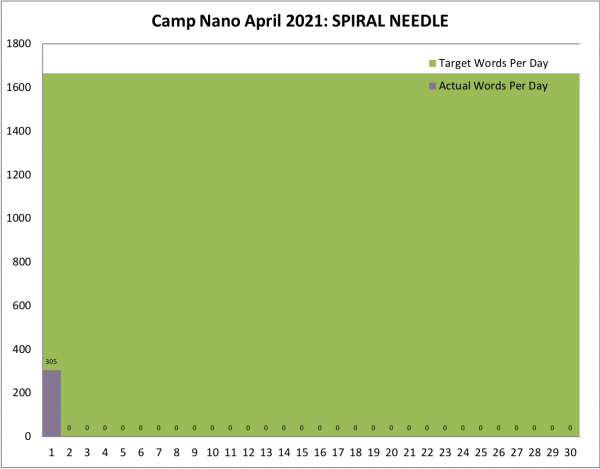 Taking on Dakota Frost, Book 7. Added 305 words. A raw unedited excerpt (including some prior text from Tuesday for context):
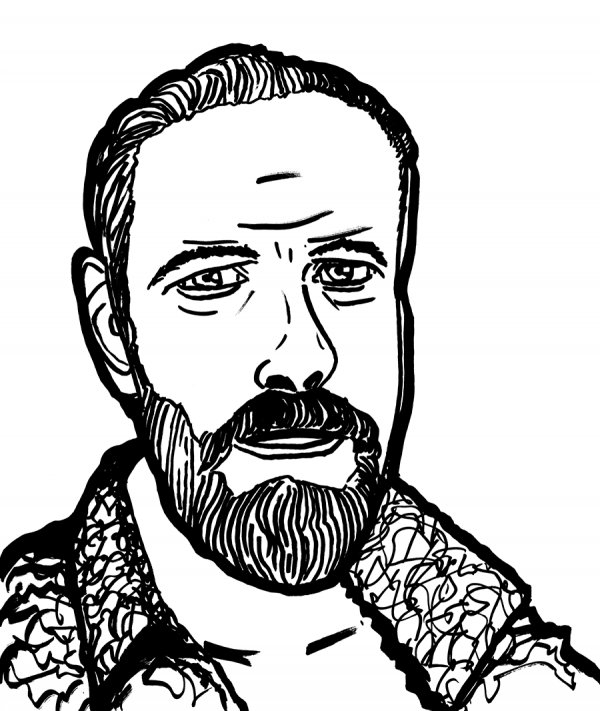 Quick sketch of PKD. His face got a bit distorted, but it's not terrible, methinks.
 Also, I did the following sketch on a box of the roleplaying game Lace and Steel, which is "centaurs and friends in the age of the Three Musketeers." I'd lost the original box somehow - I seem to recall it being mis-sized or having something wrong with the cover - and the generic white box was easy to lose in the shelves. So I quickly flipped through the character book - AMAZING art by Donna Barr, as I recall - and drew, without roughs, the following character on the cover of the white box, so I could find it later: