Press "Enter" to skip to content

Gödel, Escher, Bach: An Eternally Inspiring Tome

centaur 0

IMG_20120301_212447.jpg

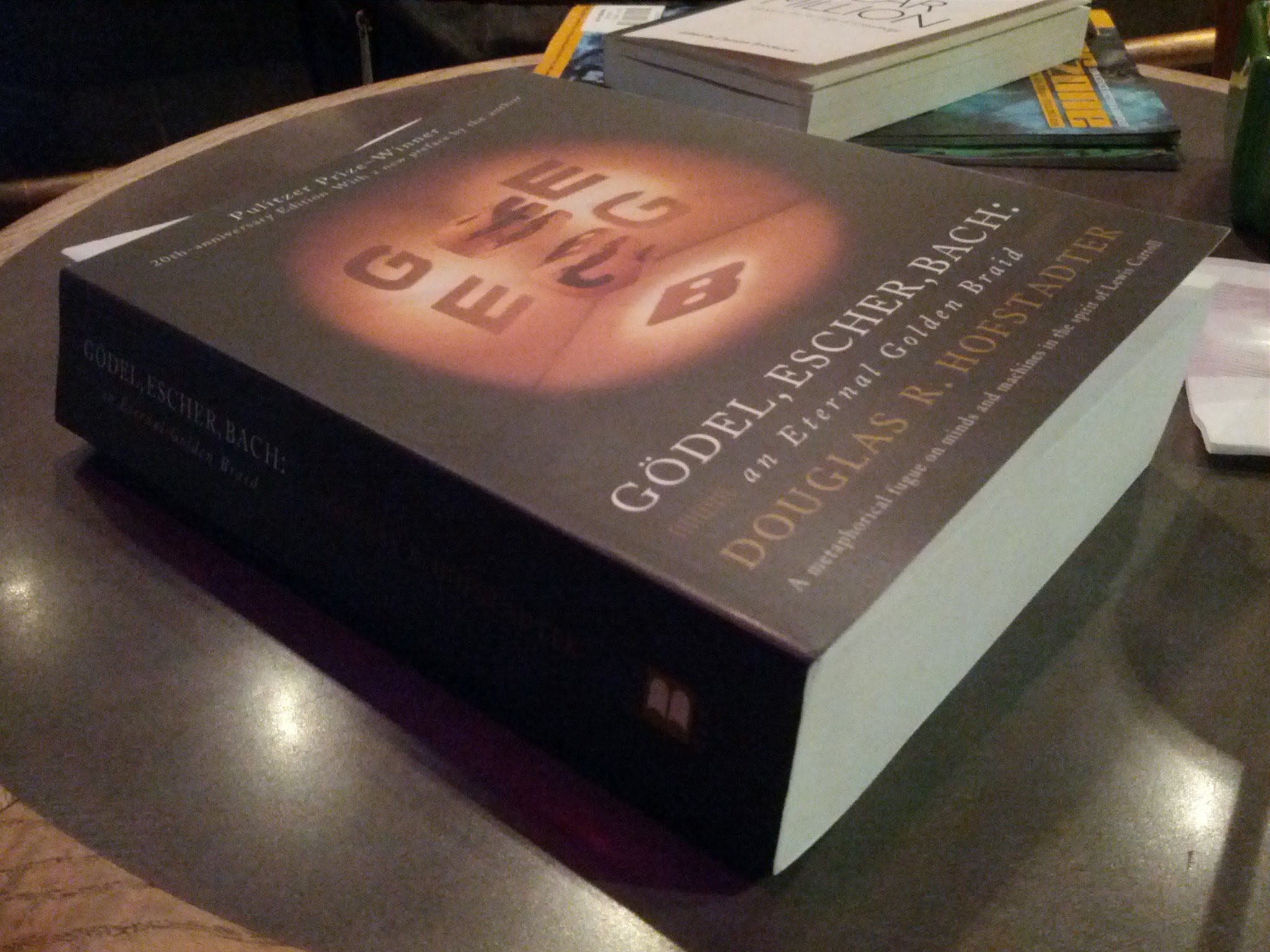
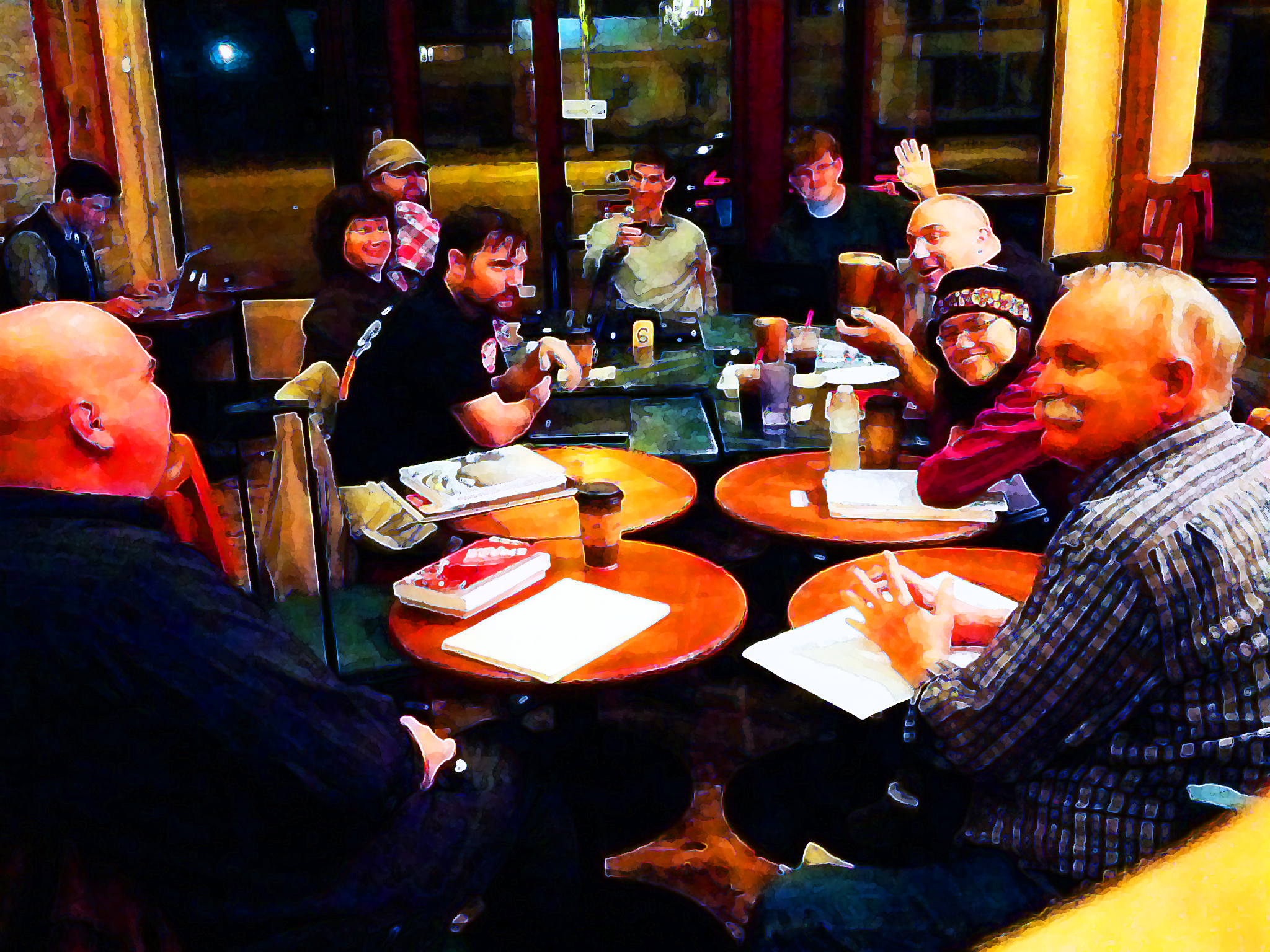
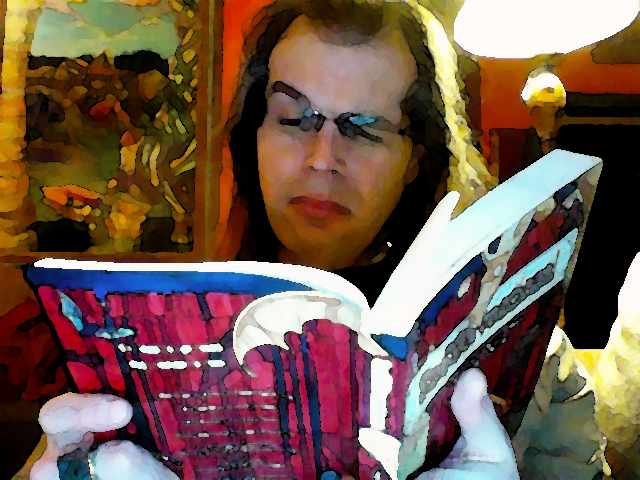
This is the book that got me started on artificial intelligence ... and now has inspired me again to attack my craft with greater vigor. I was writing an essay for The Centaur's Pen column for the Write to The End site and realized it depended on a concept - true, but unprovable theorems - which isn't in wide circulation. So I've started an essay on that topic for this site, and decided to go reread Gödel, Escher, Bach, the book which introduced me to the concept.

At the writing group, the topic of the essay and Gödel, Escher, Bach came up, and we all started discussing how intricate, how rewarding, and how friendly Hofstadter's immense tome is. It's a work of genius that continues to stagger me to this day. And then my writing friends told me that in the new edition there's a foreward with the entire back story of how the book came to be.

I picked it up last night, and reading the new intro I was gratified to learn that I understood his basic thesis - that conscious intelligence arises from bare matter by grounding its symbols in correspondence to reality, then inexorably turning that grounding inward into a spiral of self-reference with no end. Hofstadter and I might disagree about what's sufficient to produce conscious intelligence, but we'd just be quibbling about details, because I think he nailed a necessary component.

But after the intro of the foreword, when I began to read the story of how this 750 page long Pulitzer Prize winning book started its life as a 20 page letter that Hofstadter decided needed to be turned into a pamphlet, I was stunned.

He wrote it in 5 years.

Well, it actually took 6 to complete, because he typeset it himself---through a happy-but-not-at-the-time accident, twice---producing an amazing work that was polished far beyond his original intention. But he wrote it while in graduate school, while teaching classes, while traveling cross-country. He put it down for a bit finishing his PhD thesis itself, but basically the book's a white hot blaze of inspiration polished to pure excellence.

I'm inspired, all over again.

-the Centaur

I have to fall in love with a story

centaur 0


IMG_20120229_201753.jpg

My fundamental philosophy about writing is very simple: I want to have fun, I want my readers to have fun, and I hope, if we're both lucky, that they learn something.

I've long understood that the third part of this troika, the learning, is both a product and a cause of the mammoth amount of research I do for even the simplest pieces. (And yes, I did look up Fat Albert on Wikipedia just to write the first sentence of this supposedly throwaway blogpost).

I've also understood that the second part, my readers having fun, is why I need to constantly work to hone my craft. That's why I don't self-publish, but work with a publisher with a strong editor who serves as a gatekeeper and holds my work to a high standard. That's why I attend a writing group; that's why I work with beta readers; and that's why I'm writing a monthly column on writing called The Centaur's Pen over at the Write to the End blog.

But only tonight did I realize the first part is why I need to fall in love with my own stories. When I'm writing a story, I can power through it if I have to, daydreaming sequences inspired by music, character and knowledge, weaving those scattered fragments together with the rules of plot and conflict, and winnowing the chaff until what's left is a cohesive whole.

But I'm better off if I fall in love with a story. I need characters to spring to life in my books and derail them, like Cinnamon in FROST MOON or Beneficenitor in HEX CODE (in progress). I need settings l fall in love with, like the Werehouse in FROST MOON and BLOOD ROCK or the Werehold in HEX CODE. I need vehicles on which I want to lavish detail, like the doomed Abadulon in DELIVERANCE (unreleased) or Independence in MAROONED (forthcoming). And I need scenes that I desperately want to write, like Dakota's challenging encounter with Transomnia in FROST MOON or her somewhat different encounter with the Streetscribe at the end of BLOOD ROCK.

I realized this need for love of my own work when I caught myself daydreaming about the first encounter of the Freemanship Independence with a mammoth Dresanian starship near the end of BESIEGED, the third book I have planned in the Seren series. A clip of "The Planet Krypton" shuffled through my iPod, I realized how the aftermath of the climactic battle could be shot in the movie ... and then began daydreaming how all the characters would react to what's happening.


IMG_20120229_204713.jpg

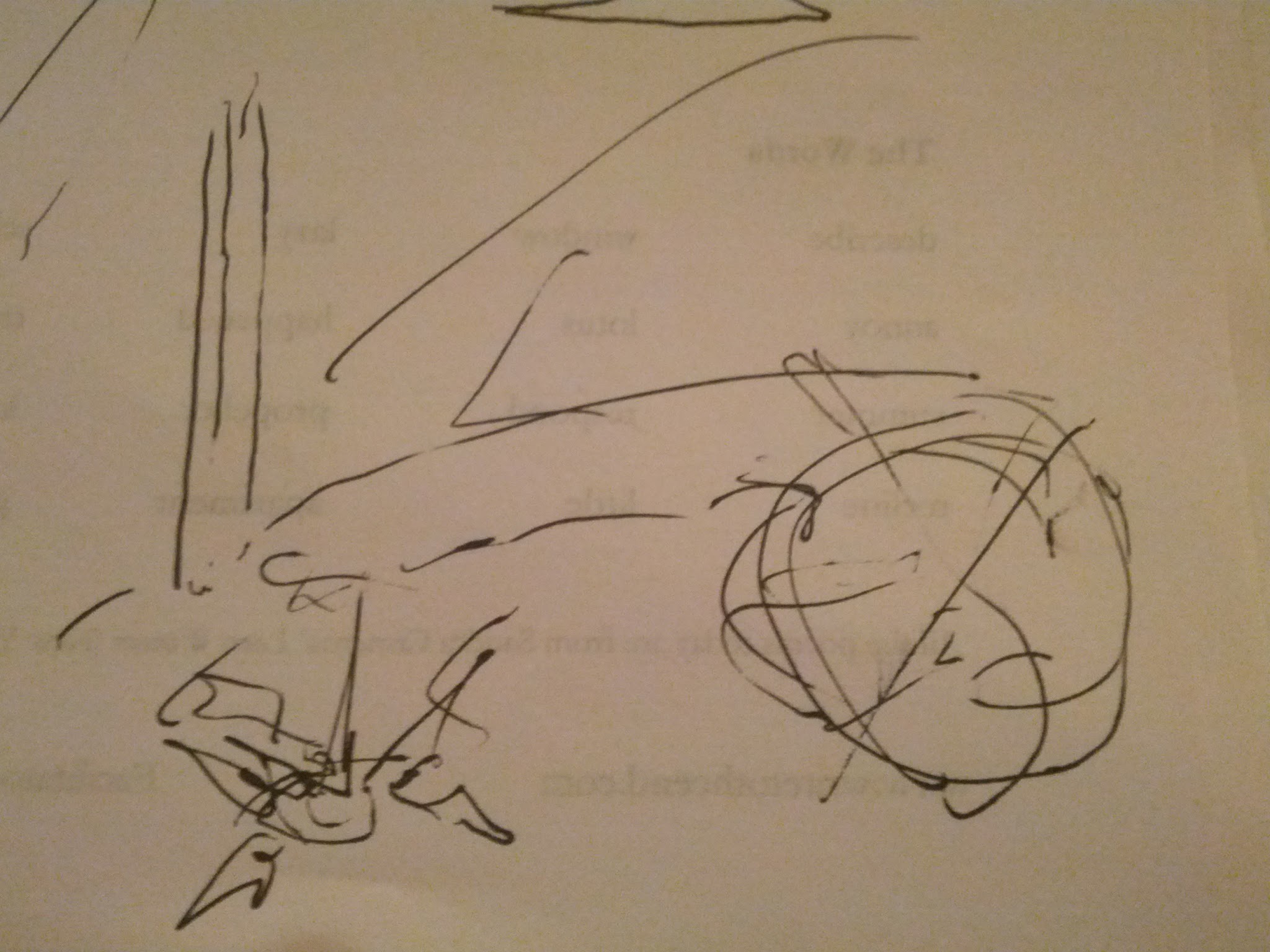
Visualizing the Independence docking against the backdrop of a giant door like a Michael Whelan painting, a scenario I can visualize so strongly I was inspired to scribble it down on the spot, the question occurred to me: "Would the hero Serendipity finally secure sanctuary for her people ... or would the war criminal Seren finally be called to account for her crimes?" And how would the crew of Independence react if someone else came to claim someone they'd chosen to claim as their own?

That's falling in love with your story: when you think about it so much that random clips of music inspire you to write scenes, but you don't just visualize them, you are forced to think through how all the characters will react to what happened, how it fits their own personalities, the setting, the story.

That's what you should strive for in your writing: a love for your story that goes all the way down to its bones.

-the Centaur

The Big Apple

centaur 1

IMG_20120217_134956.jpg

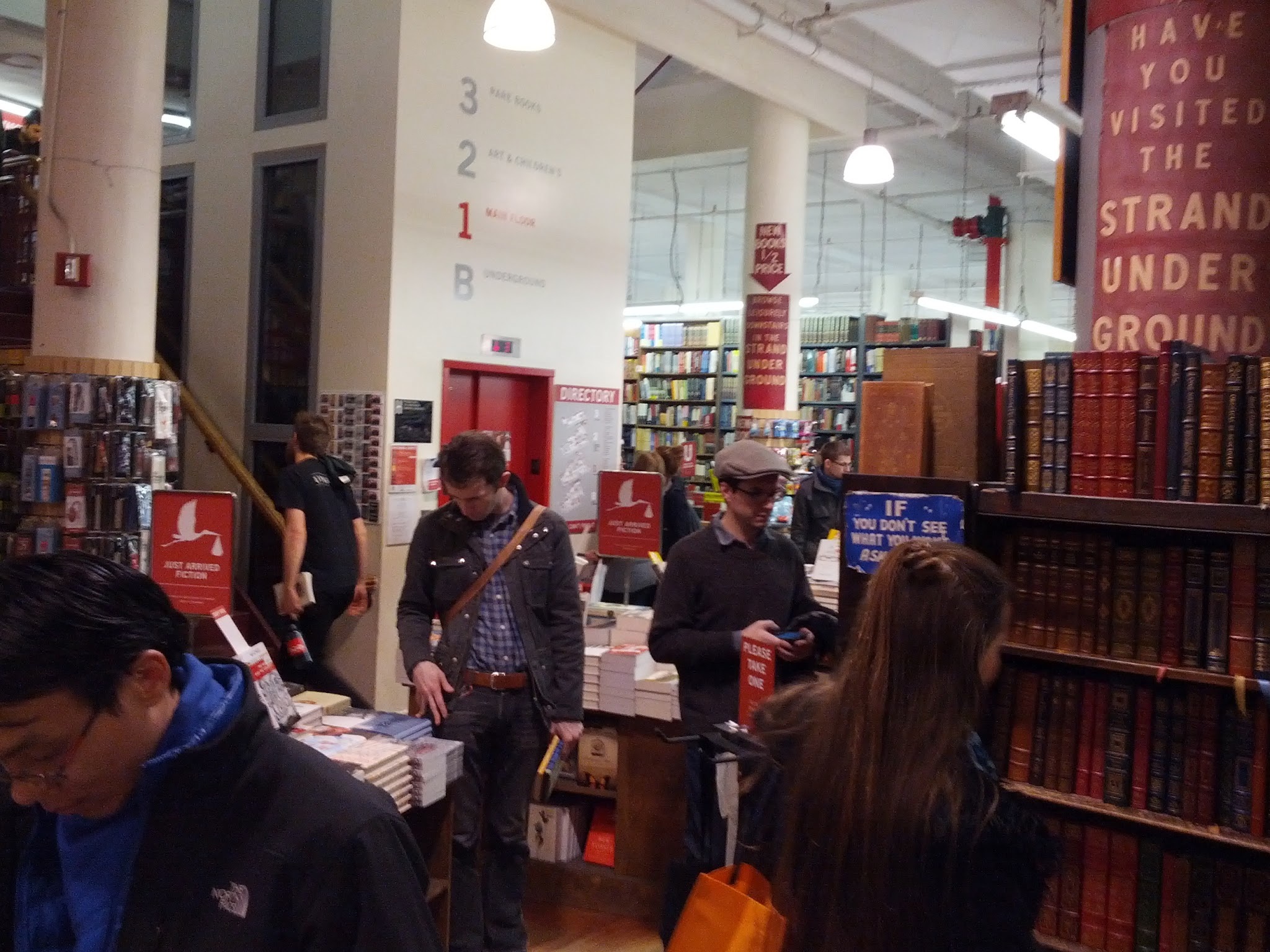
Prior to Thursday, I'd visited New York maybe five to seven times ... all total for probably less than 24 hours. Maybe even less than 12: four, or maybe 6 brief layovers, and one 6 hour trip for a product announcement when I worked for Enkia, where quite frankly I should have stayed home because I just stood behind our CEO Ashwin in a show of support and then missed my scheduled interview because me and my interviewer couldn't find the Enkia booth. So I felt I'd missed out.
IMG_20120217_135006.jpg

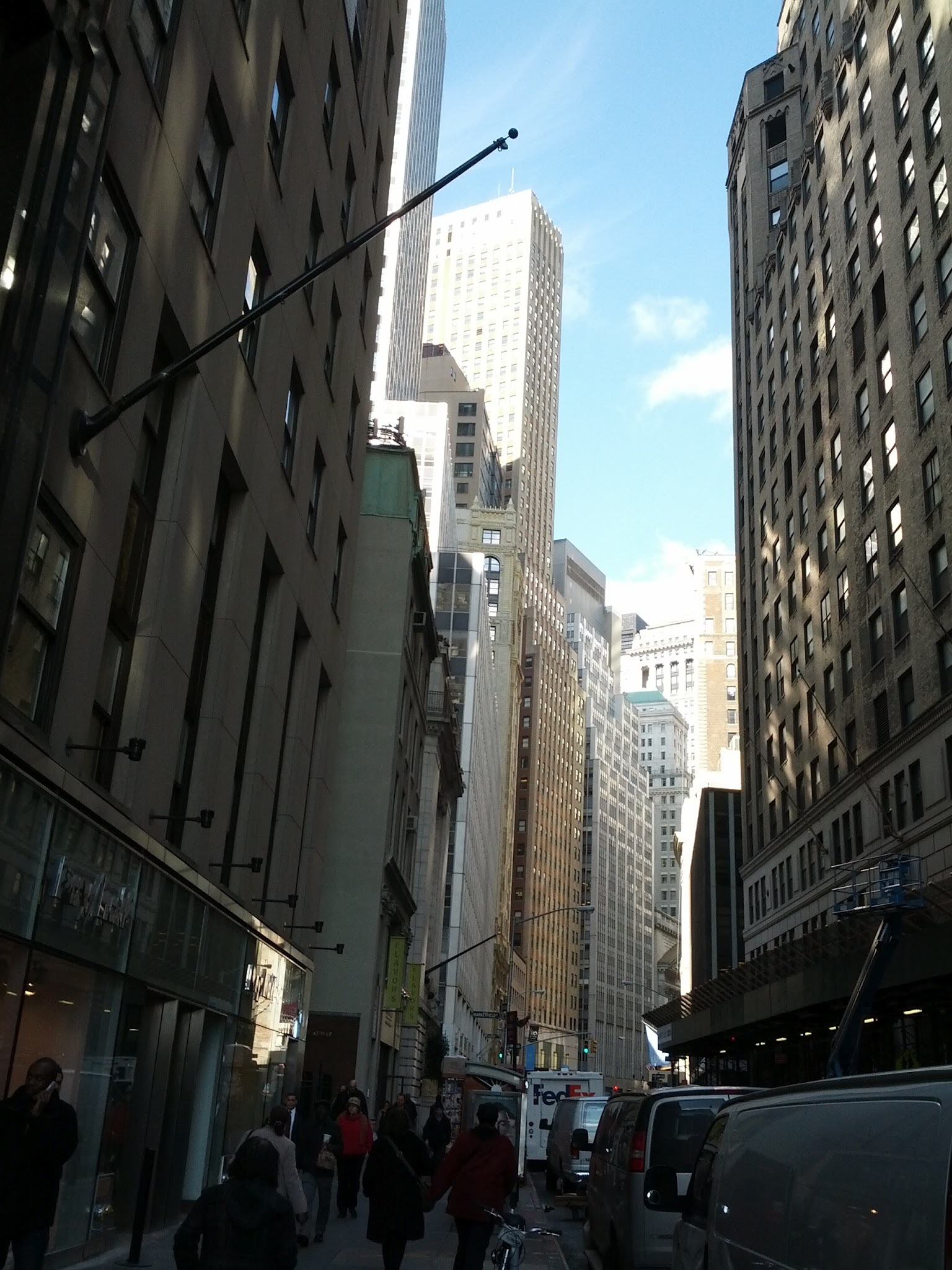
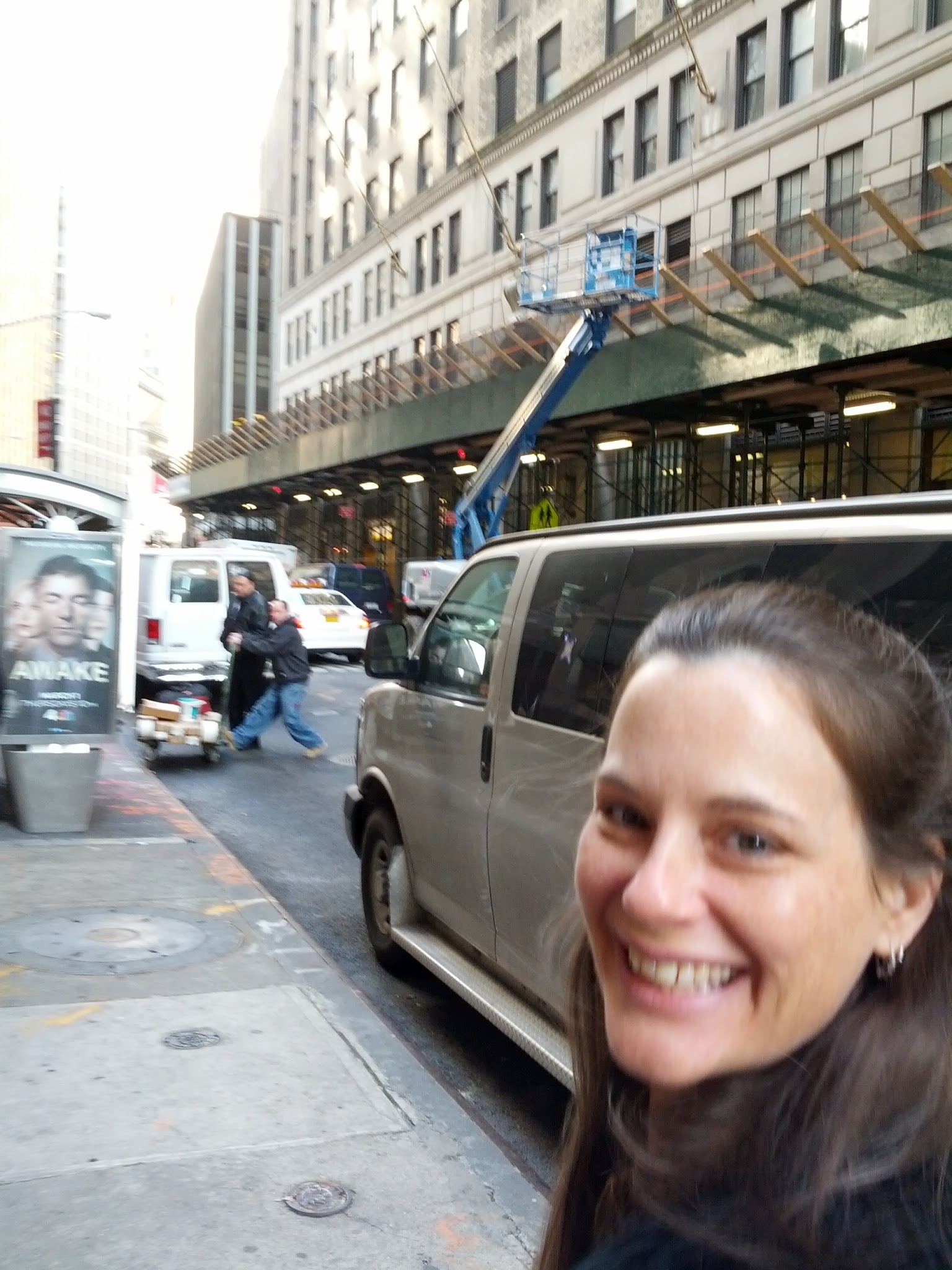
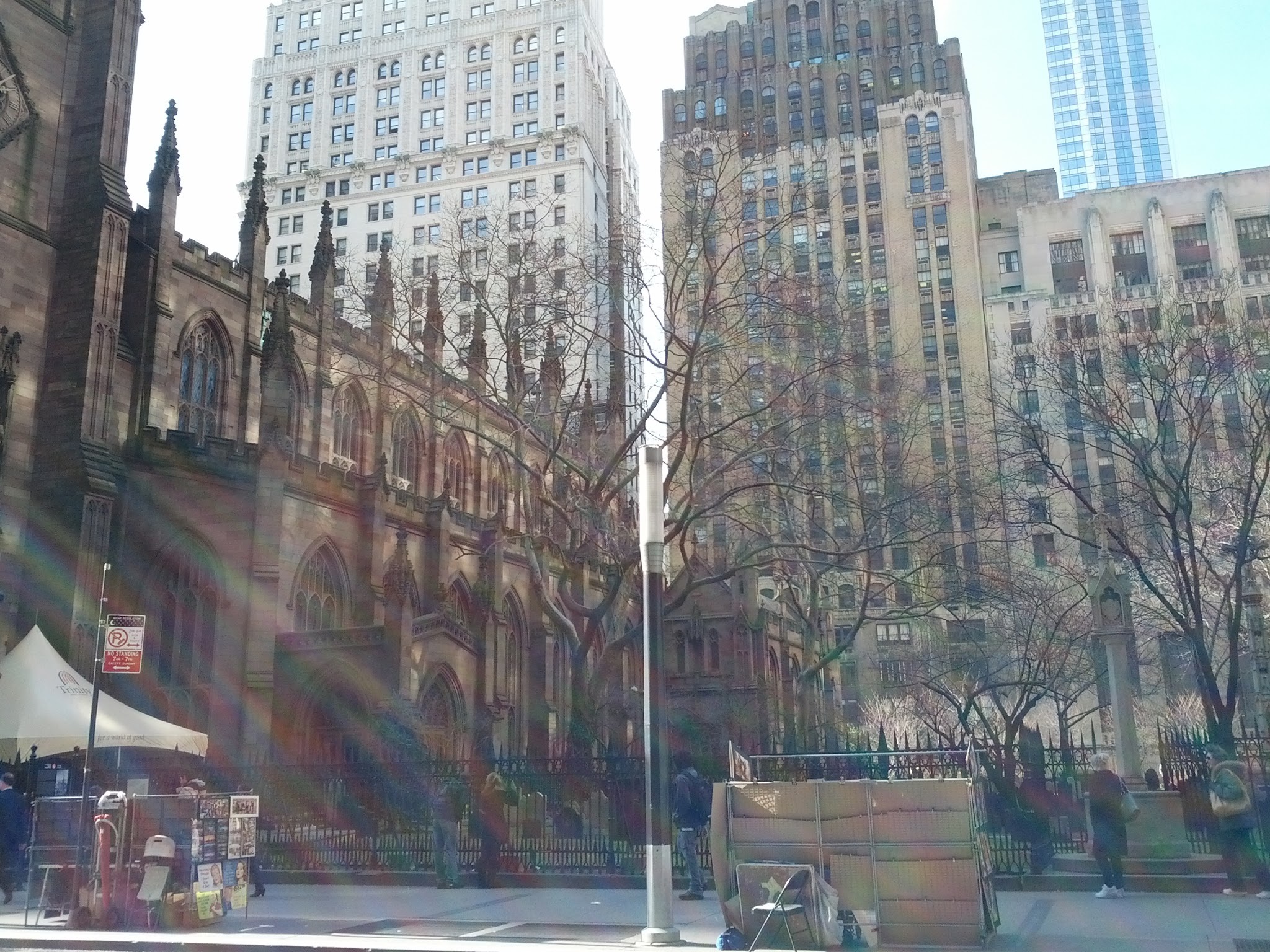
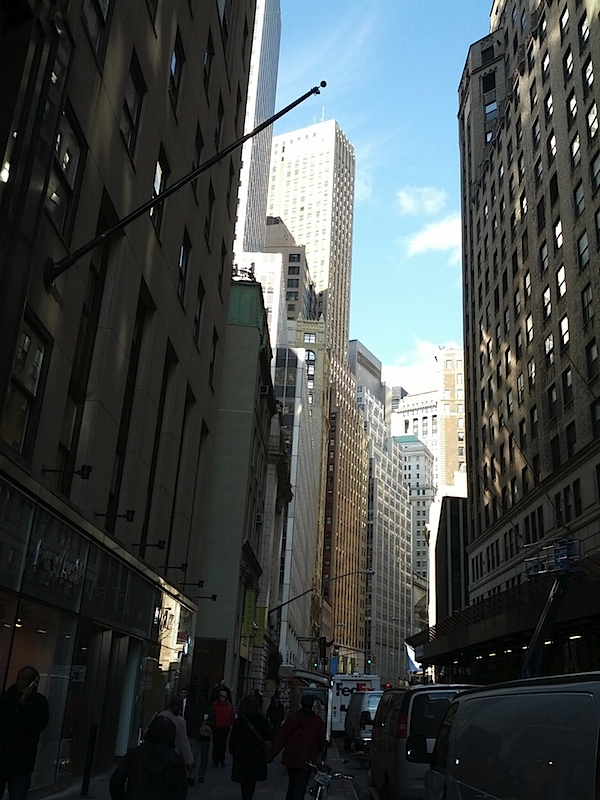
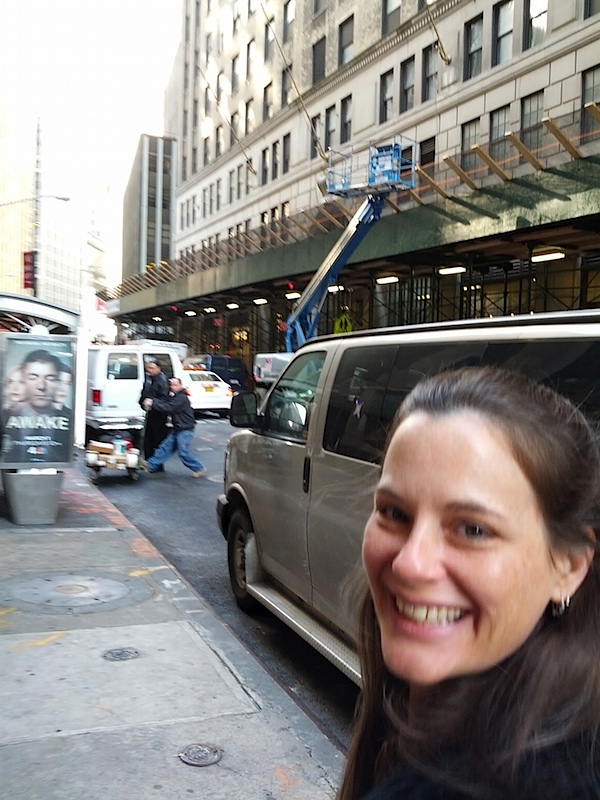
But now my beautiful wife works in upstate New York, and for a rare occasion knew what her schedule was, so we're taking the weekend off together in a belated birthday / Valentine's Day / repeated honeymoon extravaganza. And the first thing you notice about New York? The traffic sucks. HA! Not really, I've been to Boston, Atlanta and San Francisco, not to mention Athens and Tokyo, so the traffic here is just fine. No, no, the first thing you notice in New York is the buildings.
PANO_20120217_140104.jpg

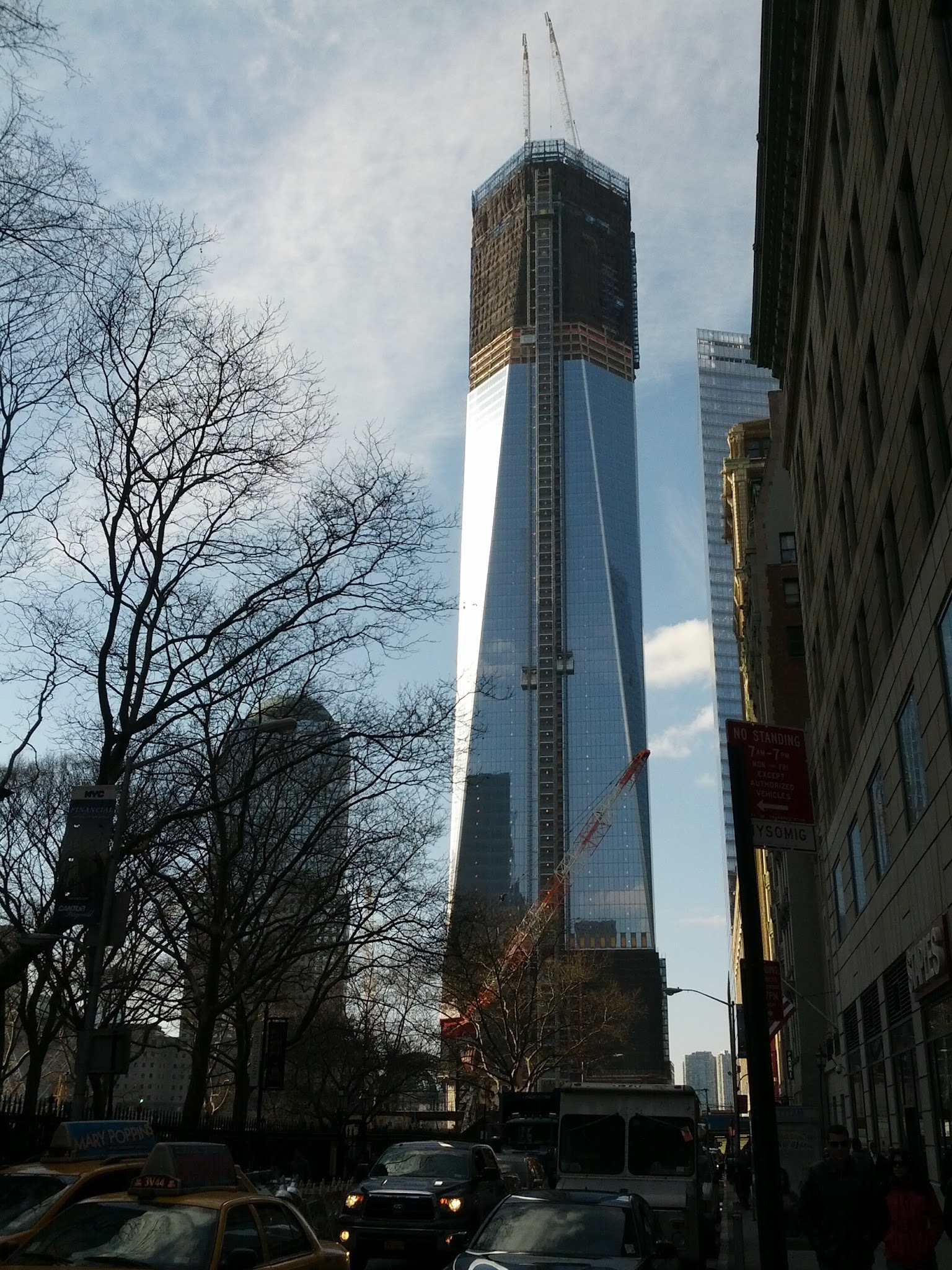
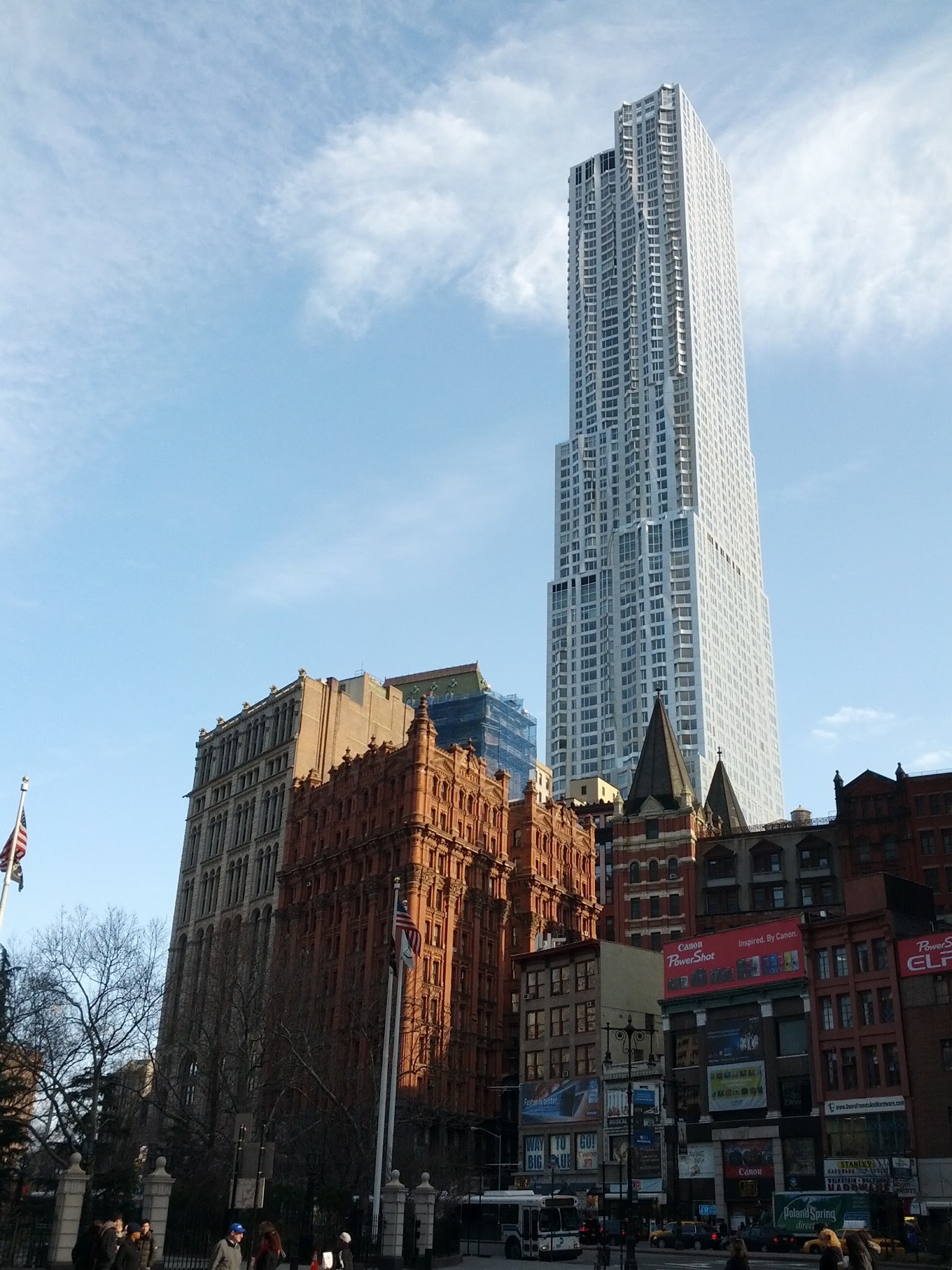
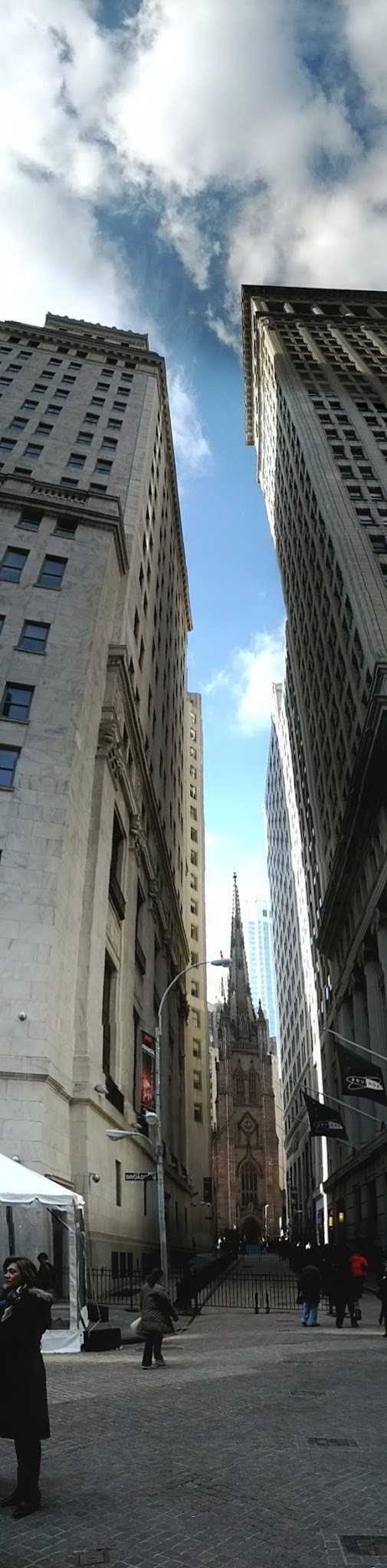
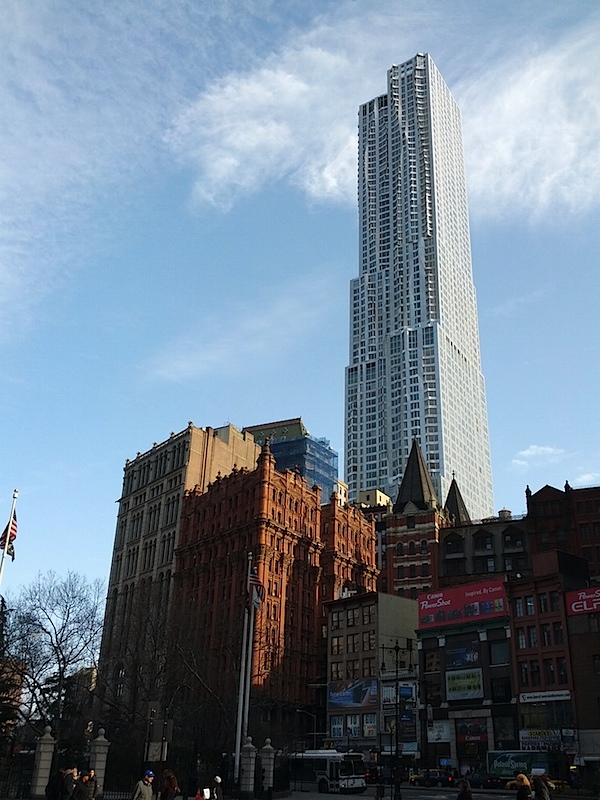
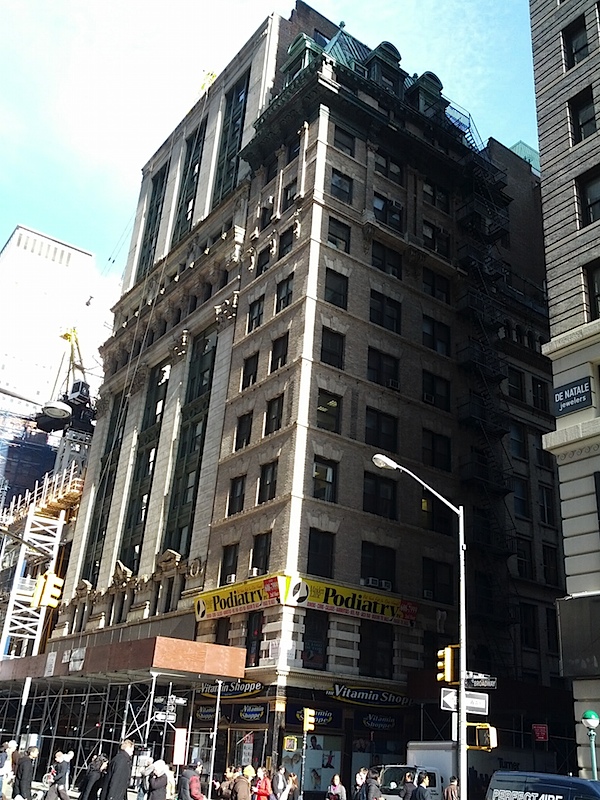
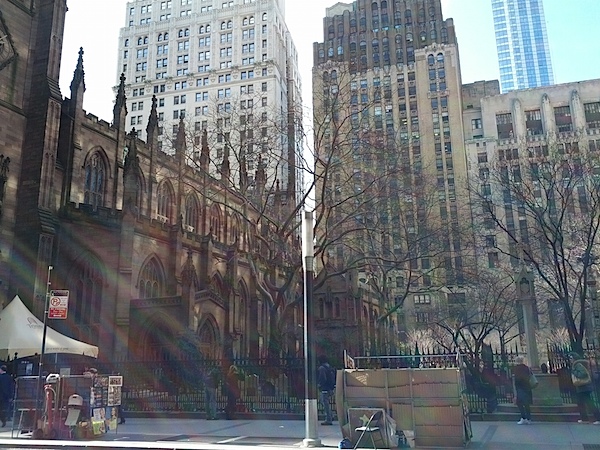
Like Chicago, New York has wonderful architecture, but where Chicago is ornate, New York is monolithic.

IMG_20120217_141616.jpg

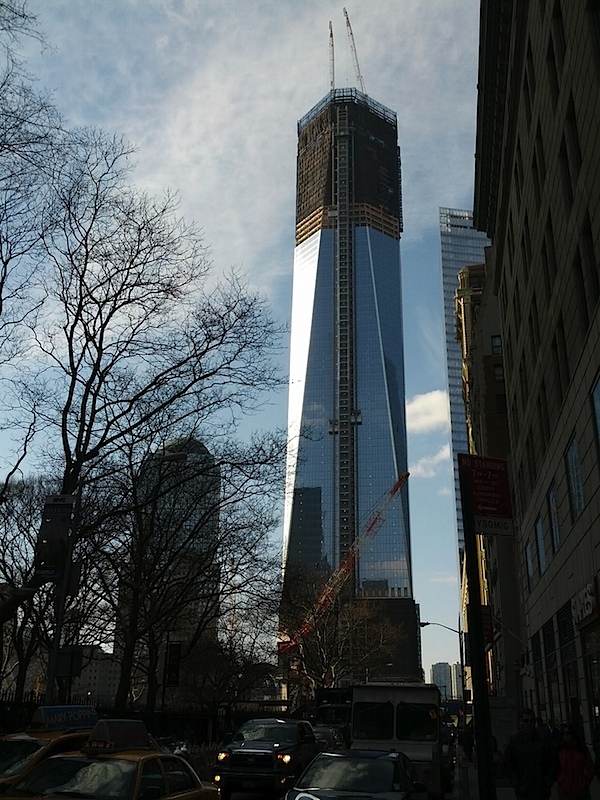
Spires stretch again and again far up into the sky.
IMG_20120217_141746.jpg

The second thing you notice is how friendly all the people are. Unfortunately I'd been prejudiced against New York City by a few bad encounters with arrogant New Yorkers - one of whom called Atlanta, the ninth largest city in the U.S., a "small town." I shouldn't take offense at that, of course, but having been from a town less than a tenth of the size of Atlanta ... and knowing that THAT wasn't even a small town, I had the temerity to correct her ... at which point she seriously tried to defend that proposition, demonstrating in one short conversation that she had no knowledge of small towns, the properties of the power distribution, or the concept of orders of magnitude (and this from a supposed math major). One bad encounter led to pure prejudice, I admit it. Well, actually three bad encounters - two involving traffic cops waving cars into places they shouldn't have gone. So three bad encounters led to pure prejudice, I freely admit it.

So I was expecting the worst when I arrived ... but in my whole time here everyone has been so nice.

IMG_20120217_141220.jpg

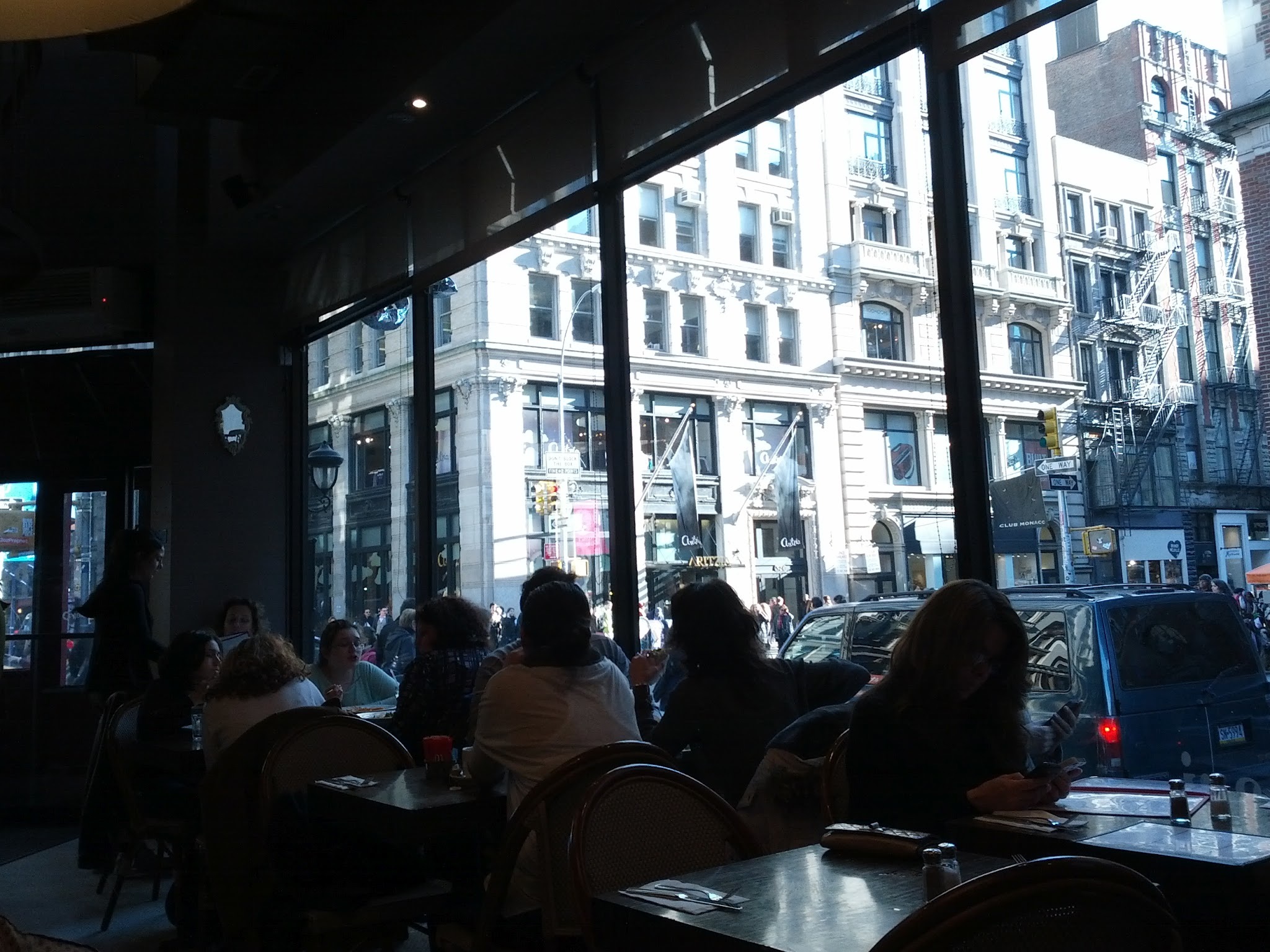
True, there have been a few stereotypical "New York Characters" lurking in the backgrounds - clueless traffic cops who waved cars out into oncoming traffic, a pedestrian who blithely walked out into traffic and then kicked at the car that nearly ran him over, an 'ey, buddy, watch where you're going' wiseguy in a cafe, and an overweight construction worker who looked straight out of central casting. But they've been extras, off the main stage.

IMG_20120217_140538.jpg

The cab drivers are all nice, and even roll down their windows to give directions to other motorists. The waiter at a tiny cafe which charges outrageous New York prices is careful to list every separate charge "because I don't want you to be surprised" and to warn diners if they've ordered a dish that might take longer than the others. Parking garage attendants say "hey, no problem buddy" when you've unexpectedly got to hold up the line a bit to remove something from your car. Bookstores don't ask you to check your bags; bookstore clerks try to be crystal clear about what they can and can't look up for you out of the textbook computer. Shoe salesmen don't take offense at "made from real leather, made in the USA" but actually help you find things, and chat with you about the music while your partner tries on shoes. Even the security guards were really nice.

So yneh, stereotypes of New York. Pfui on you.


PANO_20120217_135908.jpg

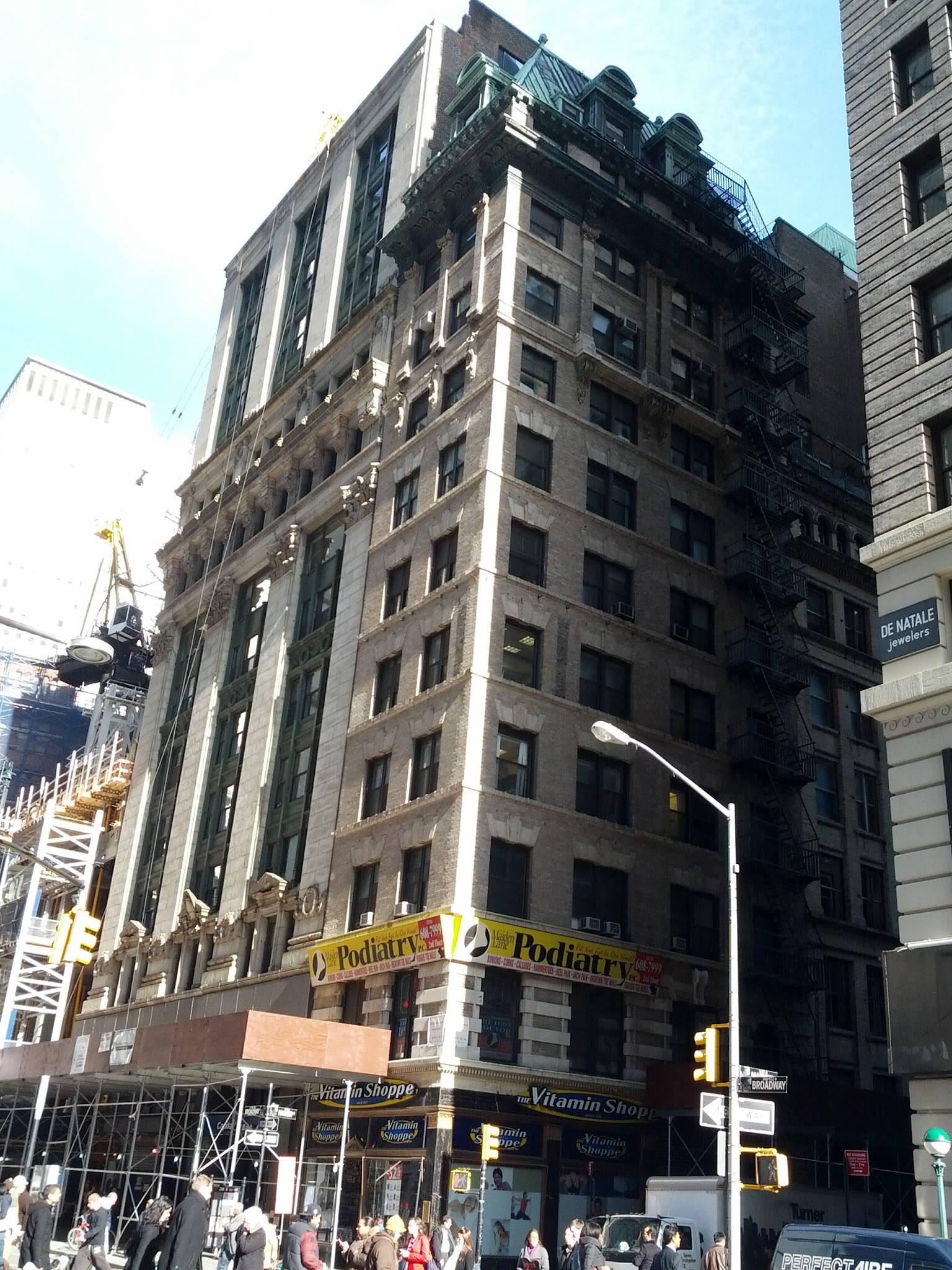
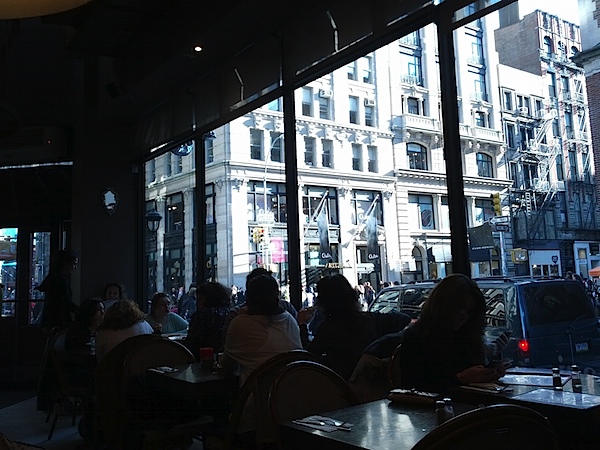
The next things you notice are the vibrant street culture and the vibrant mix of people. The bottom levels of every building seemed filled with shops, restaurants, and what have you, and the people milling about are more varied than almost any other place I've been to save perhaps Washington D.C. or global monuments like Stonehenge, Loch Ness or Olympic National Park.
IMG_20120217_151240.jpg

Like other cultured urban centers I've been in, such as San Francisco, certain parts of San Jose, and certain parts of Atlanta, there's a definite ... cultural class barrier. It's hard to describe, but the first time I went to Santana Row in San Jose I definitely didn't feel welcome: there was a certain snootiness, or projected disapproval, for people who didn't quite fit in.

Unlike my beloved Santana Row, however, where I still don't feel like I fit in because I'm the guy lugging the bookbag looking for a quiet corner coffeehouse while everyone else is trying to look hip, young and single, in New York I find it is pretty easy to look around, to see how people are adapting to their environment, and to fit right in.
IMG_20120217_232042.jpg

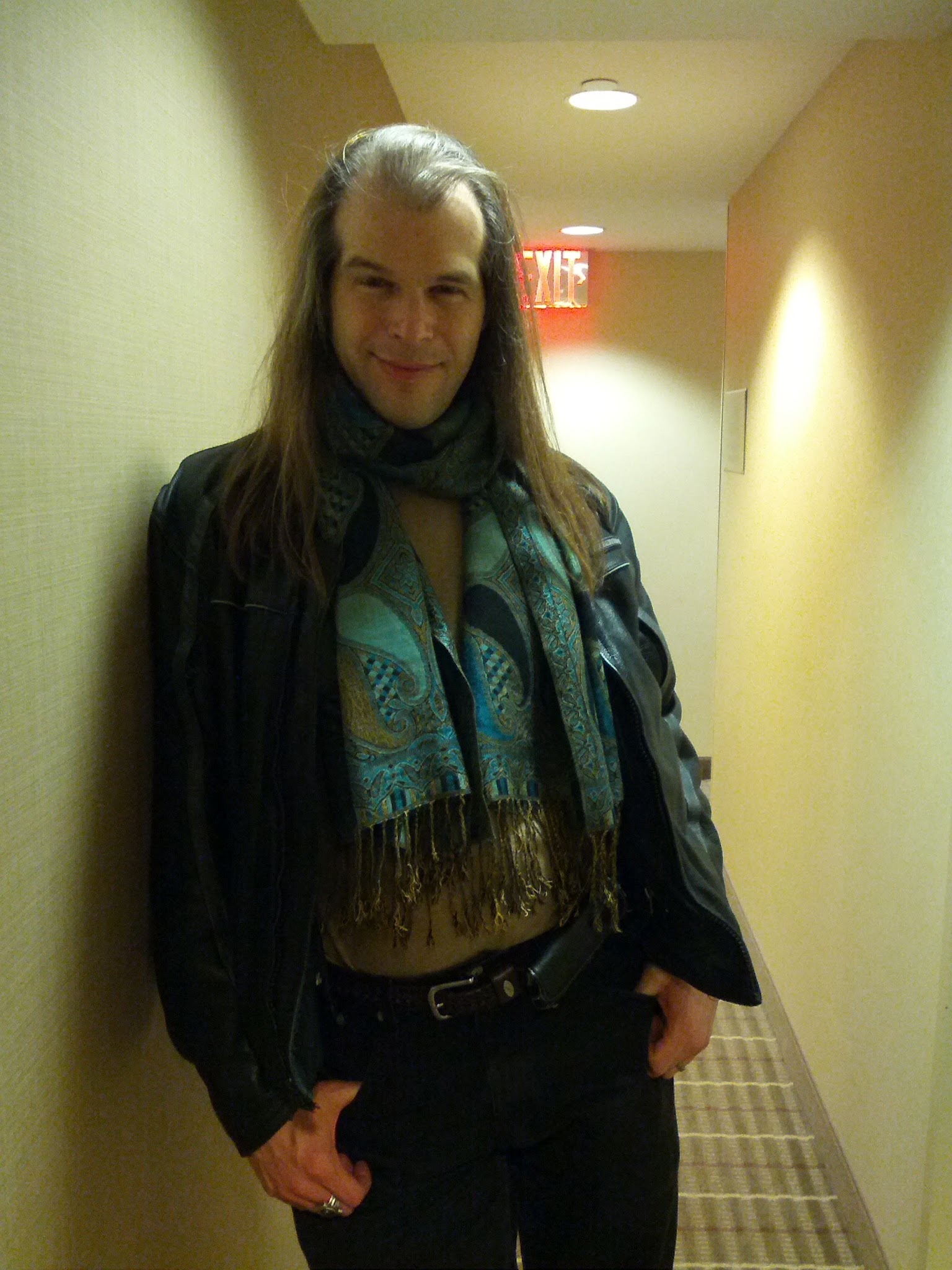
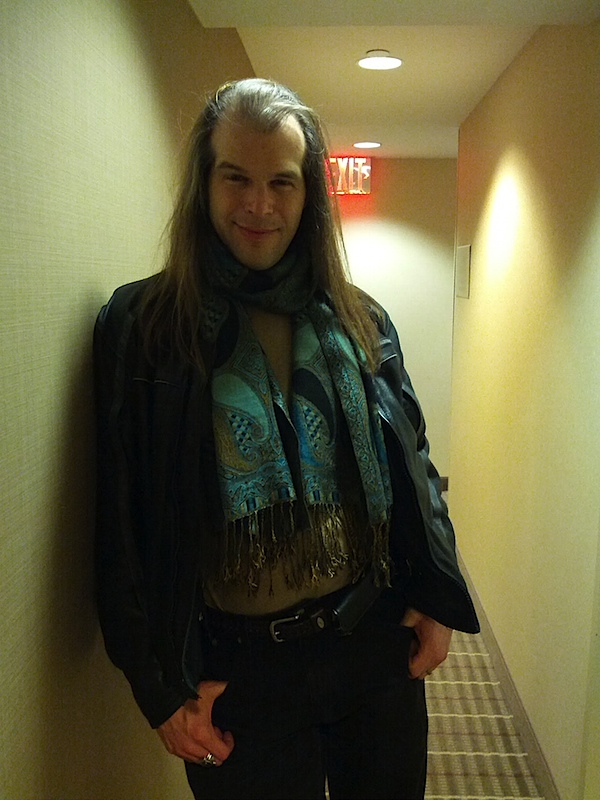
Or maybe I'm just a goofball wearing a scarf because it was frigging cold (but not like Boston).


IMG_20120217_145326.jpg

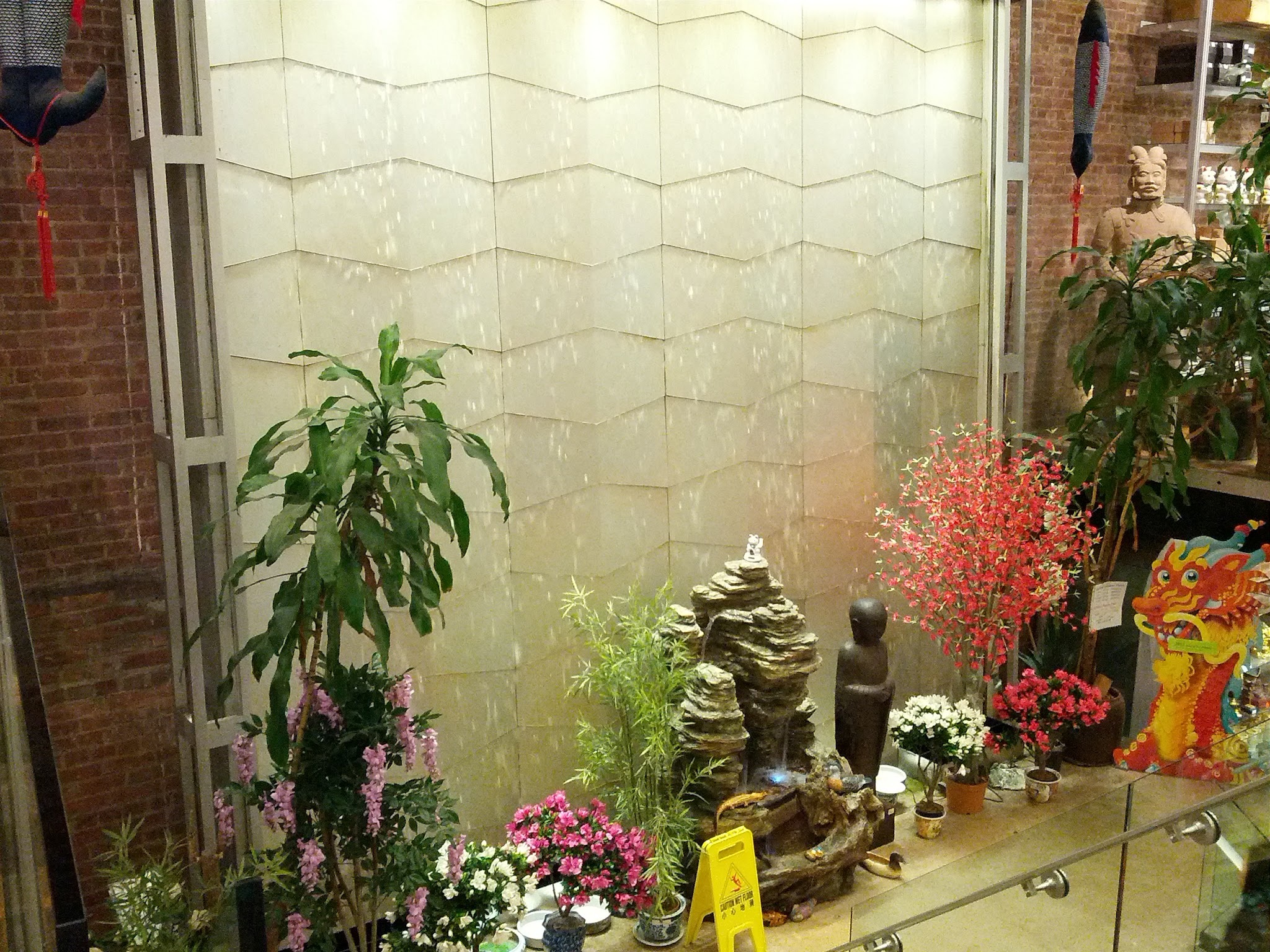
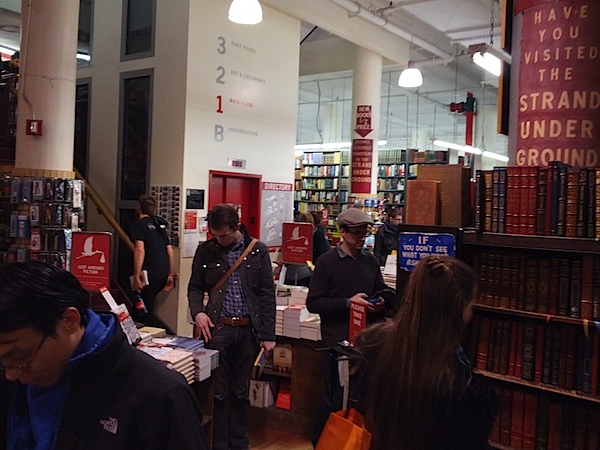
There are many beautiful things we've seen in New York ... gleaming skyscrapers, ancient buildings, wonderful restaurants, variegated shops, the Stomp show and many, many people in fantastic clothing and even more awesome boots. :-) But the thing I'm most interested in? Well, you guessed it: the books....
IMG_20120217_175549.jpg

Tomorrow it's the 9/11 Memorial, the Metropolitan Museum ... and whatever else we want.

-the Centaur

Now that’s a sign we have a protagonist on our hands…

centaur 0

Screen shot 2012-02-09 at 6.35.41 PM.png

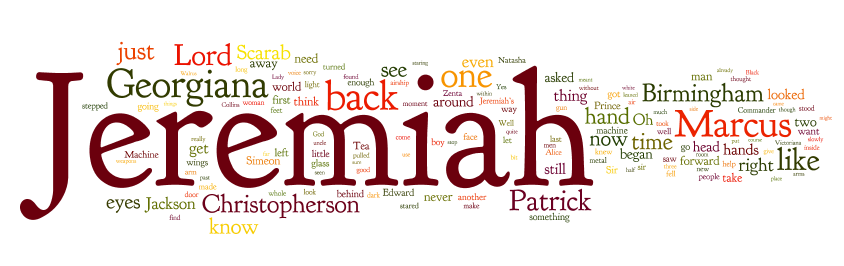
Above is a wordle of the near-completed first draft (as opposed to rough draft) of THE CLOCKWORK TIME MACHINE. Wordles are great visualization tools for your texts, and this one reveals ... well, yes, Jeremiah is the protagonist.

Actually, now that I think of it, the full title of the book is JEREMIAH WILLSTONE AND THE CLOCKWORK TIME MACHINE so I should have expected that her name would bubble to the top.

Jeremiah's also the protagonist of "Steampunk Fairy Chick", which was published recently in the UnCONventional anthology now available on Amazon ... why yes, that was a shameless plug, why do you ask?

-the Centaur

“Stranded” Away

centaur 0


donewithstranded.png

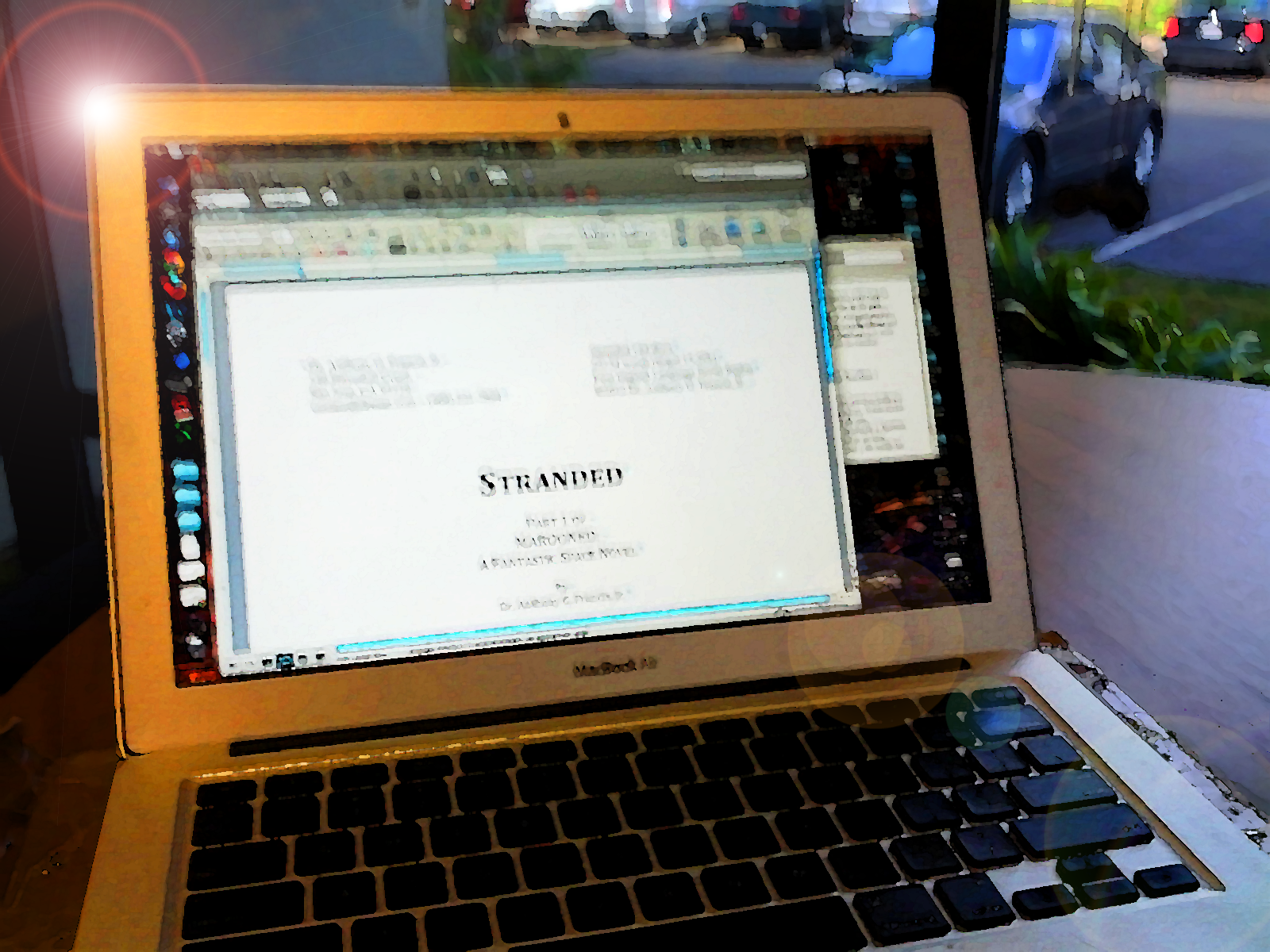
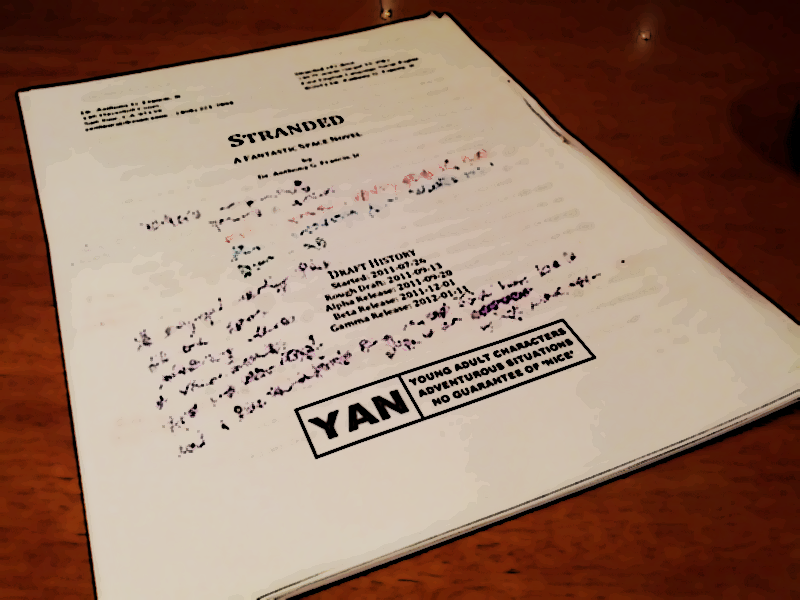
"Stranded", the novelette which is the first third of the first book of my new young adult space pirates trilogy, is away to the editor! It came in somewhat over the desired length, so I hope she doesn't hurt me, but it is the first third of the first book of a planned trilogy, so some of that length is unavoidable. (My awesome beta and gamma readers liked it. :-)

"Stranded" tells the story of Serendipity, a young centauress explorer who must come to the aid of a shipload of children who've crashlanded on a world she wanted to claim as her own. It's got aliens and fungi, spaceships and rayguns, and plush robots and kung fu, but it's really about how people should be treated and learning to stand up for what's right.

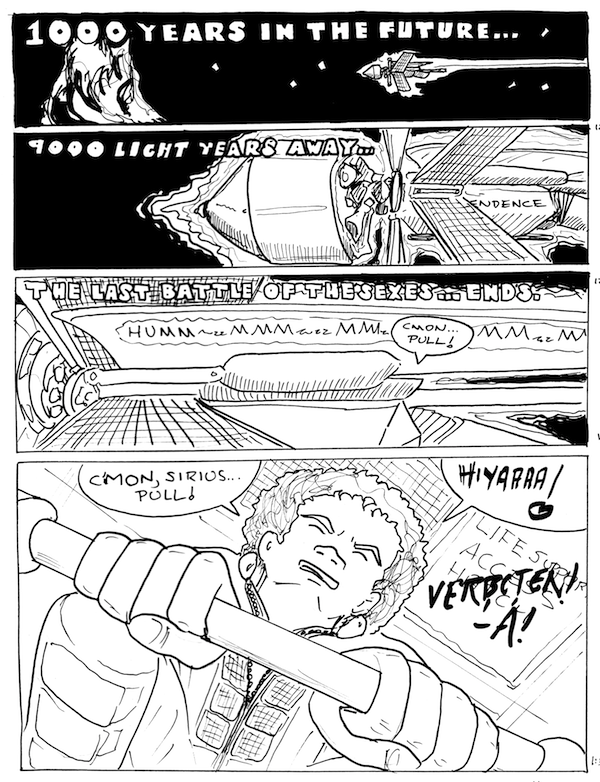
Here's a teaser, illustrated thanks to my work on 24 Hour Comics Day:

Small-Stranded-001.png

Sirius flinched as sizzling grey bullets tumbled around him in zero-gee. The grey dented veligen pellets rattled through the cramped innards of Independence’s life support plant, stinging his nose with the scent of bitter almonds as his hands strained at the yellow-striped master fuse. The girls shouted, their guns fired, more bullets twanged around him, ricocheting off the ancient, battered equipment, striking closer with every shot—but Sirius just gripped the hot, humming tube harder, braced both booted feet, and pulled.

Andromeda and Artemyst screamed for him to stop. Dijo, the engineer, screamed for the shooting to stop. Even the air screamed, out a bullet hole in a vacuum duct near his feet. But with every second, Independence shot a half million clicks farther into the deep, flying away from the Beacon that was their only hope of survival, so Sirius didn’t stop: he just screamed too, pulling, pulling, jerking—until the master fuse popped out and he shot free, bursting the hatch open.

Sirius flew out of the life support service chamber into Independence’s cavernous cargo hold. His head clanged off a handrail, knocking him into a dizzy spin in zero-gee. He smacked into the tumbling brassfiber grille of the hatch he’d knocked free, halving his spin—and leaving him right in the crosshairs of Dijo, Artemyst and Andromeda, all clipped to orange handrails far out of his reach. All had their guns on him, red laser sights on, green safety lights off.

Then the ship’s lighting flickered, and the whine of the air cycler slowly spun down.

“Halfway Boy!” Andromeda said, staring at the yellow and black striped master fuse in Sirius’s hands, her eyes as wild as the spray of feathers sticking out of her snakeskin cowl. She motioned to Dijo, who kicked off towards the life support plant. “What have you done?

“Saved all our lives,” Sirius said, still dizzy, still spinning. “You can thank me later.”

Assuming the editor doesn't put me in the hospital over the length issue, we hope the story will be out in an anthology later this year. "Stranded's" parent novel, MAROONED, will hopefully be out mid 2012. So I guess the above is really a teaser. Sorry about that. Well, not really. I hope you enjoy!

-the Centaur

(No) More Procrastination

centaur 0
Finally finished my "From Nano to Novel" pep talk for the National Novel Writing Month site ... should be coming out later this month to the donors list. (What? You're not a Nanowrimo donor? You can fix that here: https://store.lettersandlight.org/donations). But I've posted that to Facebook and to Google+. Posting it again here is, I think, a good idea to make sure people know what I'm up to, but in another way it's just procrastination ... I've got the gamma comments on "Stranded" to work on and this is not that. Back to work! -the Centaur

Last gamma comments for STRANDED in…

centaur 2
Alright, the last gamma reader comments for "Stranded" are in. (Gamma, because this is actually the second round of beta readers. :-) "Stranded" is the first novelette of three in a planned YA space adventure novel with the working title MAROONED. This will be part of a trilogy including MAROONED, PURSUED, BESIEGED, SHANGIAIED, COMMANDEERED ... oh damnit I've done it again, haven't I? "Stranded" is also the novelette I adapted for 24 Hour Comics Day. Don't know if I'll get back to that as I have already 3 books plotted out in this series and parts of the next two outlined. Hope to get "Stranded" the novelette out to the editor in the next two weeks for inclusion in an anthology maybe later this year (with MAROONED coming out next year we hope). When "Stranded" is away, then it's back to LIQUID FIRE (finishing the draft) and THE CLOCKWORK TIME MACHINE (polishing the draft to send to beta readers). -the Centaur
Quit Procrastinating

centaur 0

quitprocrastinating.png

One of the most important things a creative person needs to learn is to recognize when you're procrastinating. For example, I often have ideas to put on this blog - two or three times per day - but I'm a quiet person, and I think far more strings of speech than I ever put to paper. So it's important for me to blog whenever I can.

So I've had several blog ideas today - "Getting Traction", "Logic Versus Rationality", "Rating Your Own Work (and How I Rate)" and the one I just thought of that made me open Ecto, "Advantages of Offline Blogging Clients" and its companion piece "How to Use Photoshop Filters and Photo Booth to Make Watercolor Art Because You Don't Have Clip Art Handy."

All of these are procrastination.

I owe my editors feedback on Traci Odom's reading of the audiobook of FROST MOON. I didn't get to send it after I finished it because I finished it at 3 in the morning in the hospital and then spent the next day getting my loved one back home safely before hopping on a plane and getting back to all the work delayed by this unexpected trip.

During this whole family quasi-emergency this week, I deliberately focused on taking on tasks like listening to FROST MOON or blogging or cleaning up my hard drive, all of which didn't require building up a lot of mental state, which made them ideal for tasks for sitting up next to a hospital bed ready to help at a moment's notice.

But the operation's over, the result's a success, the loved ones are back home and my reading's done. When you've got an outstanding task that requires thought, it's SO EASY to switch gears to something that doesn't require a lot of mental effort. But no. Not this time. Time to write the notes, record the pronunciations, send the email, and get this audiobook out the door.

Finish blogpost hit Publish.

-the Centaur
“He likes to take pictures of his food.”

centaur 1
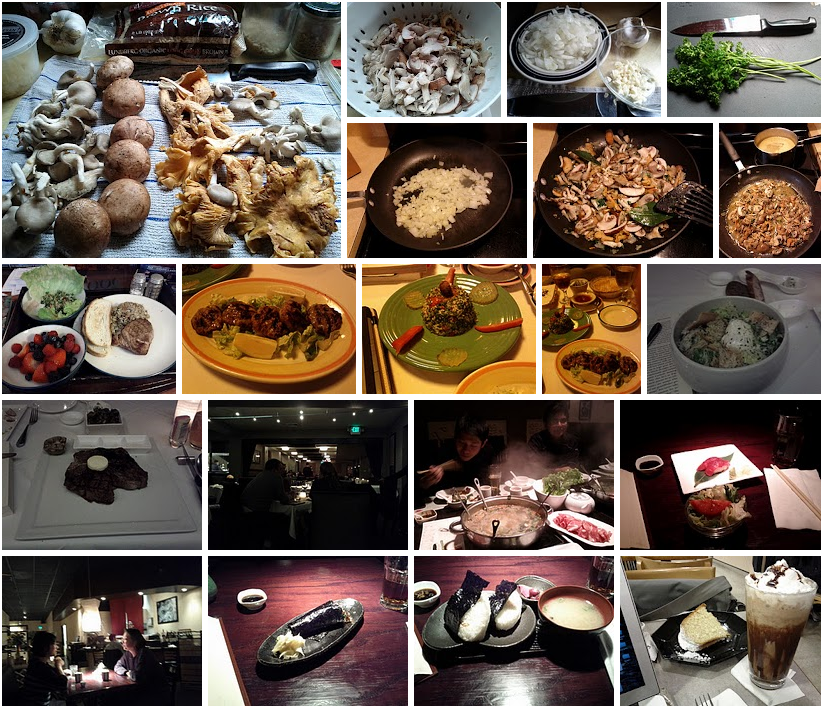
Those familiar with my Google+ stream will have noticed I take a lot of pictures of food, generally posted in my album Cuisininart (pictures of food - cuisine in art - cuisin-in-art - a riff on cuisinart - get it? No? Oh, you don't WANT to get it. Oh well.). This got started because I wanted to do restaurant reviews on this site. I love eating out; I'm a definite foodie, and I think a lot about what makes a good restaurant, from a dive bar to a five star. I've evendone a few reviews but I noticed I wasn't writing reviews because I wasn't taking pictures. I prefer using pictures in blog posts based on the ideas of my good friend Jim Davies (and seconded by my wife Sandi Billingsley) who both think pictures make blog posts stronger. This is basic comics theory: words and pictures are stronger together. So I started taking pictures. As usual, I found I was really good at collecting input, not so much at producing output. I was taking pictures all the time and not doing things with them because most of my free time is spent writing. Around the time Google+ came out, I had a brainflash: why don't I just post the pictures I've taken as a way of using them up. So I created the Cusininart album ... which prompted me to take more and more pictures, even without reviews in mind. I got so good at taking pictures of what I was eating it became a joke. My wife once explained it to a friend joining us for dinner: "He likes to take pictures of his food." Which in turn prompted this post of me explaining this to you. But I'm trying to turn this into more than just random photographs. Following the example of people like Jim Davies, Andy Fossett and Waldemar Horwat, I'm trying to make this a learning experience, to discover how to take good pictures of food. What I've found so far isn't scientific by any stretch of the imagination; consider this lessons learned from a few case studies.
  • Don't use your camera's flash. As many of you probably already know, camera flashes wash out the pictures. Don't use it unless you absolutely have to; try increasing the exposure of your camera to instead.
  • Take lots of pictures. Take pictures of each dish, of the whole spread, from more than one angle. It's not just that two or three shots of each one helps you avoid loss to a blurry jiggle; it gives you more choices for the article.
  • Take pictures from different angles and distances. Thirty to forty-five degrees seems to be a good angle, but you should experiment with closeups, overhead shots, distance shots. You'll be surprised what looks best once you review the pictures later.
  • Most of the shots should be of food. For what I want to achieve in my albums, having most shots be of food works best. Restaurants are less interesting than their dishes, unless it's a special restaurant. One out of five is OK.
  • Keep it candid. It actually helps to take pictures before you've eaten, and even to spend a moment posing some of the food. But don't waste a lot of time on it: the immediacy of the dishes in their natural arrangement is often enough.
I'm sure I could refine that list more. Perhaps I will after I spend more time experimenting more systematically, maybe even throwing in findings from food I have cooked. But until then ... that's what I've learned from taking pictures of my food. -the Centaur

The Stack is Growing

centaur 0

thedailyflash.png

FROM THE WRITER'S ANONYMOUS 12-STEP SUPPORT GROUP MEETING: Hi, I'm Anthony Francis, and I'm an author. ("Hi, Anthony!") To feed my addiction, I get stuff published.

My first published novel, the urban fantasy FROST MOON featuring magical tattoo artist Dakota Frost, won an EPIC e-book award. It's out in paperback, Kindle, in German as SKINDANCER, and soon to be audiobook thanks to the wonderful reading skills of Traci Odom. The second book in the series, BLOOD ROCK, came out last year to good reviews, and the third book, LIQUID FIRE, will come out later this year. A spinoff series starring Dakota's daughter Cinnamon Frost, HEX CODE, will come out next year, also part of a planned trilogy.

One of my short stories, "Steampunk Fairy Chick," was recently published in the UnCONventional anthology. The story, featuring steampunk adventurer Jeremiah Willstone, is based on a novel called THE CLOCKWORK TIME MACHINE (again part of a planned trilogy) which I've got in rough draft form with a possible release late this year or early next year. Another of my short stories, "Sibling Rivalry," was published in The Leading Edge magazine in 1995, but is now available on my web site. I also write flash fiction. One of my flash shorts, "If Looks Could Kill", was just published in THE DAILY FLASH 2012 (pictured above) and another, "The Secret of the T-Rex's Arms", was just published in Smashed Cat Magazine.

My nonfiction research papers are largely available on my research page, including my nearly 700-page Ph.D thesis (hork). I and my thesis advisor Ashwin Ram have a chapter on "Multi-Plan Adaptation and Retrieval in an Experience-based Agent" in David Leake's book CASE BASED REASONING: EXPERIENCES, LESSONS AND FUTURE DIRECTIONS, and Ashwin, Manish Mehta and I have a chapter on "Emotional Memory and Adaptive Personalities" in THE HANDBOOK OF RESEARCH ON SYNTHETIC EMOTIONS AND SOCIABLE ROBOTICS.

I have more writing in the works, including a novelette called "Stranded" set in the Dresanian universe from which this blog takes its name, and more writing on the Internet. But what I list above is The Stack At This Time - what you can get in print. Enjoy!

-the Centaur
It’s Better to Be Done

centaur 1


better-to-be-done.png

I am very interested in promoting creation. I think the world would be a better place if more people wrote, drew, painted, sculpted, danced, programmed, philosophized, or just came up with ideas. Not all ideas are great, and it's important to throw away the bad and keep the good - but the more ideas we can generate, the more we can test.

One of the biggest problems I see in unprofessional, unpublished or just unhappy creators is not finishing. It's very easy to start work on an idea - a painting, a novel, a sculpture, a program, a philosophy of life. But no matter how much you love what you do, there's always a point in creating a work where the act of creating transforms from play to work.

Whether you stall out because the work gets hard or because you get distracted by a new idea, it's important to realize the value of finishing. An unfinished idea can be scooped, or become stale, or disconnected from your inspiration. If you don't finish something, the work you did on it is wasted. More half finished ideas pile up. Your studio or notebook becomes a mess.

If you don't finish, you never learn to finish. You're learning to fail repeatedly. The act of finishing teaches you how to finish. You learn valuable skills you can apply to new works - or even to a new drafts. I know an author who was perpetually stalled out on a problematic story - until one day she made herself hit the end. Now it's on it's fourth draft and is really becoming something.

The tricky thing is you have got to put the cart before the horse: you've got to finish before you know whether it was worth finishing. This does not apply to experienced authors in a given genre, but if you're new to a genre, you have to finish something before you worry about whether you can sell it or even if it is any good.

You don't need for something to be perfect to finish it. I know too many amateurs who don't want to put out the effort to finish things because they don't know whether they can sell it. No. You've got a hundred bad programs in you, a thousand bad paintings, a million bad words, before you get to the good stuff. Suck it up, finish it, and move on.

Procrastination is a danger. This is the point in the article that I got distracted and wrote a quick email to a few other creators about ideas this (unfinished) article had inspired. Then I got back to it. Then I got distracted again doing the bullet list below and went back and injected this paragraph. The point is, it's OK to get distracted - just use that time wisely, then get back to it.

Finally, sometimes you just need help to finish the first time. The biggest thing is to find a tool which can help you over that hump when it stops being fun and starts being work - some challenge or group or idea that helps you get that much closer to done. To help people finish, I'm involved with or follow a variety of challenges and resources to help people finish:

  • Write to the End: It's not a critique group; it's a writing group. We meet almost every Tuesday at a local coffee house and write for 20 minutes, read what we wrote, and repeat until they kick us out. We normally hit three sessions, so I usually get an hour of writing in every night - and hear a half dozen to a dozen other writers. Inspirational. Our web site contains articles on writing, including my new column The Centaur's Pen.
  • National Novel Writing Month: A challenge to write 50,000 words of a new novel in the month of November. This seems daunting, but Nanowrimo has a truly spectacular support group and social system which really helps people succeed at the challenge. Even if you don't "win" the first time, keep at it, you will succeed eventually!
  • Script Frenzy: Write 100 pages of a script (play, screenplay, or comic script) in the month of April - another event sponsored by the creators of Nanowrimo. This is an event I haven't yet tried, but am planning to tackle this year to get back into screenwriting (as part of my 20-year plan to get into directing movies).
  • 24 Hour Comics Day: It's a challenge to produce a 24 page comic in 24 hours, usually held the first weekend of October. I've tried this 3 times and succeeded once. It's taught me immense amounts about comic structure and general story structure and even improved my prose writing.
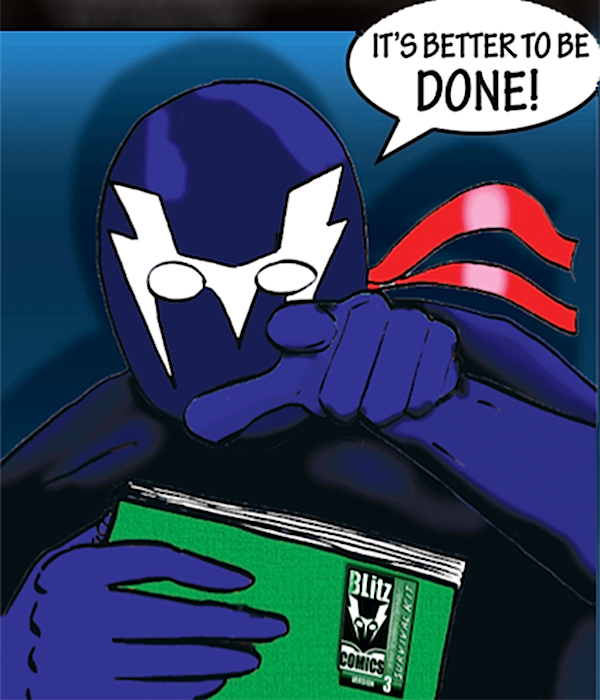
  • Blitz Comics: Because I failed at 24 Hour Comics Day, me and my buddy Nathan Vargas decided to "fake it until we make it" and to put on a boot camp about how to succeed at 24 Hour Comics Day. We produced a Boot Camp tutorial, a 24 Hour Comics Day Survival Kit - and along the way taught ourselves how to succeed at 24 Hour Comics Day.
  • Other Challenges: There are a couple of events out there to create graphic novels in a month - NaGraNoWriMo and NaCoWriMo - though both of these are 2010 and I don't know if either one is live. (If they're not active, maybe I'll start one). There's also a 30 Character Challenge for graphic artists to create 30 new characters in a month.


thedonemanifesto.png

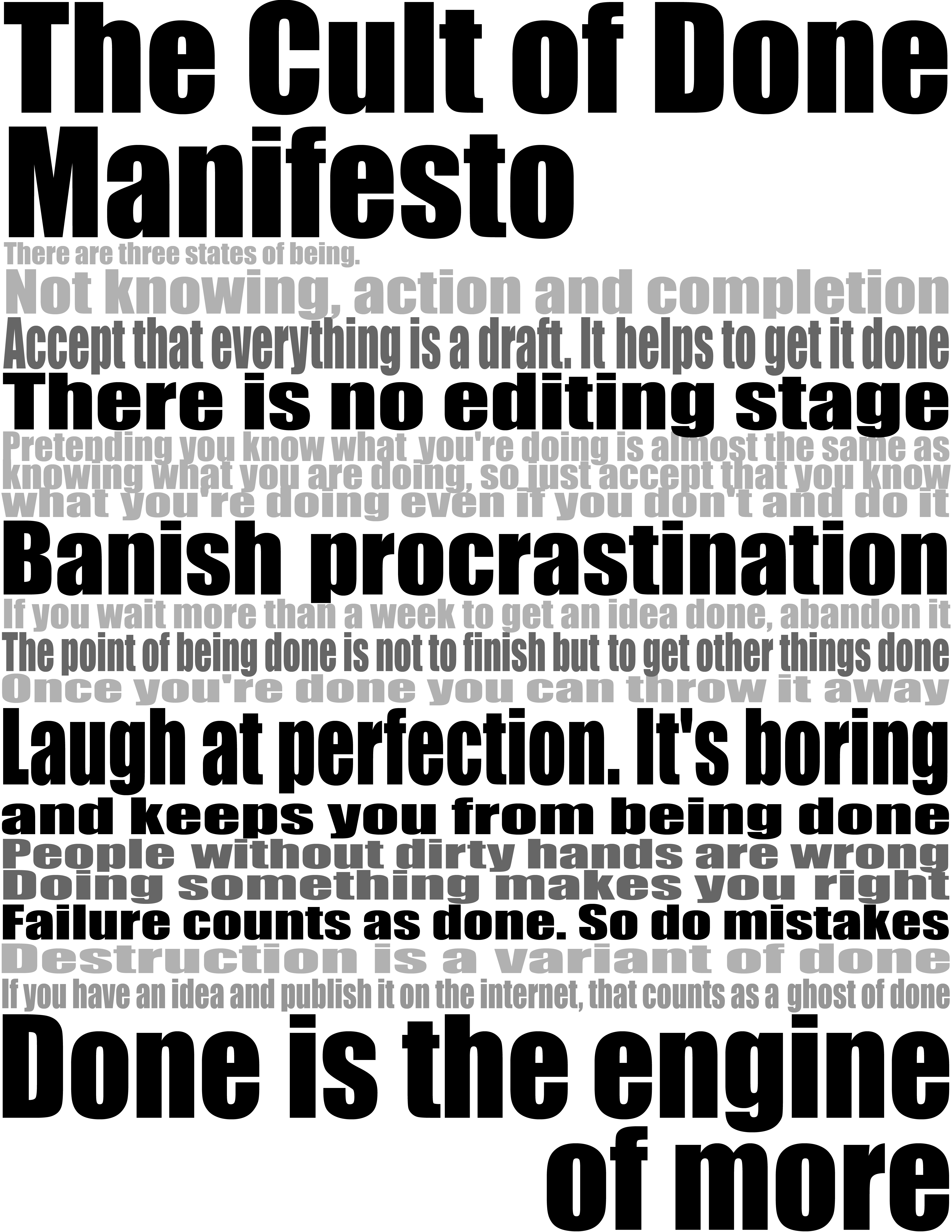
Finally, I want to finish with what inspired this post: the Cult of Done. I won't go too deeply into the Done Manifesto, but from my perspective it can be summed up in two ideas: posting an idea on the Internet counts as a ghost of done, and done is the engine of more. Get your stuff done, finish it, and if it's still half baked, post it to force yourself to move on to newer and better things.

The plane is landing. Time to get it done.

-the Centaur
Credits: The BlitzComics guy is penciled, inked and colored by me and post-processed by Nathan Vargas. Joshua Rothass did the Cult of Done poster and distributed it under a Creative Commons license. This blog post was uploaded by Ecto, which is doing well (other than an upload problem) and is probably going to get my money.

Vibrancy in Social Media

centaur 0

Some social networks vibrate with life: tweets ripple through Twitter, three quarters of a billion people use Facebook, and Google+ grew faster than either of them in their early days. Others, like MySpace or Orkut or LinkedIn, may not exactly be suffering, but they don't have the same buzz and aren't growing at the same rate.

I don't have access to all the numbers when I'm interacting with a social network: I only have its interface to my local network. But there's a side effect to a network's rapid growth and activity: some of that activity will flow through MY part of the network. Now, that's true of even non-social media like newsgroups and RSS feeds, so activity by itself isn't enough.

What's interesting is how likely MY inputs are to garner a response or even start an ongoing conversation. Let's call that the network's vibrancy. Now, the measured vibrancy will be different for different users, different inputs and different times. But we can hold that constant if the user in question, like me, crossposts similar content to different networks.

I do this because I'm an author, and I don't require my fans to be members of Facebook or Google+ or Twitter or to have an RSS reader - so I need to post many announcements to every service that my fans might be on. So what follows is my brief, purely unscientific judgments about the vibrancy of several social networks.

General Social Networking: Facebook, followed by Google+, followed by Twitter. Within minutes of me posting to Facebook, I usually get a number of likes or responses. Google+ is also good, but not quite as fast, or quite as deep. Twitter, while being great for hearing announcements from people I'm interested in, isn't as responsive as the first two. Other services I've tried, like MySpace, Orkut and Buzz, were either less active to begin with or not vibrant at all.

Literary Networking: Goodreads. I've been on LibraryThing for a while, but I haven't yet seen much activity. Goodreads, however, after some unfortunate business with spamming some of my contact list, has nonetheless proved both very active and very reactive to what I have posted.

Business Networking: No winner. I've used Linkedin, but my primary activity on it has been receiving connection requests and there's been very little response to my updates on its interface.

Thinking about these services, what makes the vibrant ones vibrant is a combination of features: Enough users, enough activity, ease of posting, ease of sharing, and in particular with Goodreads, enough different activities to make the interface a game. With Goodreads, you can post reviews, book progress, shelving and so on and this activity is exposed. Goodreads is like a game played with your literary friends and the fans of the books you're a fan of. To a lesser degree, services like Facebook and Google+ which make image and link sharing and commenting fun do the same thing.

I haven't taken this analysis any deeper. Right now this is just a thought posted to the intarwubs - the ghost of done (from the Cult of Done manifesto) since done is the engine of more. More thoughts after I spend more time researching social media.

-the Centaur
The Centaur’s Pen at Write to the End

centaur 0
I'm part of a fantabulous writing group called Write to the End that meets at Mission City Coffee. This group, which started at Barnes and Noble at Steven's Creek before the economy and contracting book market convinced B&N to cut back on their community programs, has been the best thing for my writing productivity since ... well, ever. I'd even stopped doing National Novel Writing Month until I started attending the WTTE, but now I do Nano every year ... and go to the writing group almost every Tuesday. SO ... it's now time to give back. I'll be doing a monthly column on the WTTE blog titled "The Centaur's Pen." In it, I will write about writing: about why to write, what to write, how to write, how to edit, how to get published --- and how to behave AFTER you get published. Now, I am not a great writer, but I'm trying very hard, I think about writing almost all the time, and I've spent a lot of time talking to other aspiring writers and learning about the art, craft and business of writing. So I hope my insights will be of use to you! January's inaugural article is on "Learning from Publication:" how seeing your work in print can be an opportunity to improve your craft, even though you can no longer change it. An excerpt follows:
Recently I wrote a short story called “Steampunk Fairy Chick” for the UnCONventional anthology. Even though the story went through many revisions, lots of beta readers, two editors and a copyeditor, when I read through my author’s copy I found there were still things I wanted to change. Nothing major—just line edit stuff, a selection of different choices of sentence structure that I think would have made the story more readable. I can’t react to this the way I would with a draft; the story’s in print. And I don’t want to just throw these insights on the floor. Instead, I want to analyze the story and find general ideas I could have applied that would have improved the story before it hit the stands—ideas I could use in the future on new stories.
To read more, click through to Write to the End and "Learning from Publication." If you want to read the story the article is talking about, click through to Amazon and buy the UnCONventional anthology (in print or ebook). Enjoy! -the Centaur
The Photoshop Filters of Luxury

centaur 0
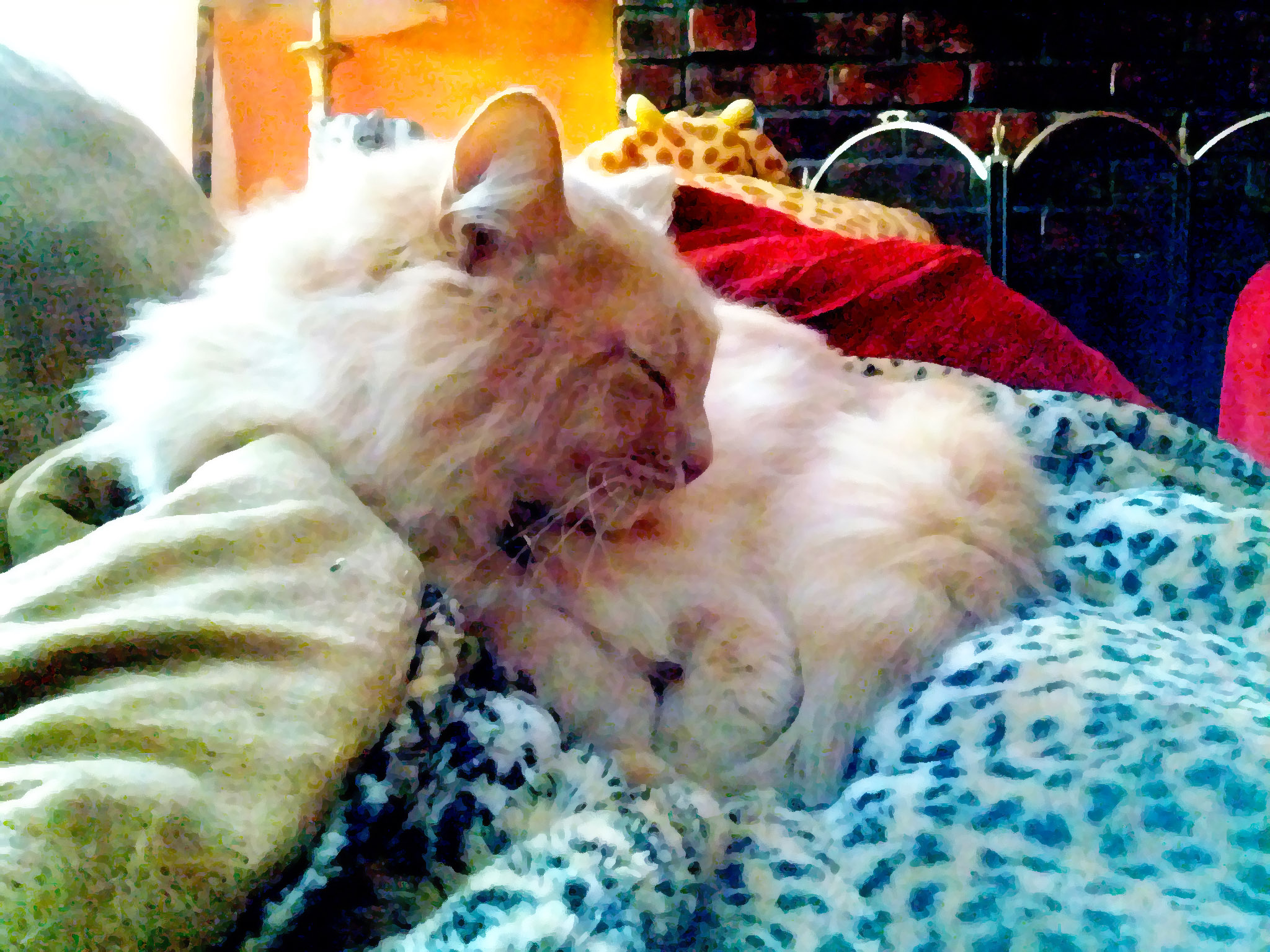
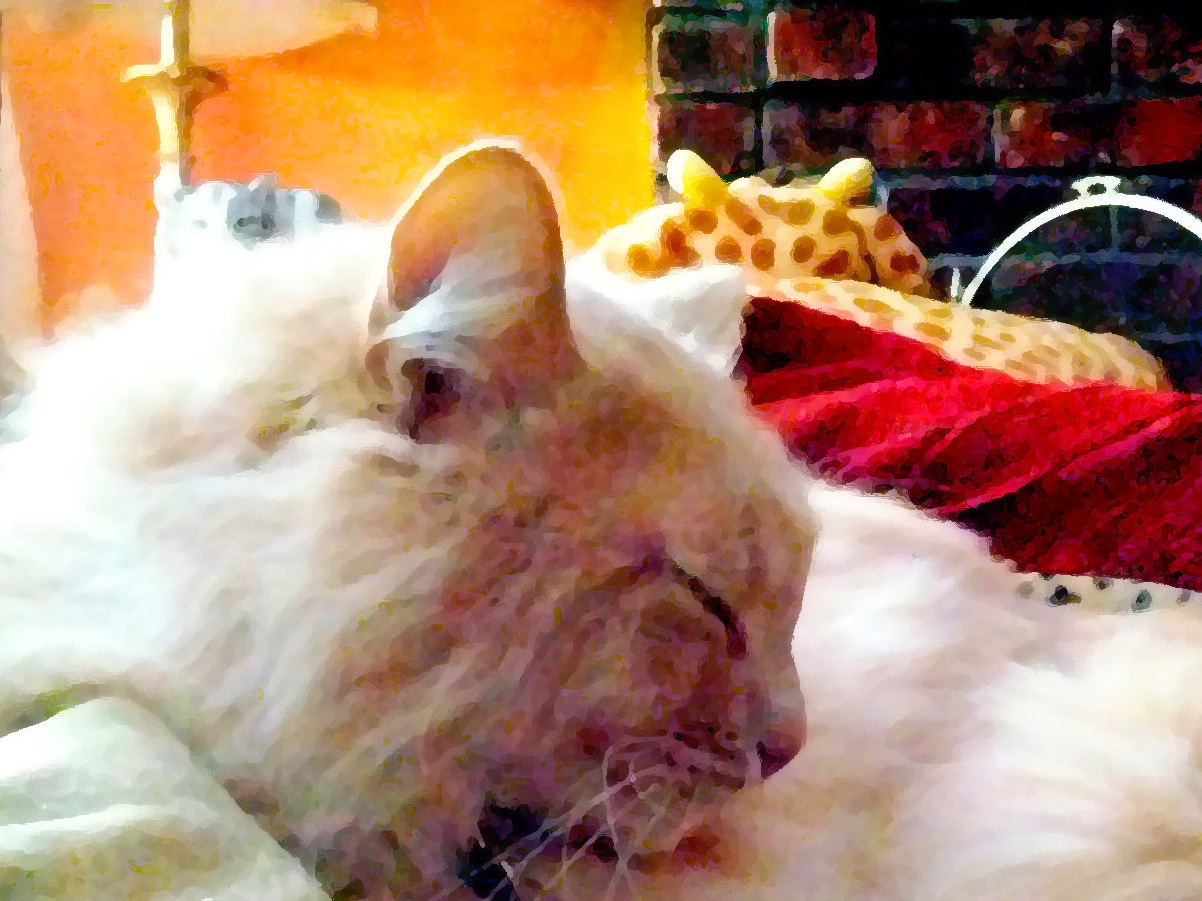
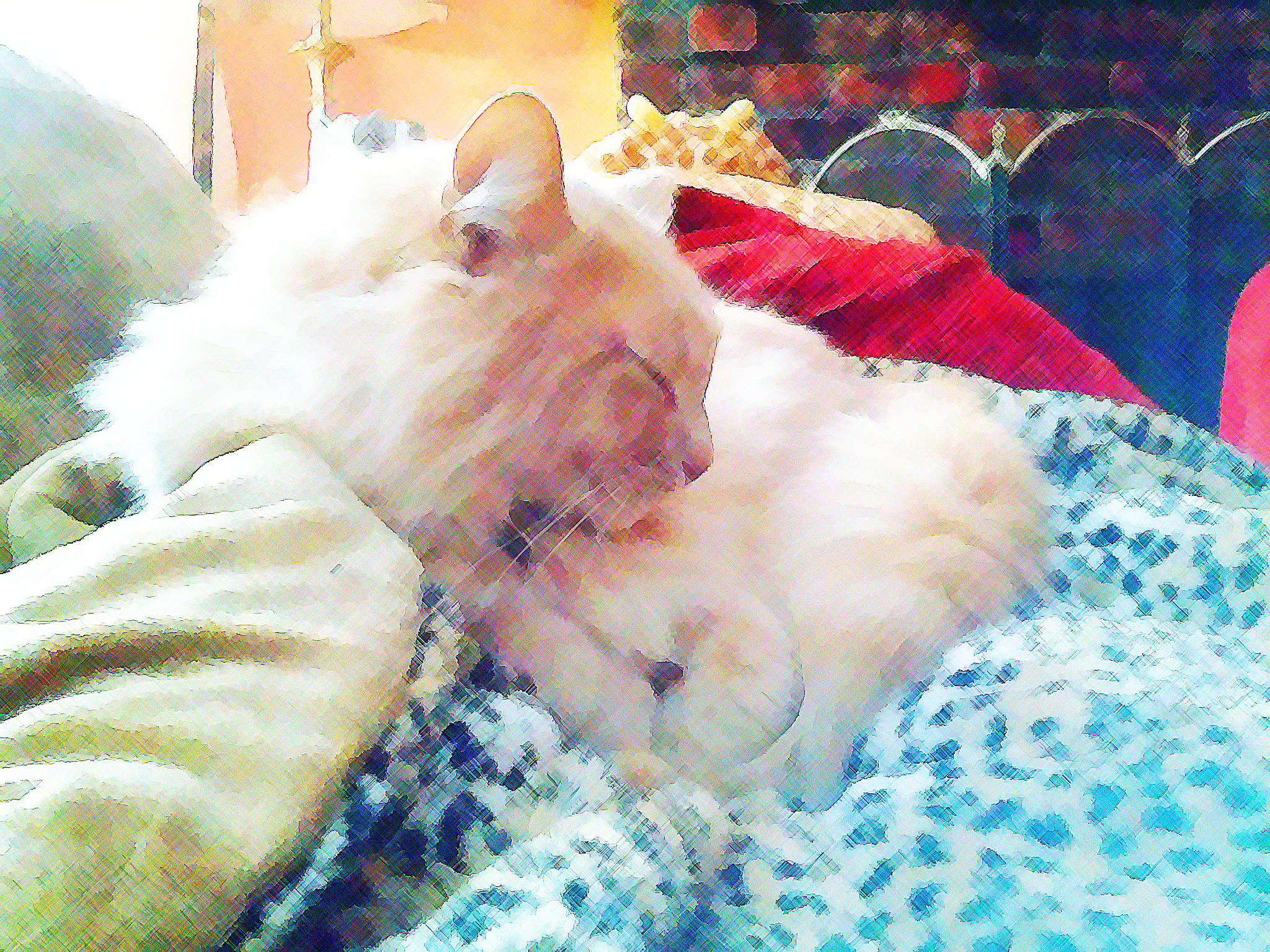
Following up my previous post on using offline blog clients, here's an example of something harder to do with an offline client: uploading images with the originals as clickthrough. I haven't quite figured out how to do that in Ecto but perhaps it's an easy thing. Regardless, what Ecto posted was an image resized to the size it would be displayed at, whereas sometimes what you want is a resized thumbnail where you can click through to the original, which is what the standard WordPress interface will do for you nicely: These images are a comparison of two different filters in Photoshop on the same original. Amazing what we can do with graphics filters today. -the Centaur -Anthony
Testing Ecto as an Offline Blogging Platform

centaur 0

lapofluxury-detail.jpg

My ideas for blogging fast outpace my patience for actually blogging them. One problem with systems like WordPress or Blogger is that the interfaces for creating posts are a bit complex and work only online. Simpler "microblogging" systems, like Facebook, Twitter and Google+, enable you to post easily, but limit what you can post (and are walled gardens, to one extent or another). So I'm always looking for good offline blogging clients.

Part of the problem is that I'm on the Mac. Nothing against Windows or Linux, but Macs are (for me) more reliable even though the interface isn't quite as easy to use. But working on the Mac limits your software choices. I've tried Qumana, which isn't bad but sometimes has bad interactions with my blogging settings. (I need to update it, so I'm not giving up on it yet). I've tried a variety of Android blogging clients, such as the WordPress app, but I haven't figured out how to make them obey my image sizing restrictions. So I'm trying other blogging clients, starting with Ecto.

Nice category / tagging interface, easy uploads. Doing something weird with carriage returns, which was a problem with Qumana, but it may be fixable. OK, this is enough of a post to try it out. Here goes nothing!

-the Centaur
Pictured: Gabby, my most computer literate cat, in the lap of luxury (as seen through a few Photoshop filters).

UPDATE: Ecto *gasp* did what I wanted. One point for Ecto!

Testing 1 2 3

centaur 0
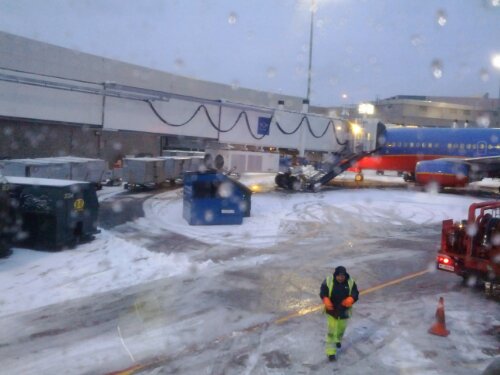
image Trying out a new Android WordPress client... -the Centaur UPDATE (via WordPress's interface): Well, the software shrank my image. And for those who asked, Minneapolis, I think, which is where my connection back from Arisia got rerouted. No, actually I think this might have been from Boston, which had snow when I left. Minneapolis was worse.
A Toast to 2011

centaur 0
It's the last post of 2011, but I give you no year end summary, no predictions for the future. We've celebrated a lot, but there's not even a party today, just chilling with my wife, remembering good times. I just send you good wishes, and wish you happiness in the holidays, however you find it. Because, Lord knows, there are a lot of ways, now more than ever. So from all of us at the Edge to you and yours, a Merry Christmas and a Happy New Year. -the Centaur

Yosemite puts the awe in awesome

centaur 0
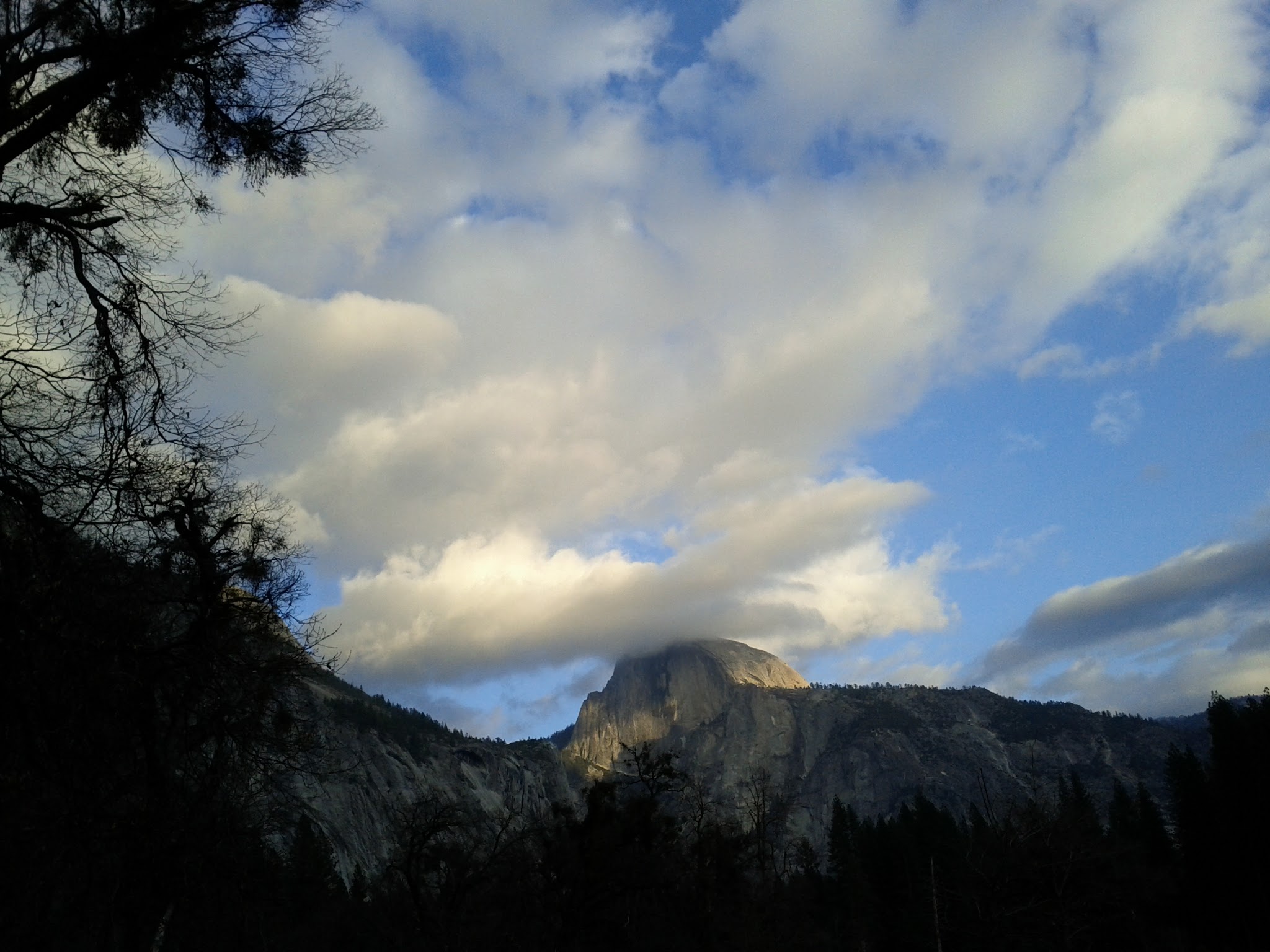
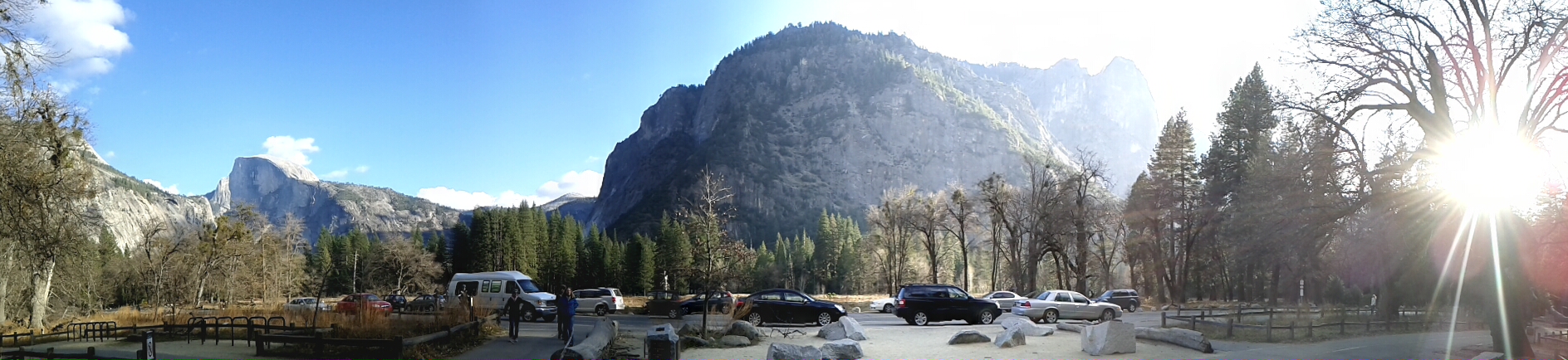
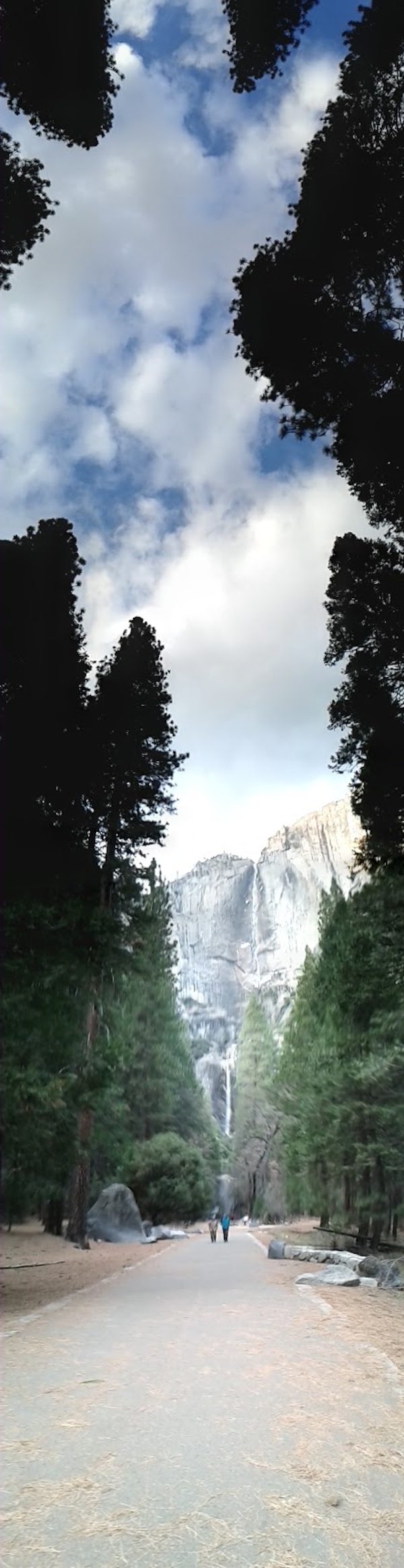
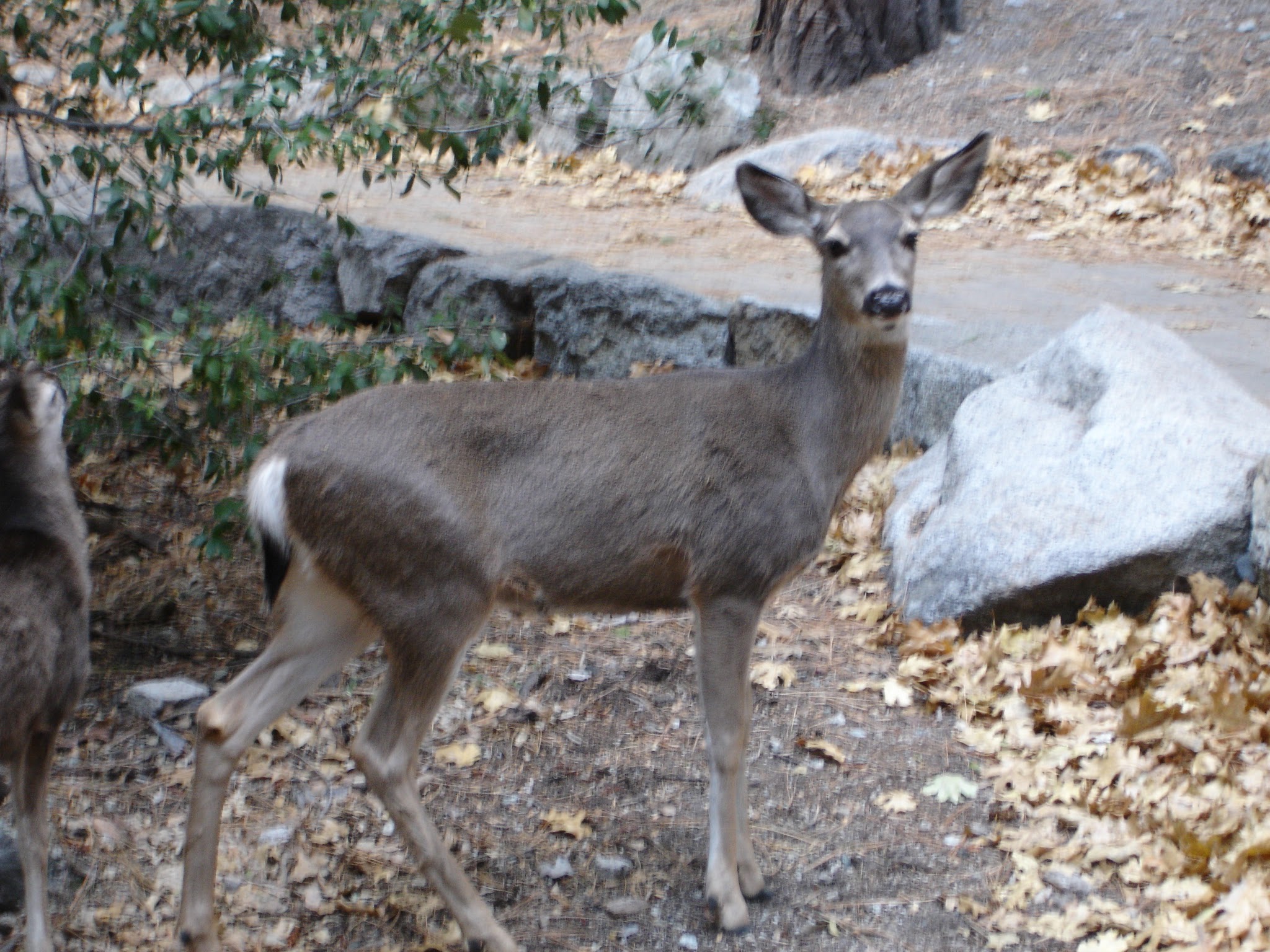
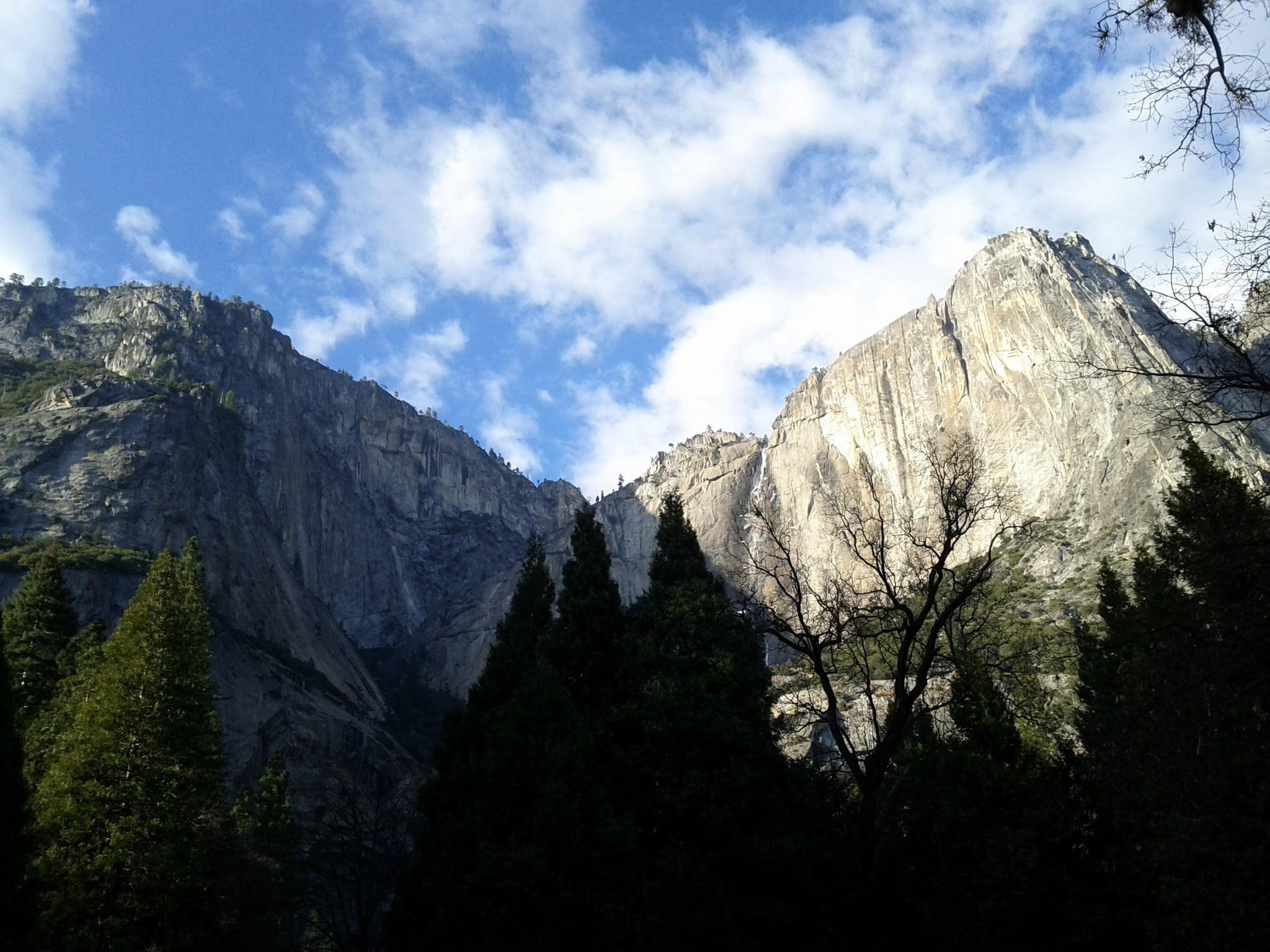
Awesome is a word I overuse, wearing away its original meaning of "breathtaking." Yosemite, now Yosemite is breathtaking. Hey human, get off my lawn. Unlike the Grand Canyon, which is overwhelming in its detail, Yosemite's beauty comes from its sheer variety packed so close together. Truly God's Country. -the Centaur

Teaser for Steampunk Fairy Chick

centaur 4
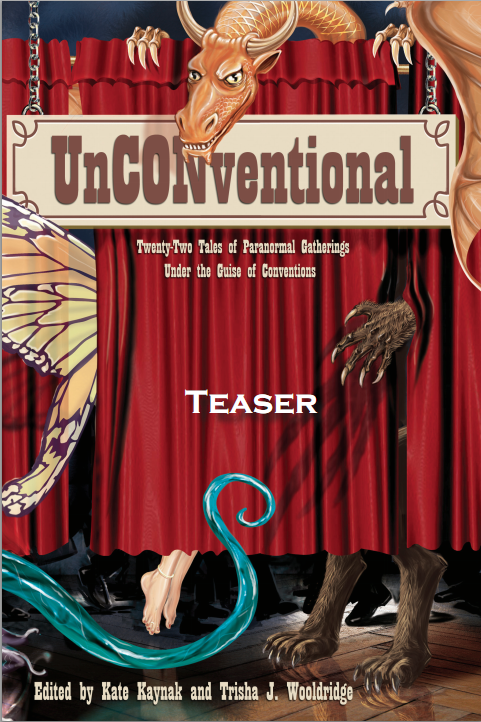
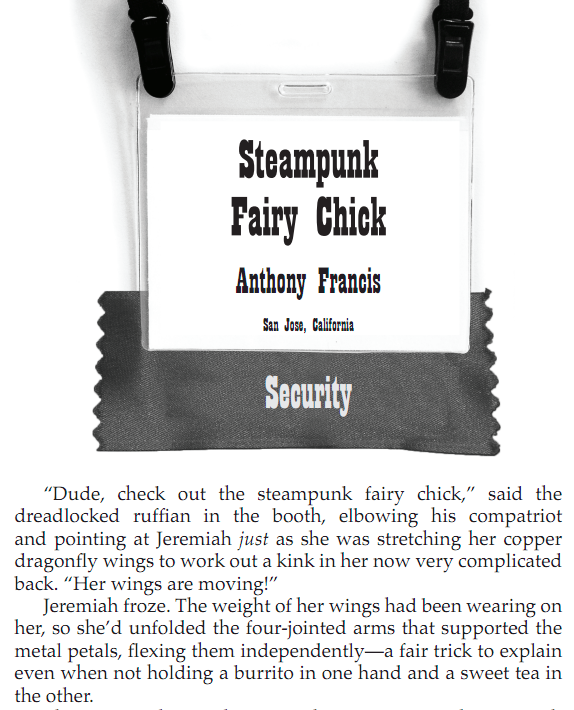
The UNCONVENTIONAL anthology is now available on Amazon, featuring my story "Steampunk Fairy Chick" starring Jeremiah Willstone, heroine of THE CLOCKWORK TIME MACHINE. The editors of the anthology, Kate Kaynak and Trisha Wooldridge, have made teasers of the first few pages of each story available, and you can read the start of "SFC" here. If you can't wait for that, you can see the first two paragraphs below: Please enjoy! -the Centaur

Aptera … Gone

centaur 0
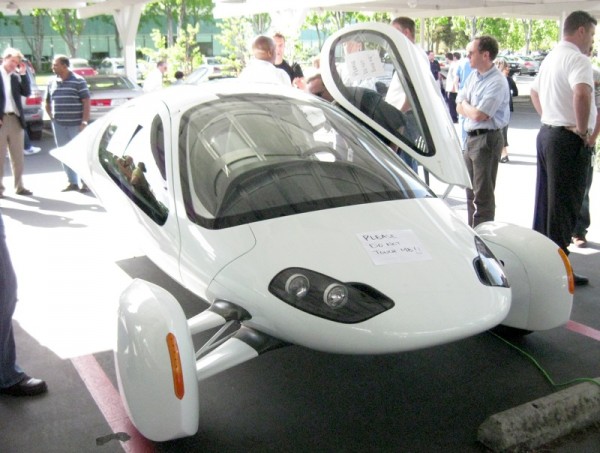
the aptera at google I am SO not surprised. This will be a bit ranty for me; it's taken from an email I sent to friends and lightly edited for tone so I don't get sued. For those of you who don't know, Aptera was a manufacturer of a proposed electric car, and they've gone belly-up. From a recent article in Wired:
The truth is, Aptera always faced long odds and has been in trouble for at least two years. The audience for a sperm-shaped, three-wheeled, electric two-seater was never anything but small. It didn’t help that production of the 2e — at one point promised for October 2009 — was continually delayed as Wilbur ordered redesigns to make it more appealing to the mainstream. Aptera had a small window in which to be a first mover in the affordable EV space, and that window closed the moment the Nissan Leaf andChevrolet Volt hit the market. At that point, Aptera teetered on the brink of irrelevance. Eventually, though, Wilbur realized the 2e would never be anything but a niche vehicle and switched gears, something potential investors made clear must happen. They wondered about the market demand for such a funky vehicle and the long-term viability of the company if it didn’t expand its product lineup.
I don't want to get off on a rant here, but let's be clear about this. I WAS GOING TO BUY THE CAR, but couldn't because Wilbur ordered a redesign. So his company was out $20K that went to Toyota (actually the Toyota was more expensive). A lot of other people had plunked money down for the car - more than 3000. They had to refund a non-trivial number of deposits. So Wilbur ordered a redesign of a vehicle FOR WHICH HE ALREADY HAD PREORDERS keeping it out of their hands. I read a prescient article, somewhere on an Aptera board or something, in which a ranting techie unexpectedly nailed it: Wilbur came in, changed the car to "prove" his auto design chops or something, and killed the company by derailing the ongoing production. Oh wait I've seen this movie: Tucker: The Man and His Dream. Now, I wasn't on the inside of Aptera, and I don't know what Wilbur faced, so I cut him some percentage of slack as an armchair quarterback. "That having been said," it seems clear that a driveable electric vehicle was delayed to market for reasons as ridiculous as enabling users to go through a drivethrough.
For months we have been receiving important feedback from you, our depositor community, and we have come to realize there were flaws in our initial product assumptions — specifically as it pertains to satisfying the needs of real-world consumers. Our greatest degree of learning came just a few months ago when we asked all of you to participate in a brief survey. This critical piece of research requested insights about your expectations for our company and our products, and we discovered a notable disconnect between our product plan and realistic expectations. Some modifications had to be made. For example, you helped us realize that some trade-offs for convenience (like being able to grab a burger in a drive-thru) might be necessary to make the ownership experience more palatable, even if it cost us a couple tenths of a point on our drag coefficient.
Yes, the Aptera should have been able to receive a burger at a drive through. But at the mythical 300mpg why didn't you just SELL ME THE DAMN CAR and iterate on the next version. Heck, the first Prius was butt-ugly, not the gorgeous (and spacious) Kensington blue mouse I currently drive. No, you don't want to sell a car that will catch fire or anything, but you can't fix everything - and if you try, you lose. The best is the enemy of the good. And the marketing language we see above is classic, CLASSIC spindoctoring which sounds SO similar to the "we've made our decision and we're going to stick to it no matter whether it really makes sense" situations that I *am* personally familiar with. Interestingly, I've heard similar stories about tech leaders who focus on the appearance of their product to investors ... or, sometimes, just its appearance. I don't mean Steve Jobs focusing on pixels in icons because he wanted the experience of his product to be perfect; there are some wannabe Steve Jobsen clients-from-hell in the Valley who focus on the pure appearance of the product and not what it actually did or how it affected users - and things always get derailed as a result. Worrying about whether consumers will like the door of your car is appearance. Worrying about what investors will think about the marketability of your car is appearance. Sixty million dollars in potential gross revenue from three thousand prepaid customers was reality, and Wilbur threw that money on the floor. Aptera, you're missed. Your cars, which I never even got to drive, most of all. -the Centaur Pictured: the Aptera prototype on its visit to The Search Engine That Starts With A G. And no, I never got to drive it.